Lights down. Curtain up.
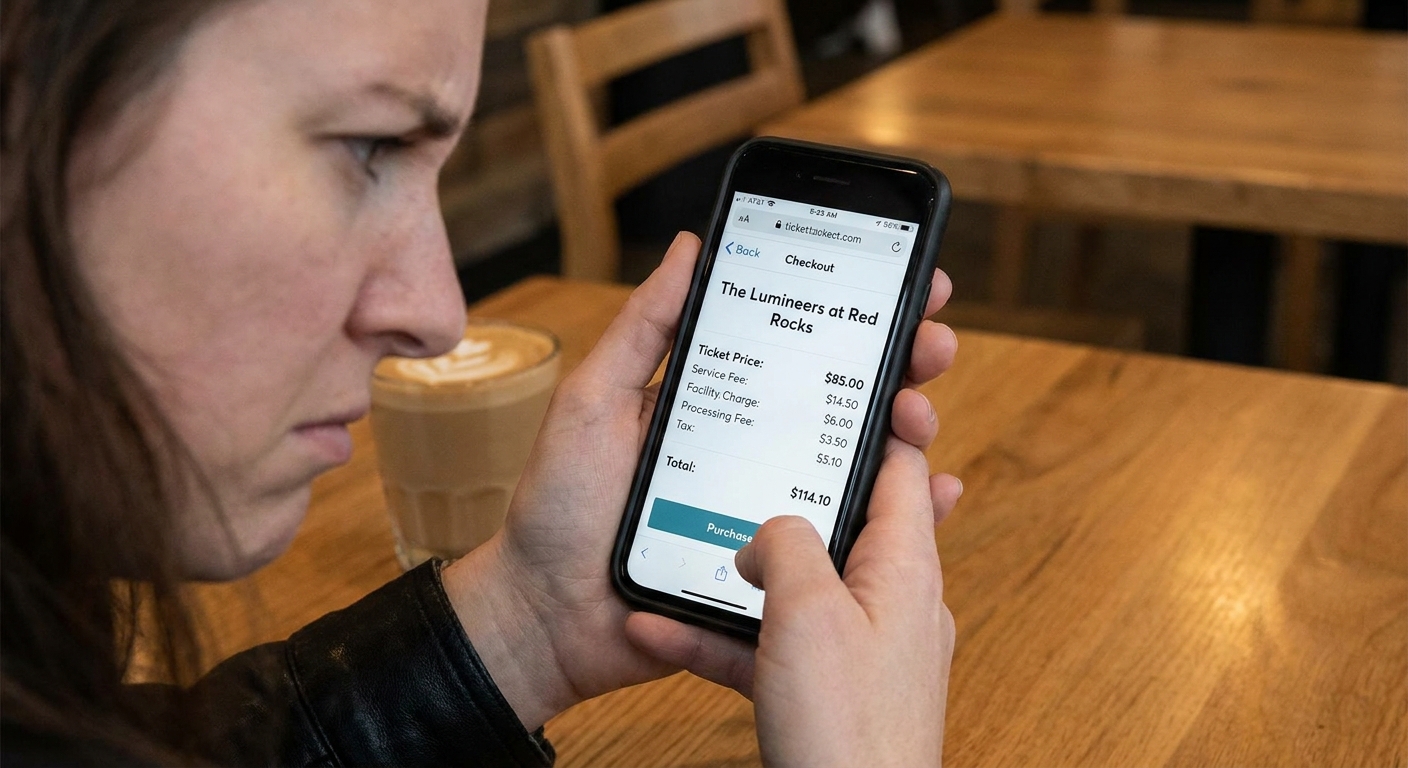
You picked your seat, you’re ready to hit “Checkout,” and then the total jumps. Suddenly there are extra line items with official-sounding names: service fee, facility fee, order or processing fee, and delivery fee. None of them are the ticket price you thought you were paying, and the differences are not always explained in plain language.
Here’s what those add-ons typically mean, what they tend to cover, when you’ll see them, and what happens to them if you need a refund.
The quick idea: seat price vs. fees
Most ticket orders break down into two buckets:
- The ticket price (sometimes called face value, base price, or simply “ticket”). This is the cost attached to the seat or admission.
- Fees that are added by the ticketing platform, the venue, or both. These are usually shown at checkout, but in some cases they appear earlier as “estimated fees” or are baked into an “all-in” total.
All-in pricing means the number you see includes mandatory fees (and sometimes taxes) upfront, so it is closer to what you will actually pay. Estimated fees means the site is showing a preview based on typical charges, but the exact breakdown may not appear until checkout.
Fees can vary by venue, presenter, city, ticketing company, and even by delivery method. Two people seeing the same show can pay different fees if they buy through different sellers.
A quick note: pricing changes are not always fees
Sometimes the “jump” you see is not a fee line at all. The seat price itself can change due to market-based pricing (often labeled “dynamic pricing,” “platinum,” or similar). That is not a checkout fee, it is the ticket price moving up or down based on demand or inventory rules. If the number changed before you even got to the fee breakdown, this is one of the first things to look for.
Service fee (the ticketing company fee)
What it is: A service fee is most often the charge from the ticketing platform or seller for handling the sale.
What it usually pays for
- Operating the ticketing system (websites, apps, call centers, box office software)
- Payment processing and fraud prevention
- Customer support
- Account tools like transfers, mobile ticket access, or ticket scanning integration
- Sometimes marketing and distribution costs for selling tickets at scale
When it appears
You’ll typically see a service fee per ticket. It may change depending on the event, the price level, and where you buy. Some sellers also label this as a “convenience fee” or “booking fee.”
Is it refundable?
It depends, but often no. Many ticket terms treat service fees as nonrefundable unless an event is canceled and the seller’s policy includes fee refunds. For postponed or rescheduled events, fees are frequently not refunded if you keep the ticket. If you request a refund, what comes back depends on the seller’s posted policy and what the event organizer authorizes.
If you are buying event insurance, note that insurance often reimburses the ticket cost under covered reasons, but it may treat fees differently. Always read the policy language before you rely on it.
Facility fee (the venue fee)
What it is: A facility fee is generally a venue charge that helps fund the building and its operations. Unlike a service fee, this one is tied to where the show happens.
What it usually pays for
- Venue upkeep and capital improvements (seating repairs, technology upgrades, renovations)
- Front-of-house operations (ushers, scanning equipment, staffing infrastructure)
- Building costs tied to hosting events (utilities, maintenance, event-day systems)
When it appears
Most commonly, it is a per-ticket charge. You might see it labeled as “facility charge,” “venue fee,” or “building fee.” The amount can differ by venue and sometimes by event, even within the same venue.

Order fee, processing fee, or handling fee (the per-order charge)
What it is: This is typically a flat fee charged once per transaction, not per ticket, though practices vary.
It is also common to see a per-order fee on top of per-ticket fees. In other words, you might pay a service fee per ticket and still get hit with an order or processing fee for the whole cart.
What it usually pays for
- Back-end order processing and reconciliation
- Payment processing overhead not already covered elsewhere
- Account servicing for the order (confirmation emails, ticket management tools)
When it appears
You’re most likely to see this when you buy multiple tickets at once, because the ticketing system can attach one “order” charge to the whole cart. Some sellers use this label for a catch-all fee that does not neatly fit under “service fee.”
Is it refundable?
Often no, sometimes yes if the event is canceled. Policies vary widely. If an event is canceled and refunds are authorized, some sellers return everything including order fees, while others return only the ticket price and certain taxes. Your confirmation email and the seller’s refund policy are the deciding documents.
Delivery fee (how you get the ticket)
What it is: A delivery fee depends on the method you choose to receive your tickets.
Common delivery methods and what the fee covers
- Mobile ticket: Often free, but not always. Some platforms still attach a small fee to mobile delivery, usually tied to account access tools, secure delivery systems, and support.
- Print-at-home: Often free, but some sellers attach a fee for certain delivery options or added anti-fraud and verification features.
- Will call: May be free or may include a handling charge.
- Mail or courier: More likely to carry a fee, especially close to showtime.
Is it refundable?
If you paid for shipping and the tickets were already mailed, that cost is often nonrefundable. If an order is canceled before shipment, sellers may be able to reverse it, but policies differ.
Other fee lines you might see
Depending on the seller and location, you may also encounter:
- Tax: Sales tax, amusement tax, VAT, or other local taxes required by law in some places.
- Regulatory or compliance fee: Often a seller-defined label for internal costs tied to payment rules, privacy requirements, or other compliance obligations. Despite the name, it is not necessarily a government-imposed fee.
- Charity add-on: Optional round-ups or donations. These should be clearly optional.
- Ticket resale marketplace fees: Resale sites may include buyer fees, and sellers may also pay fees. The fee names vary, but they function similarly to service charges for facilitating a secondary-market sale.
Why the same show can have different fees
Fees are not standardized across the live events world. A few reasons you might see different totals for similar tickets:
- Different sellers: The venue’s official ticketing partner, a presenting organization, and a resale marketplace can all price fees differently.
- Different delivery methods: Mobile, will call, and mail can change the final fee stack.
- Different venues: Facility fees are venue-specific and can vary significantly.
- Per-ticket vs. per-order structures: Some systems load costs into per-ticket fees, others add bigger per-order charges.
If you are comparison shopping, make sure you compare the all-in total, not just the seat price.
Refunds, cancellations, and exchanges: what to expect
If the event is canceled
In many cases, cancellations lead to refunds of the ticket price. Whether fees come back depends on the seller’s rules and what the event organizer authorizes. Some sellers refund fees automatically for cancellations, others do not.
If the event is rescheduled
Reschedules often come with an option to keep your ticket for the new date. If refunds are offered, there is usually a deadline or a refund window. For example, you might see language like “request a refund by X date if you cannot attend the new date.” In those cases, the ticket price may be refundable within the window, while fees may or may not be, depending on the policy for that platform and event.
If you can’t go (no event change)
If you voluntarily request a refund, many ticket terms say no refunds or fees are nonrefundable. Your options may be:
- An official exchange program (if offered)
- Fan-to-fan resale through the original ticketing platform (if enabled)
- Transferring tickets to a friend (if transfers are allowed)
Always check the event page and your order confirmation for the exact terms attached to your tickets.
What about chargebacks?
Disputing a ticket purchase with your card issuer is not a guaranteed fix, especially if the fees were disclosed before you clicked purchase. It can also trigger account restrictions on some platforms. If you think you were charged incorrectly, start with the seller’s support channel and keep screenshots of what you were shown at checkout.
How to spot fees earlier (before checkout surprise)
- Look for “all-in pricing” toggles: Some ticketing sites let you show the total price with fees included.
- Click the info icons: Many checkout pages have small “i” tooltips next to fee lines that explain how the platform defines them.
- Check the venue site first: Venues sometimes post fee schedules or at least explain which fees they charge.
- Watch for per-ticket math: If you add two seats and the fee doubles, it is likely a per-ticket service or facility fee. If it stays the same, it is likely a per-order processing fee.
- Separate price shifts from fees: If the seat price itself changes between views, look for labels like “platinum” or “market-based pricing” before you assume the difference is a fee.
FAQ
Are service fees the same as facility fees?
No. Service fees are typically charged by the ticketing seller for running the sale. Facility fees are generally charged by the venue for building-related costs.
Can I avoid fees by buying at the box office?
Sometimes you can reduce certain fees by purchasing in person, but not always. Some venues still charge facility fees at the box office, and some ticketing contracts apply service charges across sales channels. If fees matter for your budget, it is worth calling the box office and asking what fees apply in person before you make the trip.
Why is there a delivery fee for mobile tickets?
Mobile delivery can still involve costs for the ticketing platform, including secure delivery systems that may use rotating barcodes or other token-based verification, plus customer support. Some sellers price that into service fees, while others list it separately.
Are ticket fees negotiable?
Generally, no. Fees are set by the seller and venue arrangements. Your best lever is choosing where you buy, whether you buy in person, and which delivery method you select, when options exist.
The takeaway
Those extra lines at checkout usually reflect three things: the ticketing platform running the sale (service fees), the venue maintaining the building (facility fees), and the transaction details of your order and delivery (processing and delivery fees). They are common across theater, concerts, comedy, and touring shows, but they are not always refundable and they are not always consistent from seller to seller.
If you want the clearest comparison when you are hunting for seats, focus on the all-in total, and do not be shy about checking the venue box office policies before you click “Place Order.”