Lights down. Curtain up.
An open-captioned performance is a scheduled performance where the words of the show are displayed as text on a screen that everyone in the audience can see. That includes spoken dialogue and often sung lyrics. In most cases, you do not need to check out any special equipment or set up anything on your phone. You just show up and watch the performance, with captions visible in the room.
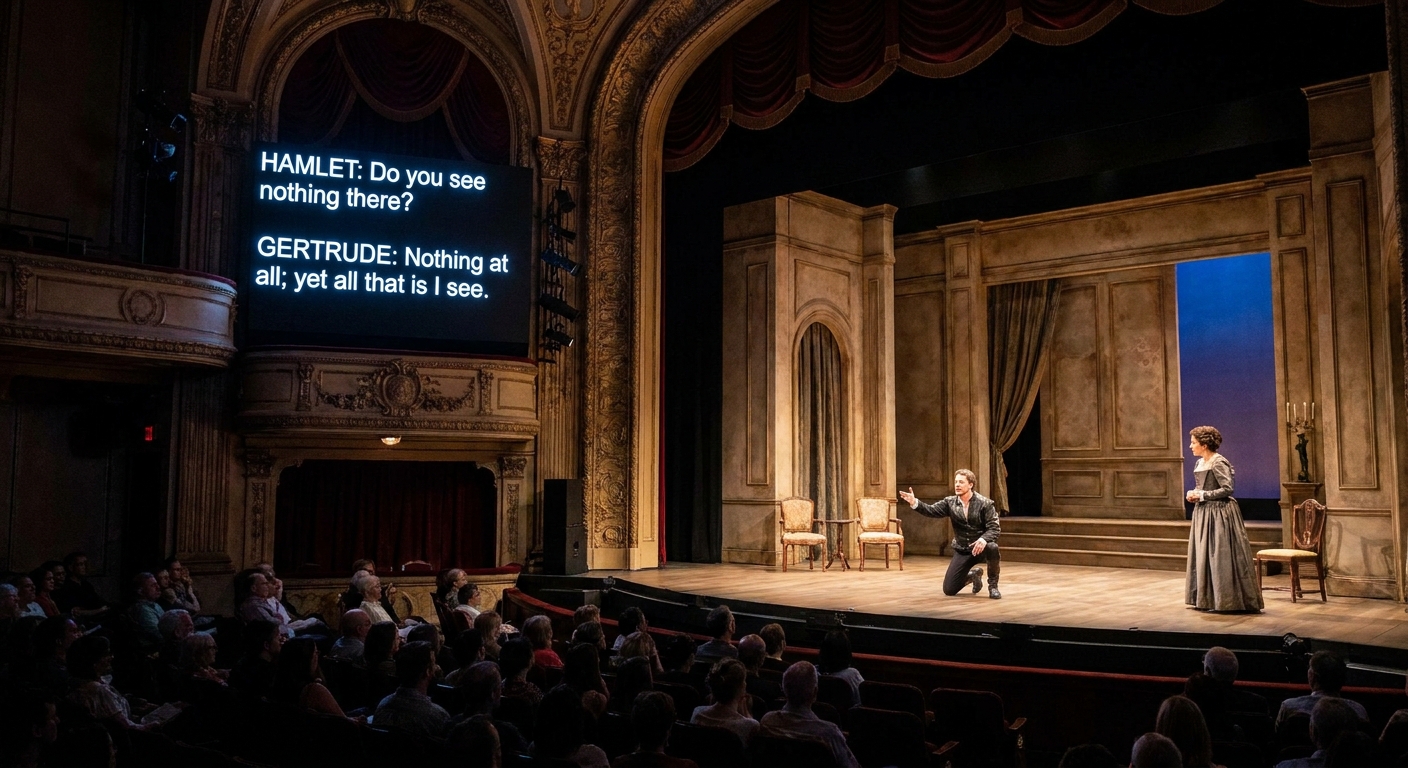
What open captions look like in a theater
Open captions are designed to be readable at a glance, without pulling focus from the stage for too long. The goal is simple: make the text available to anyone who wants it, while keeping the performance front and center.
What the captions usually include
- Dialogue (what is said, and sometimes who is speaking)
- Lyrics for musicals, and sometimes sung-through shows
- Key sound cues in some productions (for example, [door slams], [thunder], or brief music notes)
Caption style and detail can vary by venue and production. Some captions stick closely to the spoken text. Others add light context, like speaker labels or brief sound descriptions, especially in loud moments or overlapping dialogue.
Where the caption text appears
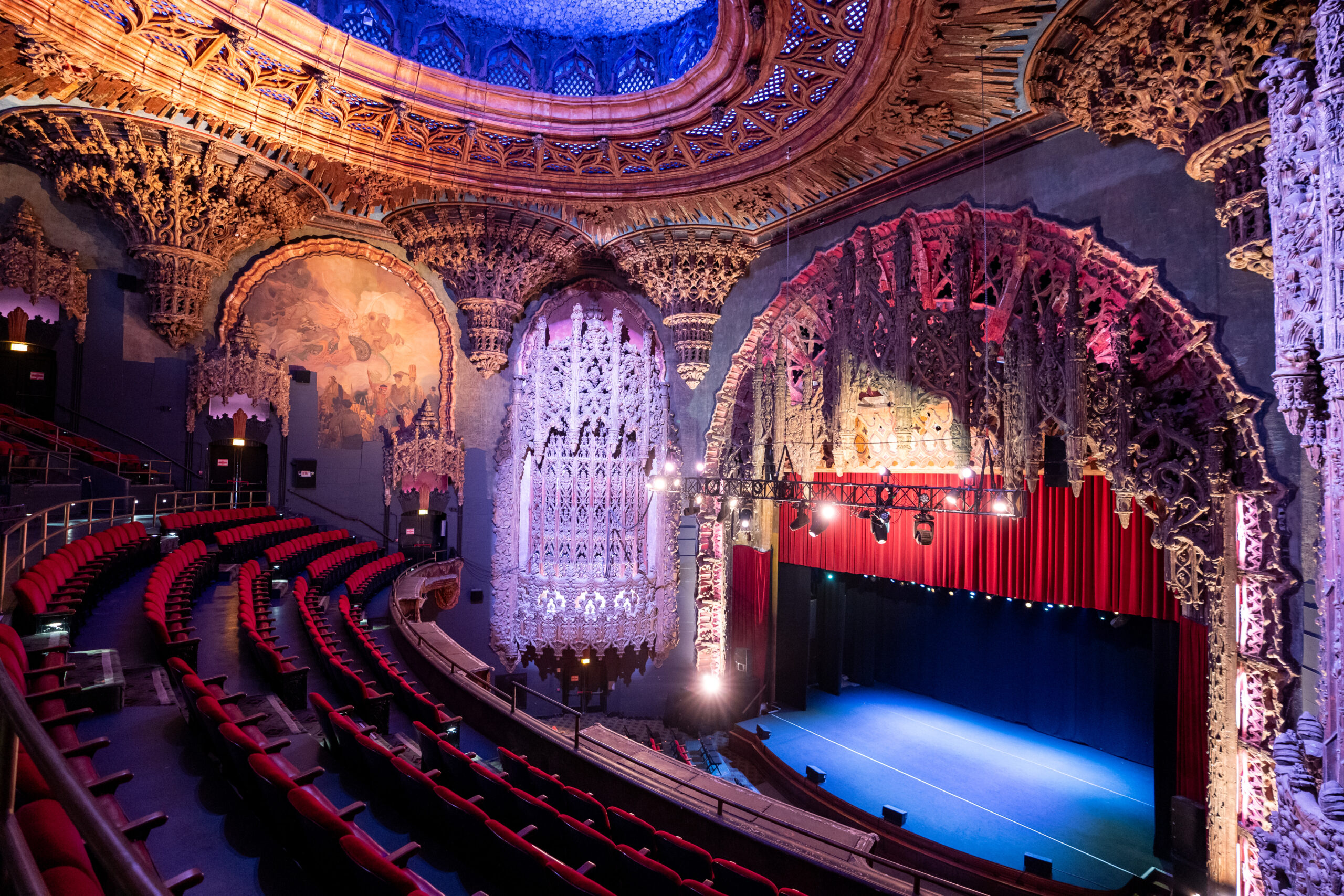
In most venues, open captions appear on a dedicated caption display that is separate from the stage action. You might see:
- A screen near the stage, often to one side (audience left or right) or sometimes centered above the proscenium
- Two screens, one on each side, in larger houses
- An LED board placed below the stage lip in some configurations
Because the captions are fixed in the room, your view of the screen depends on where you sit. That is why open-captioned performances often come with seat suggestions.
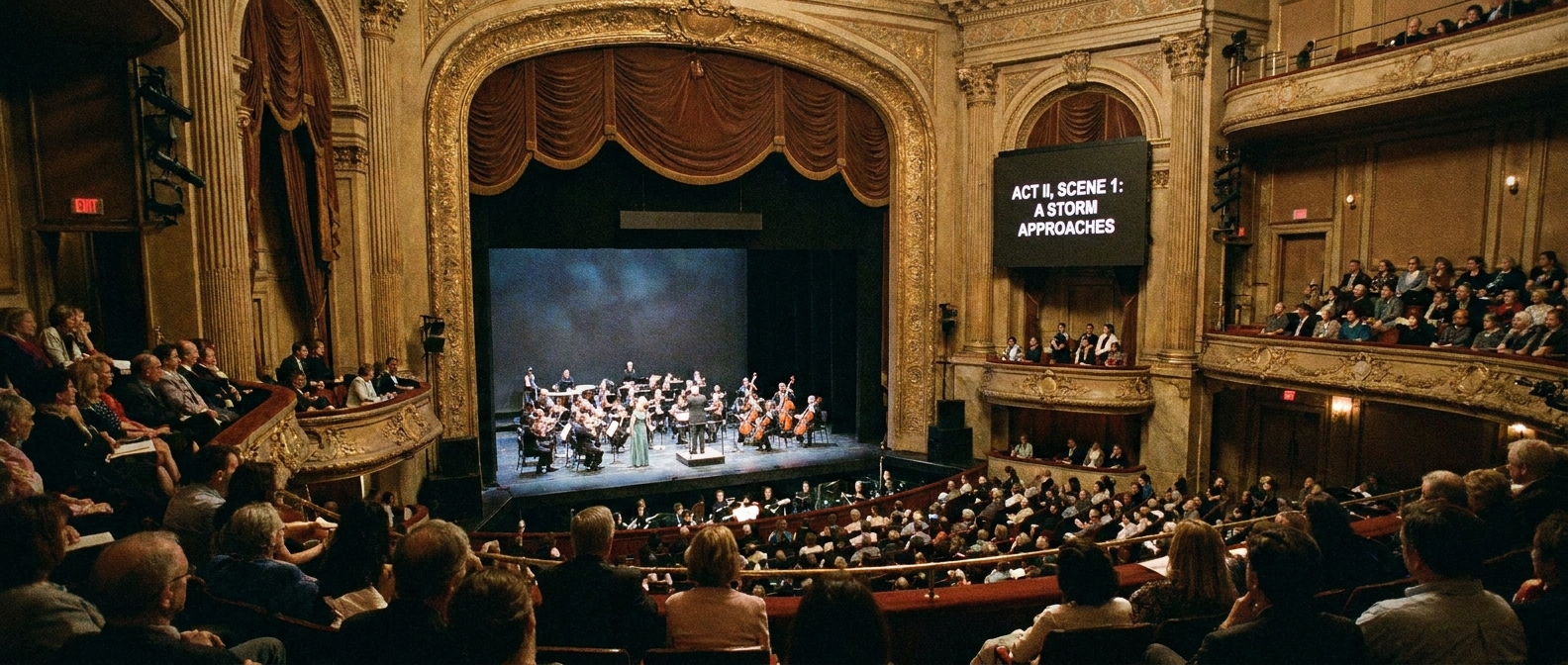
Which seats see open captions best
Every theater is shaped a little differently, but you can usually improve your caption view with a few reliable seat-picking rules.
General best picks
- Center sections (or as close to center as possible) so you can glance between the stage and the caption screen with less head-turning
- Mid-distance rows, where the stage and caption display are both comfortably in your field of view
- Slightly toward the side with the screen if captions are only on one side and you want the shortest glance
Seats that can be tricky
- Extreme side seats, where the caption screen may be partially blocked or at a tough angle
- Front rows, where you may have to look up sharply at the stage and then shift to the screen
- Under-balcony overhang seats, if the screen is mounted high or the sightline is tight
If you are booking tickets and the listing does not specify where the caption screen will be, the safest move is to contact the venue box office. Ask two quick questions: Where is the caption display located? and Which sections have the clearest view?
How to find open-captioned dates
Open captions are usually offered on select performances, not automatically at every show. That means you typically have to choose a captioned date on purpose.
Where venues usually list them
- The show’s ticketing page under Accessibility or Access Performances
- The venue’s main Accessibility page, often with a calendar
- A box office phone line or email, especially for smaller theaters
What labels to look for
- Open Captioning
- Open-Captioned
- OC (sometimes used as shorthand)
- Captioned Performance (confirm whether it is open captions or devices)
If you only see “captioning” with no details, it is worth double-checking. Some venues use that word to mean personal caption devices, and the terminology can vary from theater to theater.
Open captions vs. personal caption devices
It is easy to mix these up because both provide text. The difference is where the captions live.
Open-captioned performance
- Captions are on a screen in the theater
- Everyone can see the captions
- No device checkout is needed
Personal caption devices
- Captions appear on a small device you borrow from the venue, or sometimes through a venue-supported app
- Only you see the text
- You may need to arrive early to pick it up, and the device may work best in certain seating areas depending on the system
Neither option is “better” across the board. Open captions are wonderfully straightforward. Devices can be helpful if you prefer captions to be more private or if an open-captioned date is not available for the performance you want.
Open captions vs. audio description
Audio description is for people who are blind or have low vision. Instead of showing text, it adds spoken narration that describes key visual information during natural pauses, usually heard through a headset.
- Open captions translate the show’s words into text you can read.
- Audio description translates the show’s visuals into words you can hear.
A performance can offer both on the same date, but they are different accessibility services aimed at different needs.
Open captions vs. opera supertitles
If you have been to the opera, you may have seen supertitles. They are also text displayed for the whole audience, usually translating the libretto.
Here is the key distinction:
- Supertitles are primarily about translation (and sometimes summarizing), and they are a long-standing part of opera presentation.
- Open captions are an access service that displays dialogue and lyrics for accessibility, often in the same language as the performance.
They can look similar from your seat, but the purpose and how they are produced can differ.
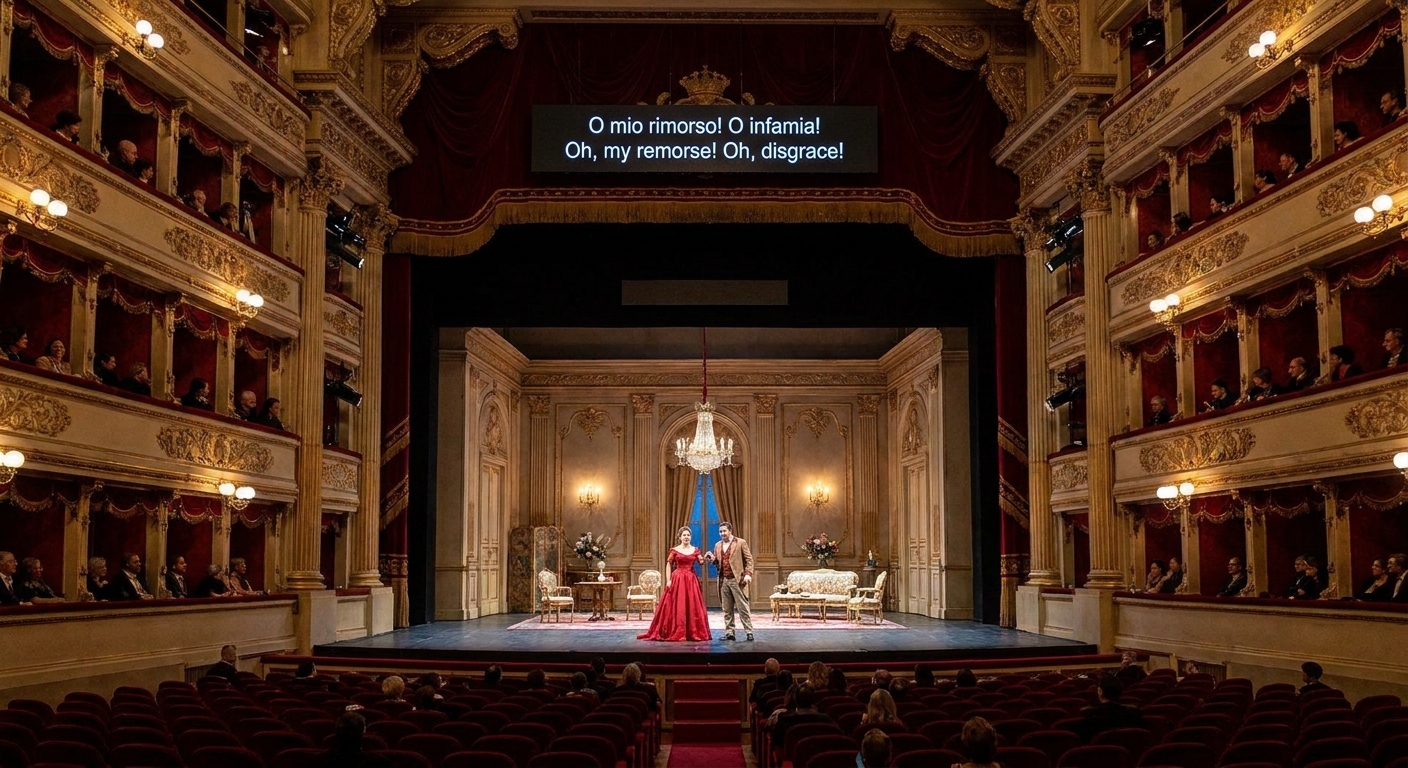
What to expect on the day of the show
- Arrive with time to settle in, especially if you want to assess sightlines to the caption display before the lights go down.
- Captions usually start at curtain, and some venues also caption pre-show announcements. Timing can vary, and captions may occasionally lag or lead slightly depending on the system.
- Not every moment is captioned the same way. Overlapping dialogue, audience interaction, accents, or ad-libs can affect what appears on the screen, and some caption tracks may lightly paraphrase for readability.
If you need a seating adjustment for visibility and there is room to move, the ushers or house manager are often your best first stop.
If you need captions and do not see a date
If the run does not list any open-captioned performances, reach out anyway. Ask the box office what captioning options are available and whether they can add an open-captioned date or offer an alternative accommodation. Even when the answer is no, the request signals demand, which helps accessibility programming grow.
Quick FAQ
Are open-captioned performances only for Deaf and hard of hearing audiences?
No. They are designed for accessibility, but many people enjoy them for lots of reasons, including auditory processing needs, learning English, catching fast lyrics, or simply preferring text support.
Do open captions distract other audience members?
They are visible, so yes, some people notice them. That is why they are usually offered on specific dates, so patrons can choose the experience they prefer. If captions are not your thing, picking a non-captioned performance is the simplest fix.
Will captions be on every performance?
Usually not. Open-captioned performances are typically scheduled on select dates. Check the venue’s accessibility listings or contact the box office.
Can I choose any seat at an open-captioned show?
Generally yes, but some seats will have a clearer view of the caption screen than others. Mid-house, near center, is often the easiest viewing angle.