Lights down. Curtain up.
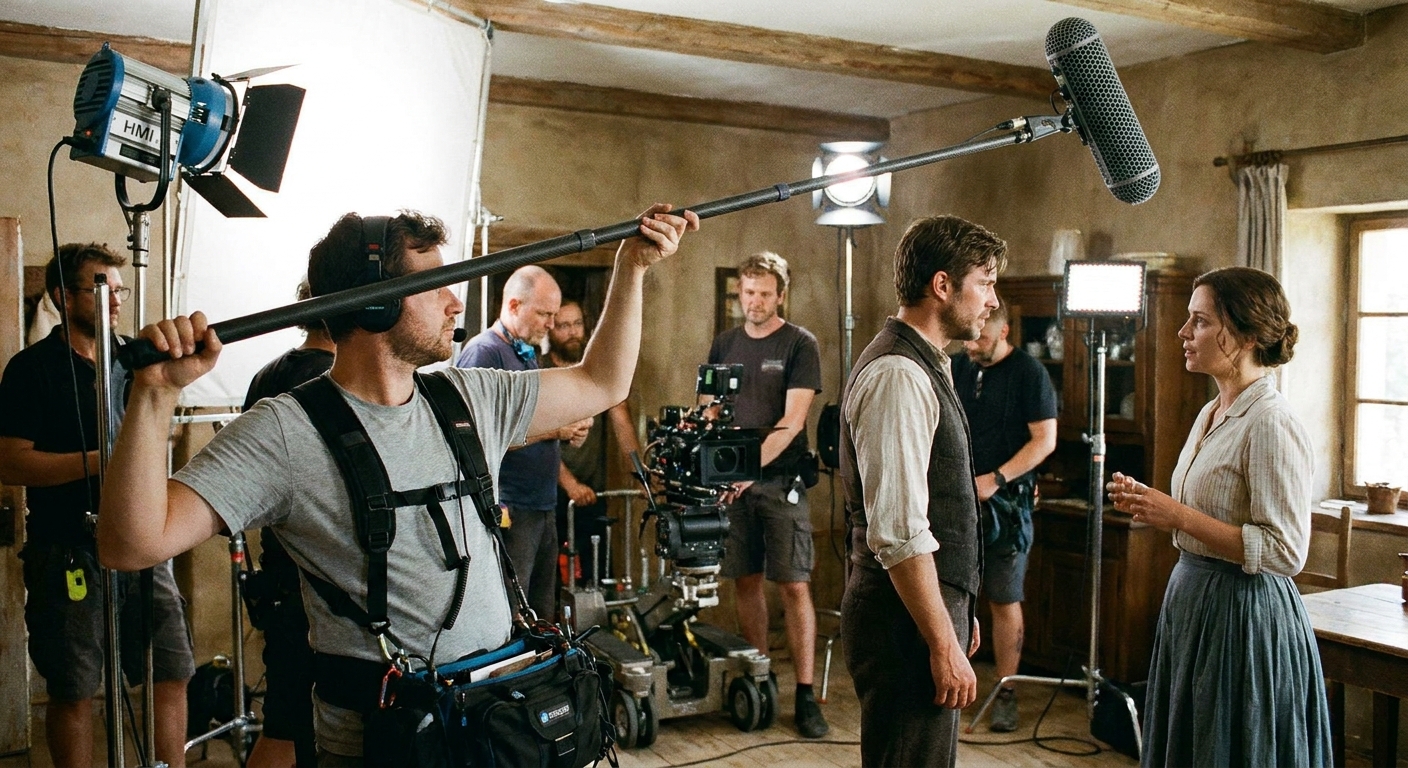
If you have ever watched a set go silent right before “Action,” you have seen the moment sound takes the lead. One of the key players is the boom operator, the crew member holding (and aiming) the microphone that captures clean dialogue right there in the scene.
What a boom operator is
A boom operator is a member of the sound department who positions a microphone on a boom pole as close to the actors as possible during a take, while keeping the mic, pole, and any wind protection out of the camera frame. The goal is to record clear, natural dialogue that matches the performance and the space.
On many productions, the boom operator works under the production sound mixer (the person responsible for overall sound recording on set). The mixer focuses on levels, recording, wireless, and monitoring. The boom operator focuses on mic placement, movement, and staying invisible.
What the boom operator watches for
The boom operator is listening, watching blocking, and making split-second adjustments. It is a physical job and a precision job at the same time.
Mic placement and distance
Dialogue sounds best when the mic is close, but closeness is limited by the lens, lighting, and the actors’ movement. Boom operators aim for the sweet spot above or below the actor, often using a shotgun microphone (very directional) or, in reflective rooms where a shotgun can sound splashy, a hypercardioid pencil mic for tighter, more controlled pickup.
Staying out of frame
“Out of frame” changes with the specific lens, camera height, and composition. A boom operator has to know the frame line even as it shifts with a tilt, pan, or subtle reframe, often cueing moves off rehearsals or the operator’s timing.
Avoiding shadows and reflections
A mic that is technically out of frame can still show up as a shadow on a wall, a forehead, or the floor. Reflective surfaces can also betray the boom, like mirrors, windows, glossy picture frames, car paint, or even someone’s glasses.
Following the performance
Actors do not deliver lines like metronomes. They overlap, whisper, turn away, interrupt, laugh, cry, and move in ways that are truthful for the scene. The boom operator tracks the emotional rhythm and physical rhythm so the mic stays aimed where the words are landing.
Using the right rig for the moment
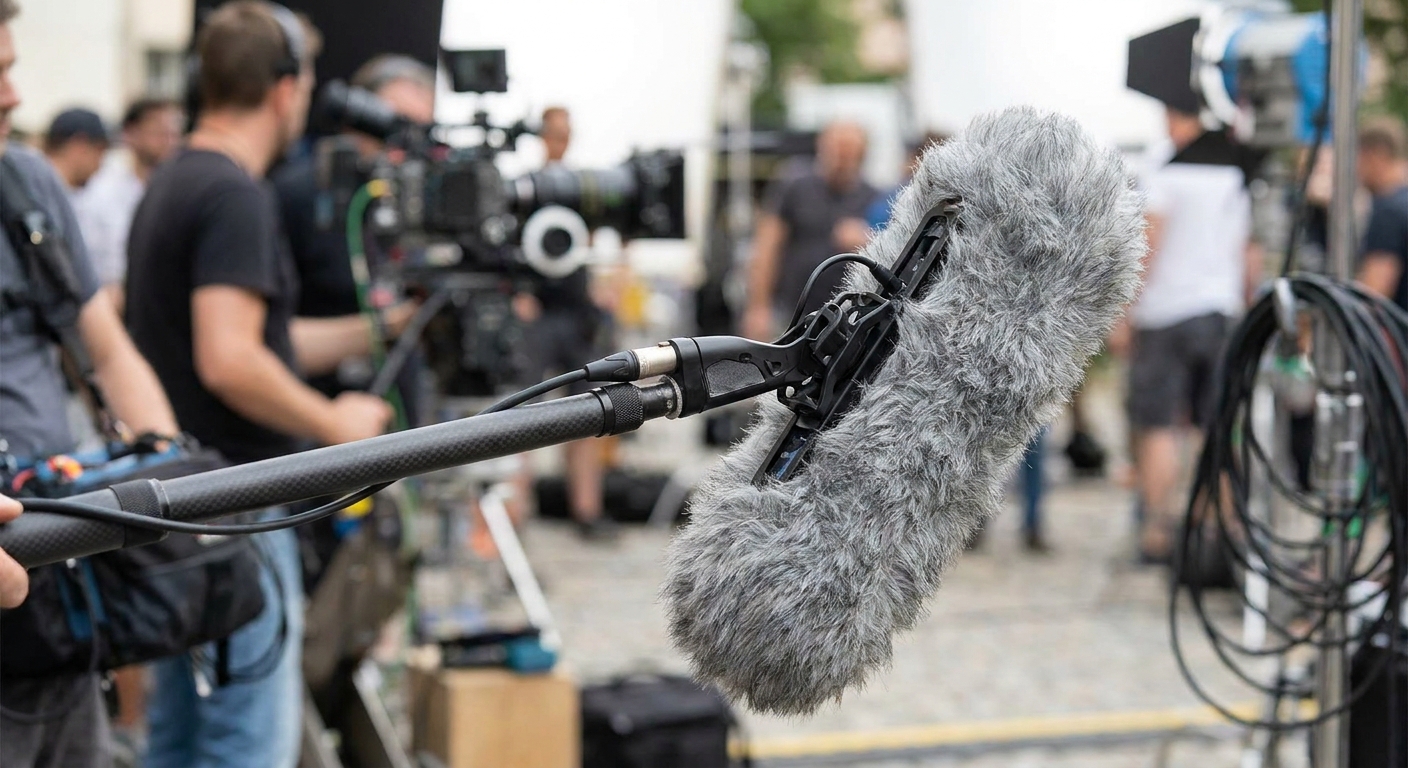
A boom mic is not just “mic on a stick.” The operator is also managing the gear that keeps the sound clean: a shock mount to reduce handling noise, and wind protection like a foam cover or a blimp with furry wind cover for exteriors. Wind can wreck dialogue fast, and even interiors can have air movement from doors, fans, or HVAC.
Handling set noise you cannot unhear
On set, sound is fighting the world. Boom operators and the sound team listen for issues like:
- Rustling wardrobe and jewelry noise
- Footsteps and chair squeaks during a quiet moment
- Generators, HVAC, refrigerators, and buzzing practical lights
- Traffic, planes, sirens, and the life outside the location
- Props that clack, crinkle, or scrape right on a line
Sometimes those sounds become part of the plan. Other times, the crew holds for quiet, adjusts blocking, adds padding, or changes how something is handled so the dialogue stays usable.
Why the boom stays out of frame
The simplest reason is visual: a microphone dipping into the shot breaks the illusion. But there is more to it than “do not ruin the picture.”
- Continuity: If the boom appears in one angle but not another, cutting the scene becomes harder.
- Time: If the mic is in frame, it can mean additional takes, reframing, or costly fixes.
- Post limits: Some boom intrusions can be removed digitally, but it depends on resolution, motion blur, and what the boom overlaps. Hair, fast movement, and complex edges raise the difficulty quickly.
That is why boom operators coordinate closely with camera and lighting, and why they often rehearse the move before rolling. When it works, nobody notices. That is the point.
Boom mic vs lav mic
On many sets, actors are also wired with lavaliers (small body mics hidden in wardrobe). Lavs can save a scene when the boom cannot get close enough, but they have tradeoffs.
- Boom mic sound: Often more natural and spacious, with fewer clothing rustle issues.
- Lav mic sound: More consistent distance when actors turn away, but can sound closer or chesty, and can pick up fabric noise.
The sound mixer may record both. The boom operator’s track is frequently the preferred choice for dialogue when it is clean, because it sounds like you are in the room with the actors.
Where the boom operator fits
Film and TV sound on set is usually a team effort. Titles vary by production size, but the typical flow looks like this:
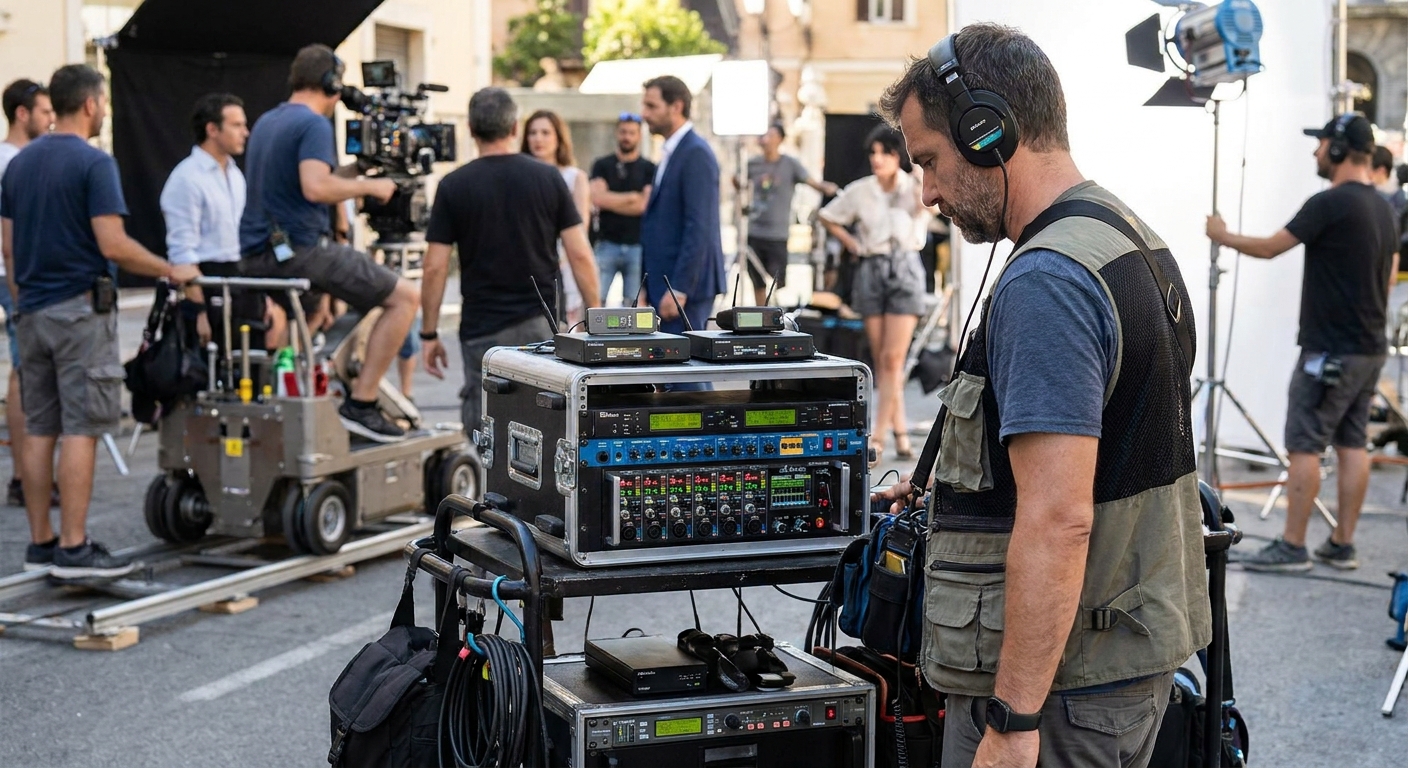
- Production sound mixer: Runs the sound cart or bag, sets recording levels, chooses mic strategy, and delivers recordings and sound reports.
- Boom operator: Works the boom mic(s), tracks blocking, and executes mic moves during takes.
- Utility sound technician: Helps with wiring lavs, managing transmitters, timecode support, batteries, and troubleshooting noise.
The boom operator is the sound department’s camera operator in spirit: they are performing mic placement live, take after take, adjusting to every creative change.
Boom operator vs foley
It is easy to lump all “sound stuff” together, but these are different jobs in different stages of filmmaking.
Boom operation is on-set production sound. It captures the real performance as it happens, especially dialogue and the natural sound of the space.
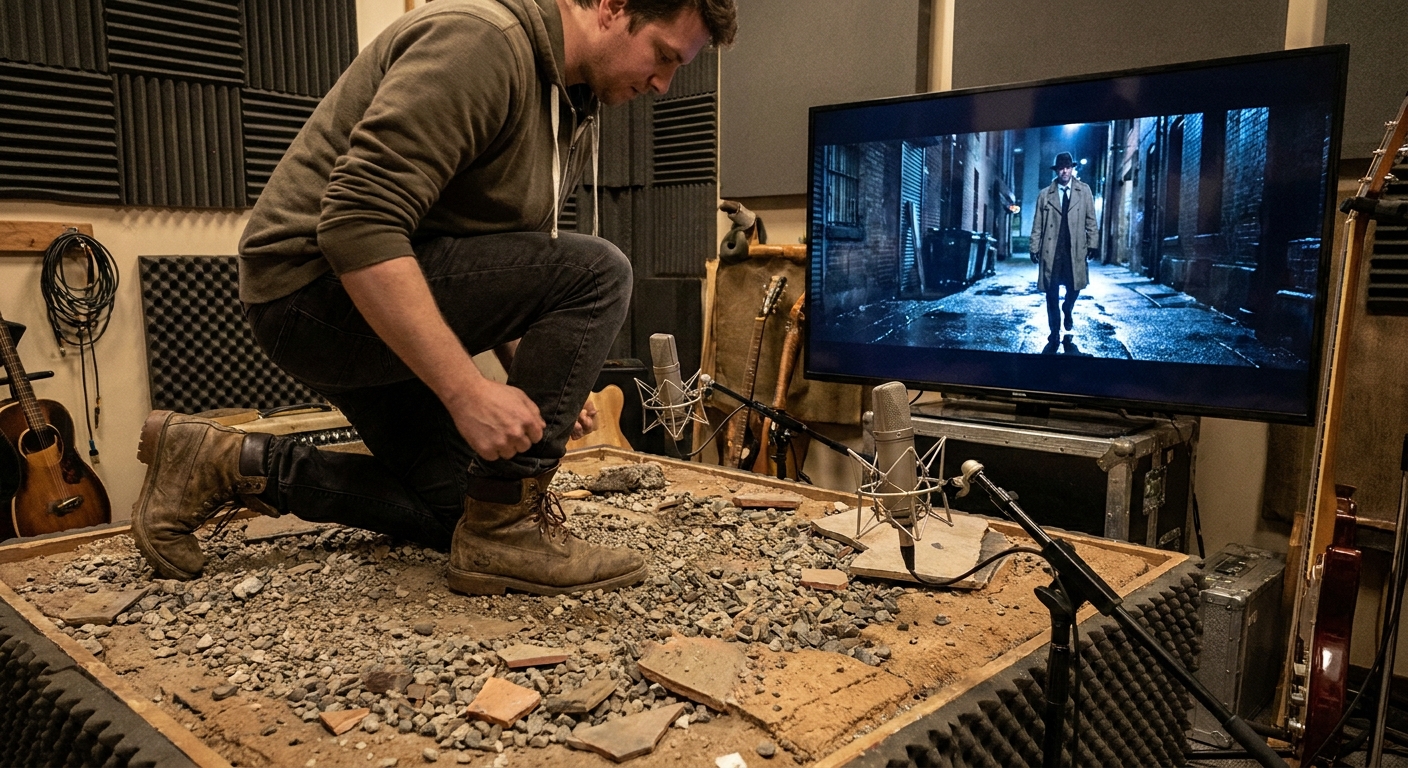
Foley is performed sound effects recorded later in a studio by foley artists. Think footsteps, cloth movement, handling props, and other human-scale sounds that support picture. Foley is crafted to match what you see on screen, often because the original production audio is too noisy or lacks detail.
In other words: the boom operator is there when the scene is acted. Foley comes later to build texture and clarity around what the camera captured.
Boom operator vs loop group
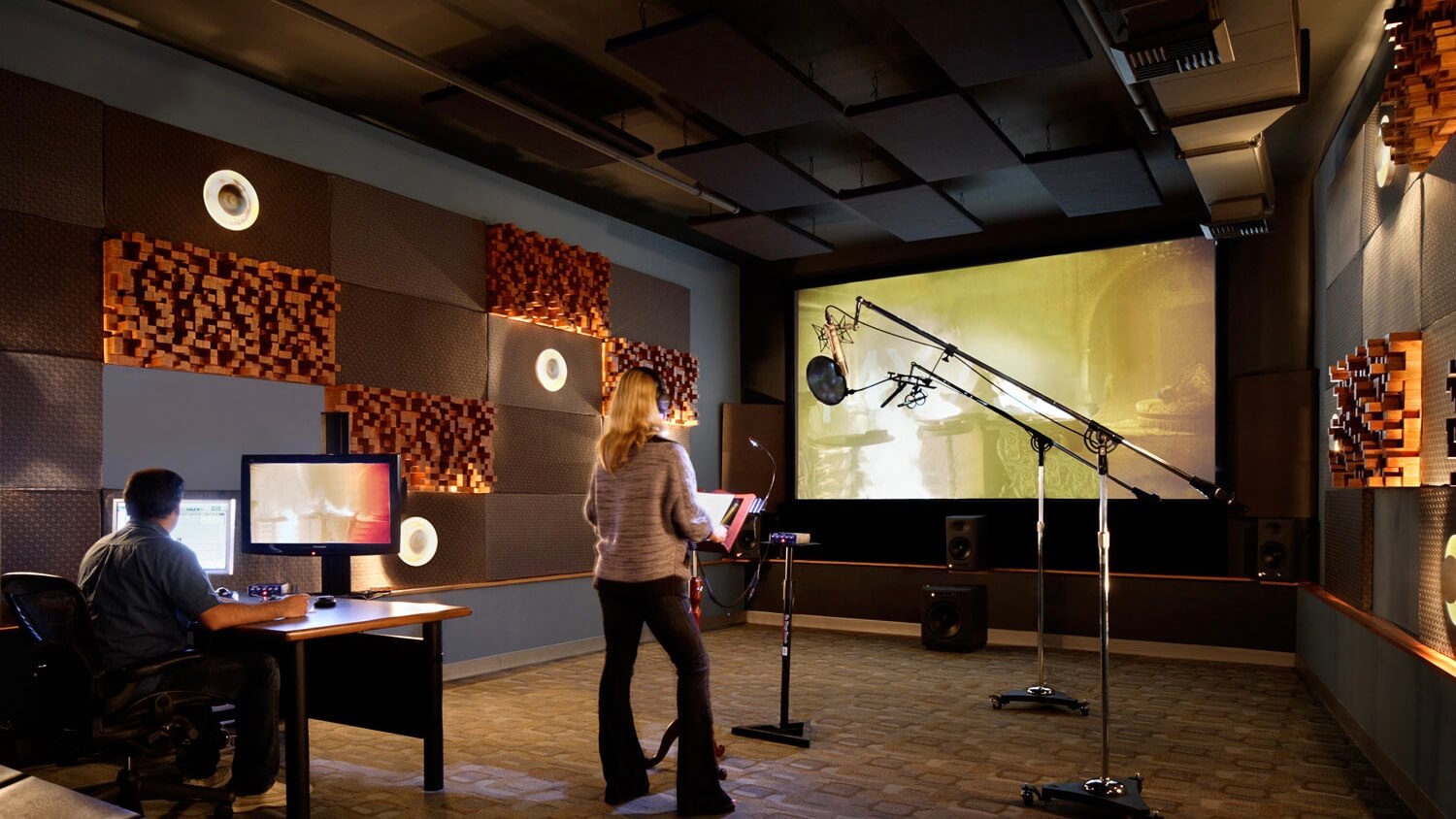
A loop group (often called walla or an ADR crowd group) records background crowd voices in post-production. That is the murmur in a restaurant, the buzz of a party, or the ambient chatter at a stadium.
On set, the boom operator is trying to capture the scene’s primary dialogue cleanly. If you are an extra, you might be miming conversation so the main lines stay intelligible. Later, loop group performers may record believable crowd sound that the editor and re-recording mixers can shape around the leads.
If you are an extra
Extras live in the same sonic world as the principals, even when you are not meant to be heard. Boom operators and the sound team will often ask for “quiet on set” and “no talking” for a reason: dialogue is fragile.
Set etiquette helps
- If you are told to mime, keep it silent. Mouth the words without making sound.
- Avoid noisy movement during takes, like shifting feet, jangling accessories, or handling loud props.
- Hold position when asked. Small moves can change the sound of a room, and they can add unwanted rustle.
When production audio is clean, performances survive the edit with more of their original life intact. That is a win for the whole scene.
Quick questions
Is the boom operator the sound mixer?
No. The boom operator physically places and moves the microphone. The production sound mixer manages the recording, levels, and overall on-set sound plan. They work together closely.
Why not fix sound later?
Post-production can do a lot, but replacing dialogue or cleaning heavy noise takes time and money, and it can change the feel of a performance. Capturing clean dialogue on set is often the most natural-sounding option.
What if a boom dips into the shot?
Sometimes it means another take. Sometimes it can be trimmed out with a different angle. Sometimes it can be removed digitally. The best outcome is preventing it in the first place through rehearsal and coordination with camera and lighting.