I grew up backstage in Chicago, where “background” was never actually background. You could feel the whole show breathing: the rustle of costumes in the wings, the low murmur in the house, the orchestra tuning like an engine turning over. Film and TV have their own version of that living atmosphere, and a lot of it is built later in a recording studio by a specialized team called a loop group.
If you have ever watched a scene in a crowded diner and thought, “Wow, that place feels real,” chances are you are hearing loop group work. It is one of those crafts that most viewers never name, but everyone feels when it is missing.
What a loop group is
A loop group is a hired group of voice performers who record background voices for film and television, typically once editorial is mostly set, often near (or after) picture lock. Their job is to create the human texture behind the principal dialogue: crowd reactions, overlapping chatter, and the kind of half-heard phrases that make a space sound populated.
You will also hear loop group work called:
- Walla: generalized crowd murmur and chatter (sometimes written as “walla walla”).
- Group ADR: because it is recorded in the same post-production world as ADR, but for groups, not a single actor replacing their line.
- Looping: a legacy term from when performers literally looped film and repeated lines in sync.
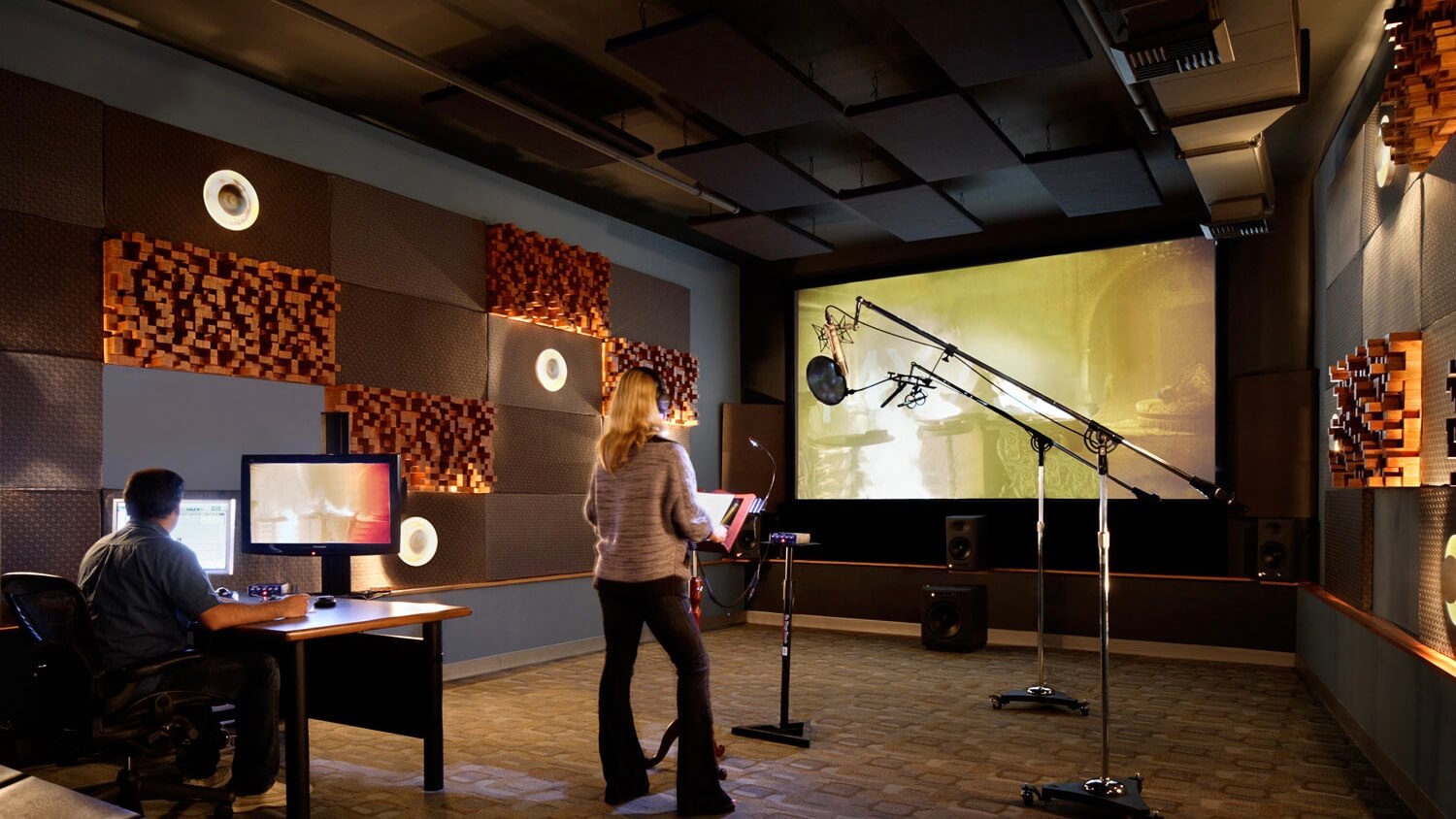
Loop group sessions are typically set up by a loop group supervisor (often working with loop group casting) based on notes from the supervising sound editor and dialogue team. The recording itself is handled on an ADR stage by an ADR mixer and/or ADR recordist, with performance direction most often coming from the loop group supervisor and sometimes additional input from the sound supervisor, director, or producers.
What loop group performers record
Loop group is not one single sound. It is a toolkit. Depending on the scene, the performers might be asked to create:
- Restaurant or bar beds: low, overlapping conversation that never pulls focus from the leads.
- Office and hallway ambience: phones, greetings, small talk, distant arguments.
- School scenes: lunchroom hubbub, classroom murmurs, locker room chatter.
- Stadium and crowd reactions: cheers, groans, chants, waves of response that rise and fall on cue.
- Specific “callouts”: distinct phrases like “Over here!” or “Did you see that?” from an identifiable off-camera voice.
- Period or location texture: background speech shaped to a region, era, social world, or invented culture.
Sometimes loop group is purely nonspecific walla. Other times, it includes very precise, story-driven beats, like an ER triage nurse calling a name, an airport gate announcement ripple of reactions, or a courtroom gallery shifting as the verdict lands.
How it gets booked
Loop group is a post-production hire, so it usually comes together once editorial and dialogue work reveal what the scene needs. The booking typically looks like this:
1) The sound team flags what is needed
During dialogue and sound editing, the team identifies places where the track feels empty or where production audio cannot cleanly carry usable background. They decide what kind of crowd bed the scene wants, and what moments need “featured” background lines.
2) A loop group supervisor assembles voices
The supervisor books a small roster of performers, often people with strong vocal control, improv instincts, and the ability to switch age, energy, and social type quickly. This is a niche corner of performance where reliability matters as much as creativity.
3) The session is recorded on an ADR stage
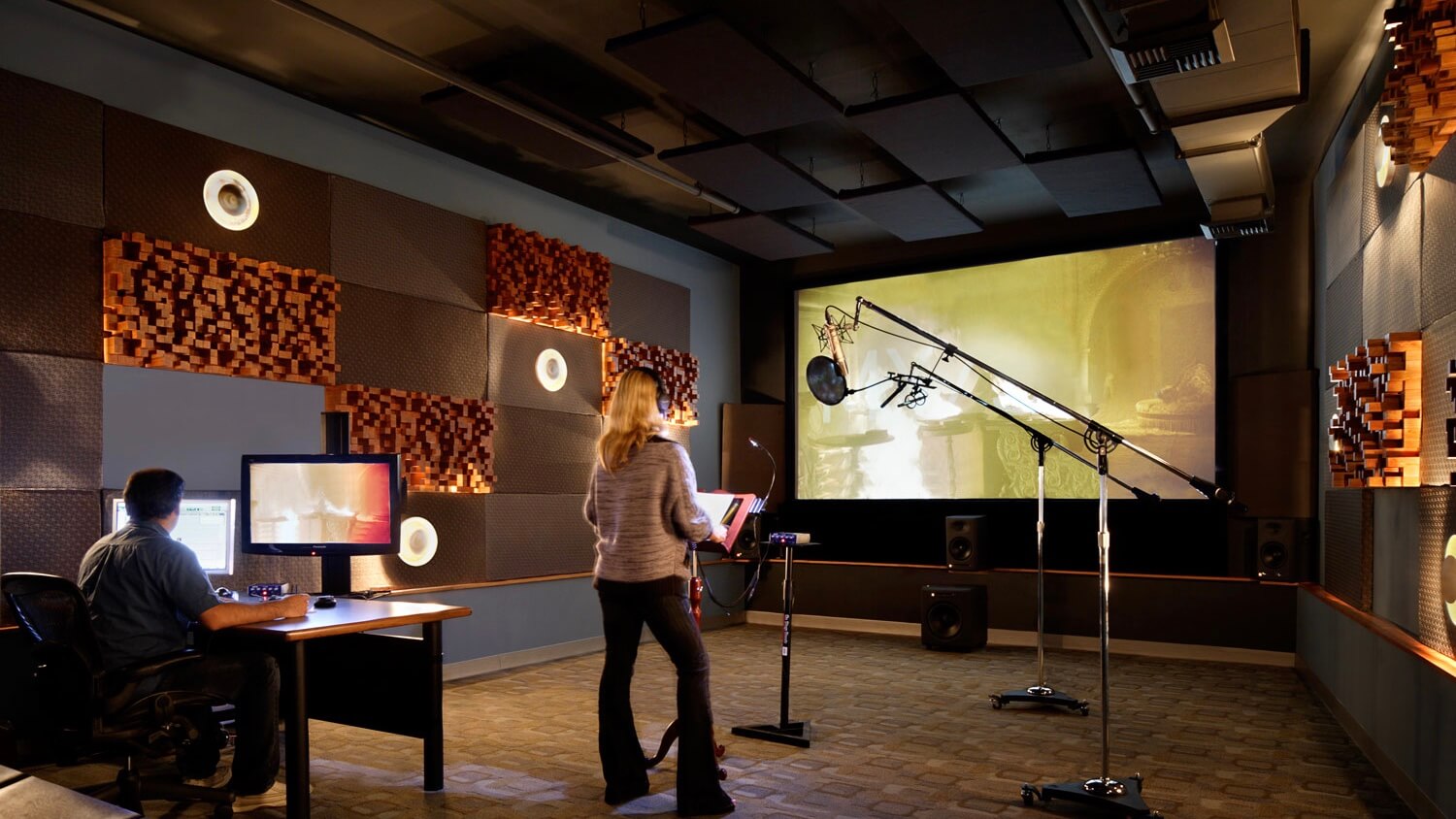
The group comes into a studio, watches the scene on a screen, and records to picture. Cues are run multiple times to dial in density, timing, and tone. A common session might involve a handful of performers building several passes, for example a general “bed,” plus a closer perspective layer, plus a few clean, intelligible callouts that editorial can place like little story pins.
4) Recordings are edited and mixed into the world
The loop tracks are cut, layered, and shaped so they sit behind the main dialogue, sounding like they belong to the physical space. A good loop group should be felt, not noticed.
What they have to match
Loop group is acting, but it is also precision craft. Performers are often asked to match several elements at once:
- Timing to picture: reactions hit on exact moments, like a laugh cresting right after a joke lands, or a crowd hush as a door swings open.
- Perspective and distance: a voice right beside camera sounds different than a voice across a gym.
- Room tone and environment: intimate carpeted rooms, echoing stairwells, open streets, or loud clubs all change how voices should behave.
- Energy and story temperature: a tense hospital waiting room has a different hum than a celebratory wedding reception.
- Era, location, and social world: accents, vocabulary, and rhythm may need to reflect a region, a period setting, or a specific subculture.
- Continuity across cuts: the background should feel steady even as editorial jumps angles and coverage.
One of the trickiest notes loop performers get is “make it real, but do not distract.” That is not a contradiction. It is the job.
Loop group vs extras
This is the confusion I hear most often, especially from people trying to break into background work.
Extras are on camera
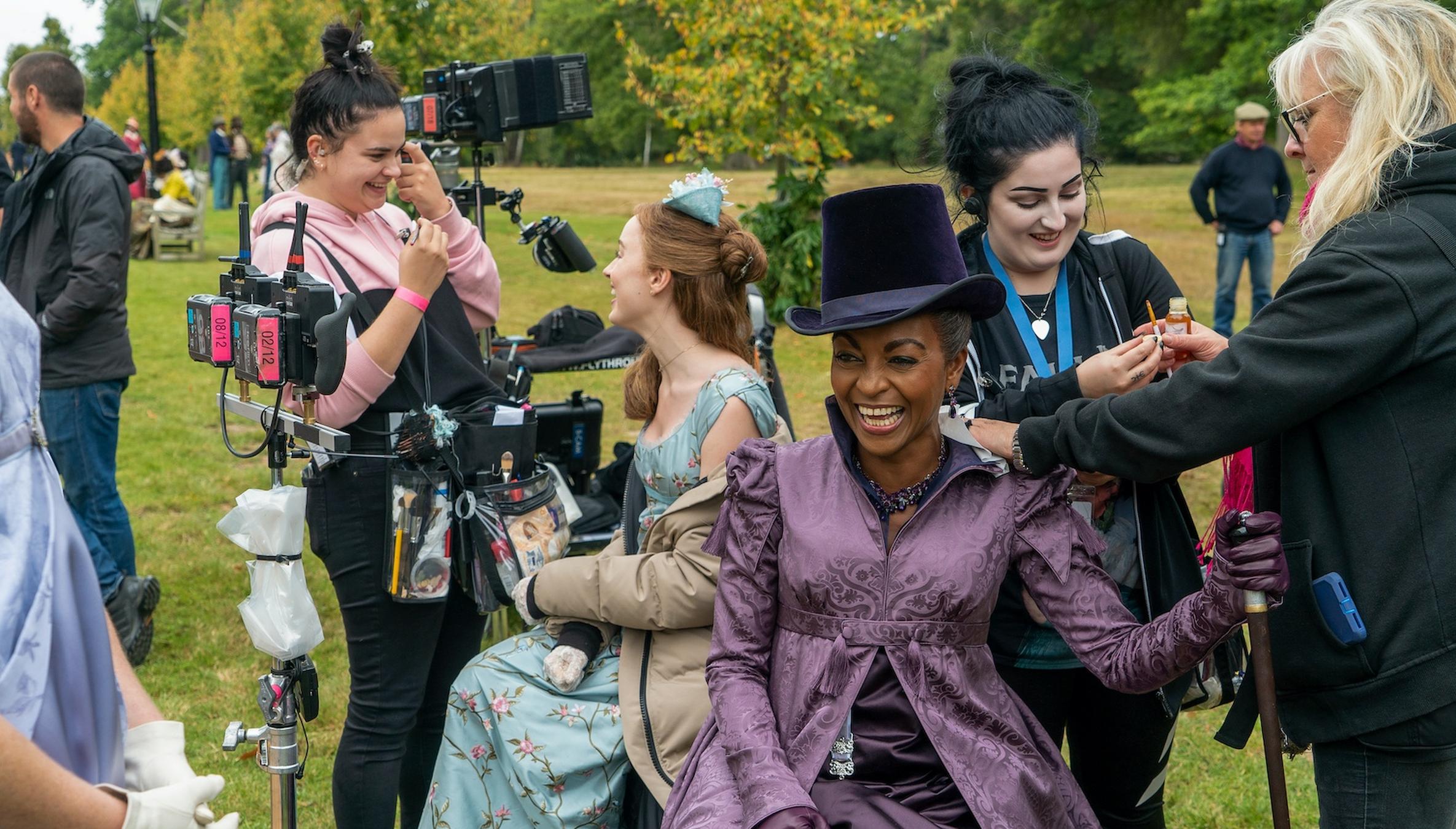
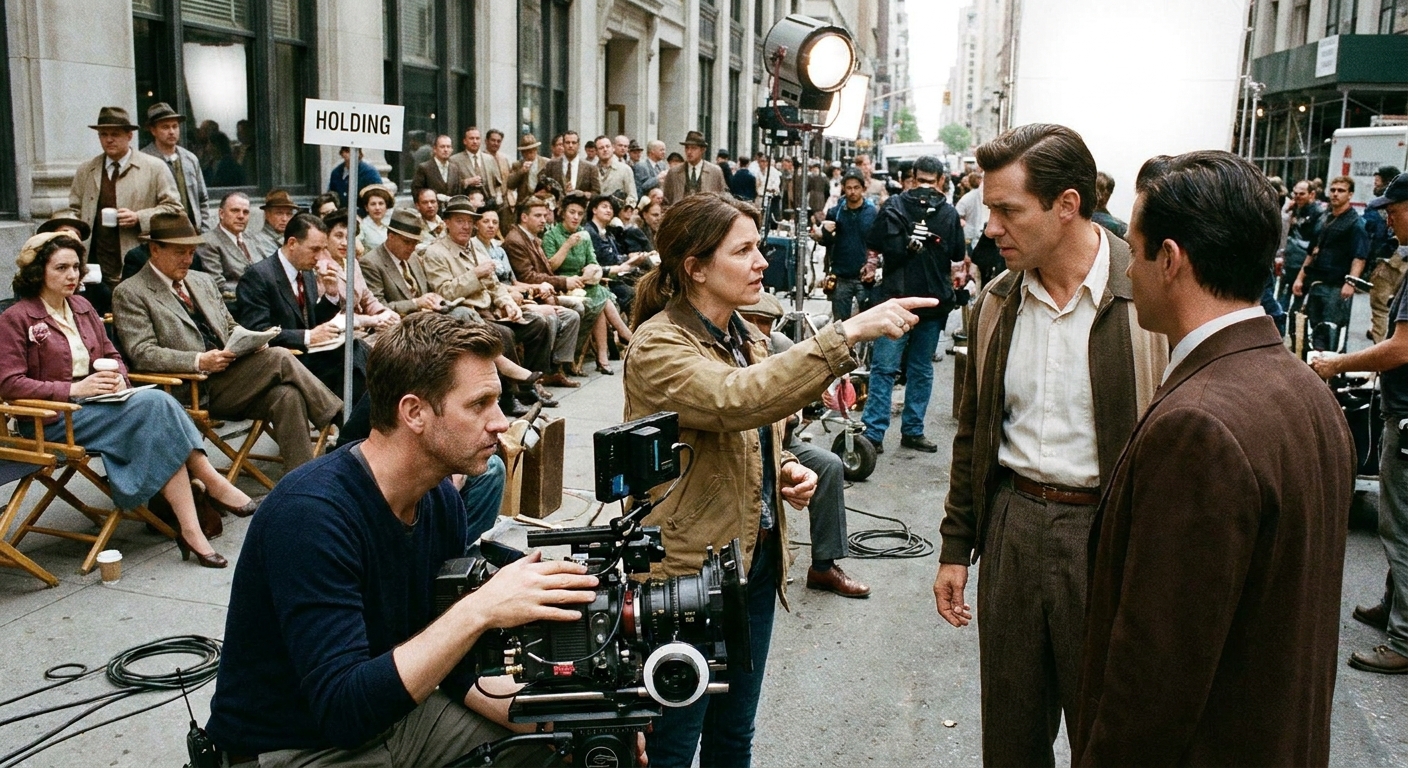
An extra is hired to appear in the frame, physically populating the world. They are part of the set choreography: walking through a lobby, filling seats in a courtroom, dancing at a party, reacting behind the leads.
Extras might mime conversation, but on many sets you are asked to keep it quiet for clean production sound. Even when extras do speak, those voices are not always what ends up in the final mix.
Loop group is off camera
A loop group performer is typically not seen. They are hired for their voice and their ability to create believable crowd behavior that supports the scene. Their work is recorded later, with picture up, specifically to build the sonic environment.
In short: extras fill the frame; loop group fills the air.
Loop group vs ADR
ADR is the umbrella term for recording dialogue in post, with the “A” variously expanded in the industry as Automated Dialogue Replacement and Additional Dialogue Recording. Either way, you are talking about dialogue recorded in a studio to fit picture.
ADR is often an actor redoing their own lines
Classic ADR is the original on-camera actor coming in to recreate a specific line because production sound had an issue, because the line was rewritten, or because the performance needs clarity. The goal is to match mouth movements and the emotional intention of the take.
Loop group is ensemble background
Loop group is generally not about replacing the lead performance. It is about building the crowd world around it. Even when loop group records distinct phrases, those lines are usually from off-camera characters, passersby, or generalized groups.
There is one more nuance: occasionally, a loop group performer may record a small, specific bit that feels like a character. But unless that person is the credited on-camera role replacing their own performance, it still lives in the loop group lane.
Why it matters
Loop group is one of the invisible crafts that protects the illusion. Without it, scenes can feel oddly sterile, like the characters are speaking inside a vacuum. With it, the world gains:
- Scale: a city feels inhabited, a school feels crowded, a venue feels alive.
- Rhythm: the background breathes with the edit and the emotional beats.
- Focus: paradoxically, good background tracks help the audience focus on the main dialogue because the soundscape feels natural.
It is also a storytelling tool. A crowd can sound supportive or threatening. A room can sound safe or unstable. Those choices are part of performance, even when no face is attached.
What it’s like in the room
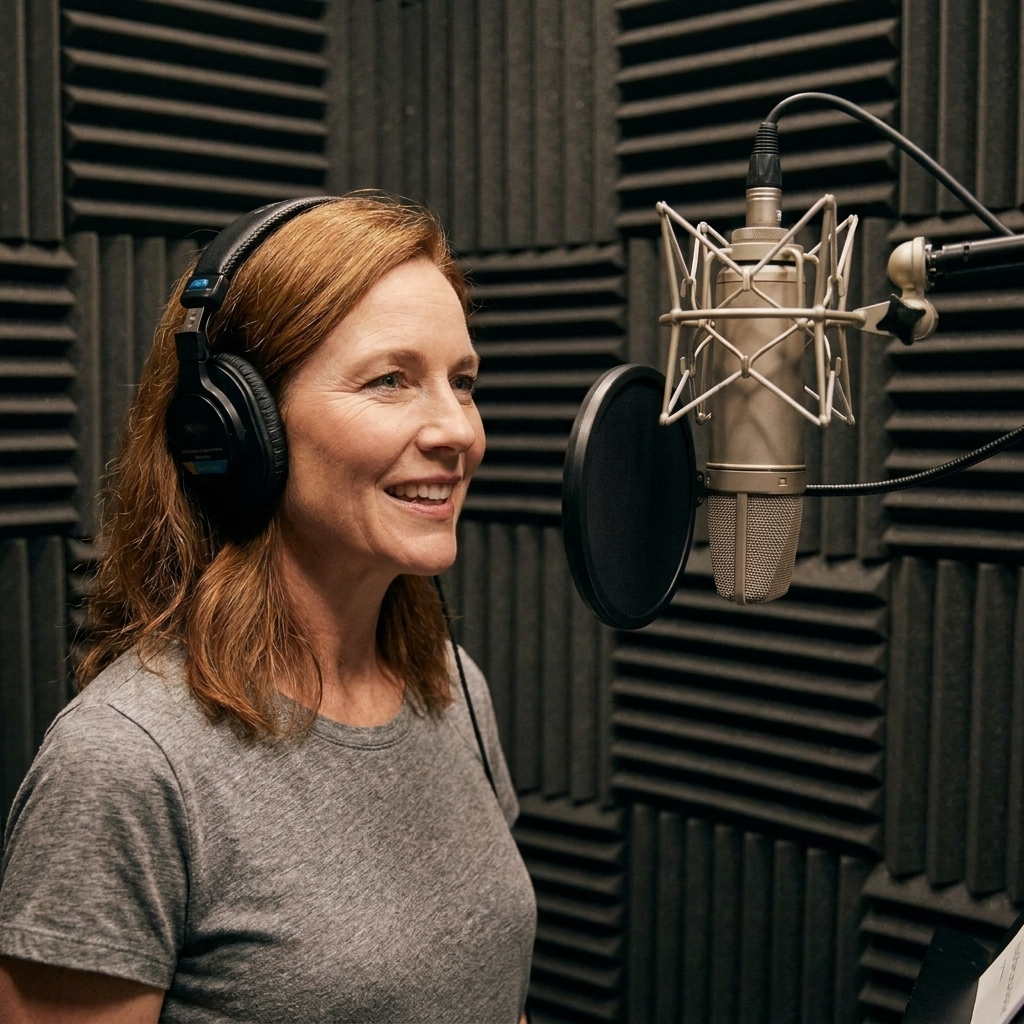
Loop group sessions are a particular kind of fun if you love craft. Performers stand at microphones, watch the scene, and get quick notes like:
- “Give me a brunch crowd, upscale, relaxed, low stakes.”
- “Now it’s the same room, but the energy turns. Someone recognizes the guy.”
- “We need an airport gate simmer, then a spike when the flight is delayed.”
- “Two voices close, everyone else far.”
Then they do it again, and again, with slight changes. The goal is a track that feels organic, not looped or repetitive, even though it is literally called looping.
Quick FAQ
Is loop group the same as voice acting?
It overlaps. Loop group is voice performance, but it is typically ensemble background work tied tightly to picture and sound design. Traditional voice acting often centers on a named character, scripted lines, and a performance meant to stand in the foreground.
Do loop group performers improvise?
Often, yes. They may be given a scenario, relationships, and an energy level, then improvise natural fragments that will not distract. For specific callouts, they may be given exact lines.
Can loop group include foreign languages?
Absolutely. Productions may need authentic language texture for a location, or a multilingual environment like an airport, school, or city street.
Why not just record real crowds?
Sometimes productions do, especially for large events. But in many narrative scenes, recorded crowds are too messy, too inconsistent, or do not match the emotional beats and camera perspective. Loop group gives post-production control.
The takeaway
A loop group is a small, skilled team of performers hired to record crowd walla and background chatter in a studio, typically once editorial is largely set, often near picture lock. They are booked through post-production, asked to match timing, perspective, and story tone, and their work is mixed in to make scenes feel lived-in.
They are not on-set extras, and they are not the on-camera actor redoing their own lines in ADR. They are something quieter and, in a way, more magical: the people who give a silent frame its pulse.