Lights down. Curtain up.
If you’ve ever heard someone pitch a movie in a single breath, you have basically heard a logline. A logline is the compact, one- or two-sentence statement that captures a film or episode’s premise: who the story is about, what they want, what is in their way, and why it is compelling.

What a logline is
A logline is a short summary of a story’s core, usually written as one sentence (sometimes two). It is used in film and television to communicate the central idea quickly, in a way that makes someone want to hear more.
Think of it like the moment you lean to the person next to you in the theater and whisper, “It’s about…” You are not recapping every scene. You are naming the engine of the story.
What a logline usually includes
There is no single universal format, but most effective loglines answer a few key questions without sounding like a checklist.
- The protagonist: who we are following (often described with a hook, not a full biography).
- The inciting situation: what changes, goes wrong, or kicks the story into motion.
- The goal: what the protagonist must do or achieve.
- The stakes: what happens if they fail.
- The obstacle or antagonist force: what stands in the way.
- The unique hook: the special angle, irony, world, or twist that makes the premise feel like this story and not any story.
A good logline can also hint at genre and tone. A horror logline reads differently than a rom-com logline, even if both involve “a couple” and “a house.”
Logline vs. tagline vs. synopsis
These get mixed up constantly, so let’s sort them neatly.
Logline
Purpose: sell the premise and communicate the story engine.
Length: typically 1 sentence, sometimes 2.
Reads like: a clear statement of protagonist, goal, obstacle, stakes.
Tagline
Purpose: marketing. It is designed for posters and trailers.
Length: a punchy phrase.
Reads like: a slogan, not a plot description.
Synopsis
Purpose: explain what happens, sometimes including the ending.
Length: varies from a paragraph to a page or more.
Reads like: a short narrative summary.
Logline vs. treatment
A logline is the seed. A treatment is the story told in broader strokes.
Where a logline is one or two sentences, a treatment can be anywhere from a page or two to several pages (or more), depending on the context. It walks through the plot in prose. Depending on the project and who is asking for it, a treatment may include:
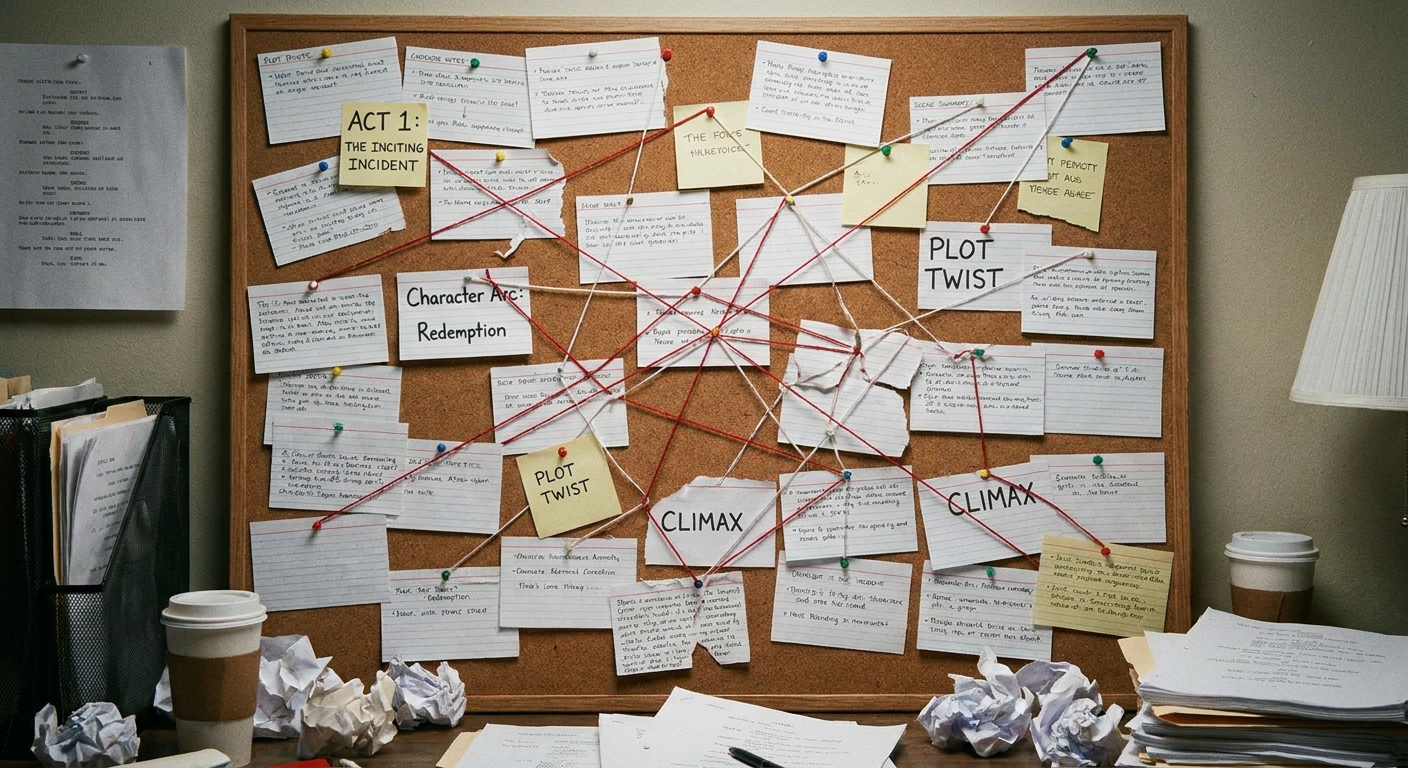
- major story beats and turning points
- key characters and relationships
- the arc of the protagonist
- tone references and world details
- sometimes a scene-by-scene outline, but written as prose
If a logline is what you say in the elevator, a treatment is what you hand over once someone says, “Okay, tell me more.”
Logline vs. spec script
A spec script is the full screenplay written to professional formatting standards, with scenes, dialogue, action lines, and structure on the page. “Spec” often means it is written on speculation (not commissioned), and in TV it can also mean a sample episode. Either way, it is meant to be read like a blueprint for the finished film or episode.
In other words:
- Logline: premise in a sentence or two.
- Treatment: narrative overview, usually multiple pages.
- Spec script: the complete screenplay draft.
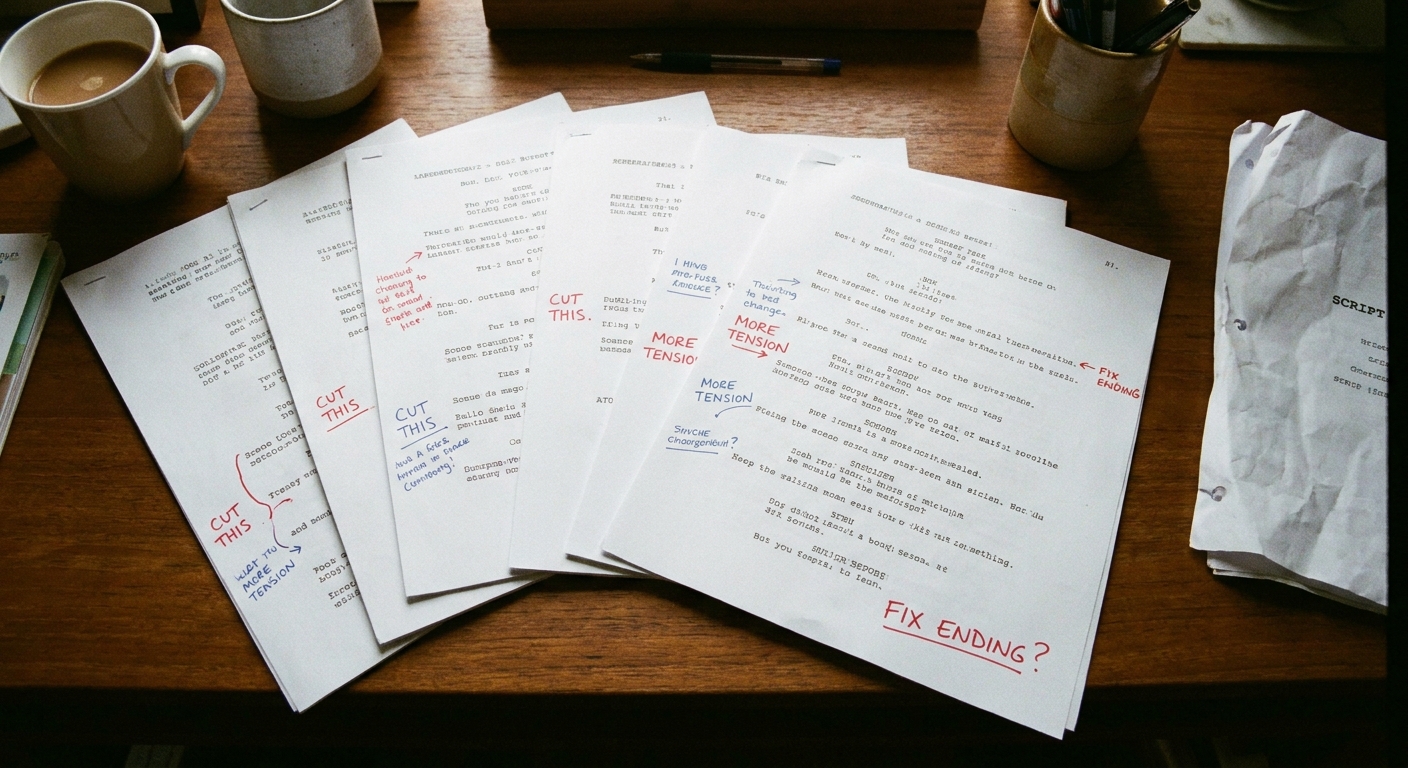
A logline can exist before you write anything else. A spec script is what that idea looks like when you commit it to full scenes and pages (and then rewrite it, because of course you will).
Why loglines matter
Loglines are not just an industry hoop. They are a practical tool.
- They clarify your story. If you cannot state the premise cleanly, the draft may be drifting.
- They help you pitch. Producers, reps, and collaborators often want the quick version first.
- They keep tone and stakes front and center. A strong logline reminds you what the story is actually about.
- They make projects easier to share. When you talk about your script, people need a sentence they can repeat accurately.
Examples of loglines (made-up)
Because loglines are so short, small choices matter. Here are a few fictional examples to show how they work.
- Thriller: When a disgraced paramedic witnesses a hit-and-run tied to a powerful family, she must gather proof before the city’s corrupt emergency system silences her for good.
- Comedy: A chronically unlucky wedding planner has one week to save the biggest event of her career, while hiding that she accidentally lost the rings.
- Sci-fi: After a mining crew wakes up years off course, their rookie pilot must outthink an onboard AI that has decided humans are the mission’s greatest threat.
- TV episode (procedural flavor): When a beloved local chef is poisoned on live TV, a skeptical detective and an ambitious rookie race to identify the culprit before the restaurant’s reopening becomes a second crime scene.
Notice the pattern: protagonist plus problem, goal, obstacle, and consequences. Even in comedy, the stakes are real to the character.
Weak vs. strong (quick fixes)
Sometimes it helps to see the same idea sharpened. Here are two fast “before and after” upgrades.
Example 1
Weak: A man deals with grief after losing someone important.
Stronger: After his estranged brother’s death, a buttoned-up accountant must pose as him for one weekend to save their family business, only to discover the lie is the first thing that has made him feel alive in years.
Example 2
Weak: A group of friends goes on a trip that changes everything.
Stronger: When their rideshare van breaks down in a closed desert town, four lifelong friends must outsmart a smiling local sheriff who will not let anyone leave, before their reunion turns into an evidence file.
How to write a strong logline
Start with the change
What knocks life off balance? The inciting incident helps the logline move, instead of just describing a setting.
Use active language
“Must” and “struggles to” are common for a reason. They signal pursuit and conflict.
Be specific, not precious
Replace vague phrases like “learns about love” with concrete obstacles and choices. A logline should feel like a story, not a theme statement.
Hint at what makes it different
If your premise has a twist, irony, or unusual world, let it show. That is often what makes someone lean in.
Keep it readable
One sentence is ideal. Two is fine if the second sentence sharpens stakes or clarifies the hook. If it turns into a paragraph, you are drifting toward synopsis.
Common logline mistakes
- Too many names and subplots. A logline is not a cast list.
- No goal. “A woman navigates life in New York” is a vibe, not a story engine.
- No stakes. If failure does not cost anything, urgency disappears.
- Only backstory. “After a tough childhood…” is not the same as “Now they must…”
- Genre confusion. If it reads like a drama but you are writing a farce, revisit your word choices.
Quick FAQ
How long should a logline be?
Many land in the 15 to 35 word range, and plenty run longer or shorter depending on context. The best rule is clarity over word count. If you need semicolons and parentheses to make it work, it is probably too long.
Do TV shows use loglines too?
Yes. You will see loglines for series, seasons, and individual episodes. Episode loglines often highlight the case, crisis, or central choice for that hour, while series loglines capture the ongoing engine.
What is the difference between a series logline and a pilot logline?
A series logline sells the repeating engine: who the show follows week to week, what kind of trouble they face, and why the setup can generate episodes. A pilot logline is more like an episode logline. It spotlights the pilot’s main problem while still hinting at the larger series premise.
Should a logline reveal the ending?
Usually, no. A logline is designed to set up the central conflict and stakes, not summarize every twist. In some professional contexts, materials that follow the logline might reveal more, but the logline itself typically focuses on the premise.
Can a logline be a question?
It can, but statements are usually stronger. Questions can feel like a teaser rather than a premise. If you use a question, make sure the protagonist, goal, and stakes are still clear.
The takeaway
A logline is the one or two sentence heartbeat of a film or episode. It is shorter than a treatment and far smaller than a spec script, but it can do a surprising amount of heavy lifting. When it works, it makes your story easy to pitch, easy to remember, and hard to ignore.
And if you catch me in the front row with my bow tie straightened, yes, I will absolutely ask: “What’s the logline?”