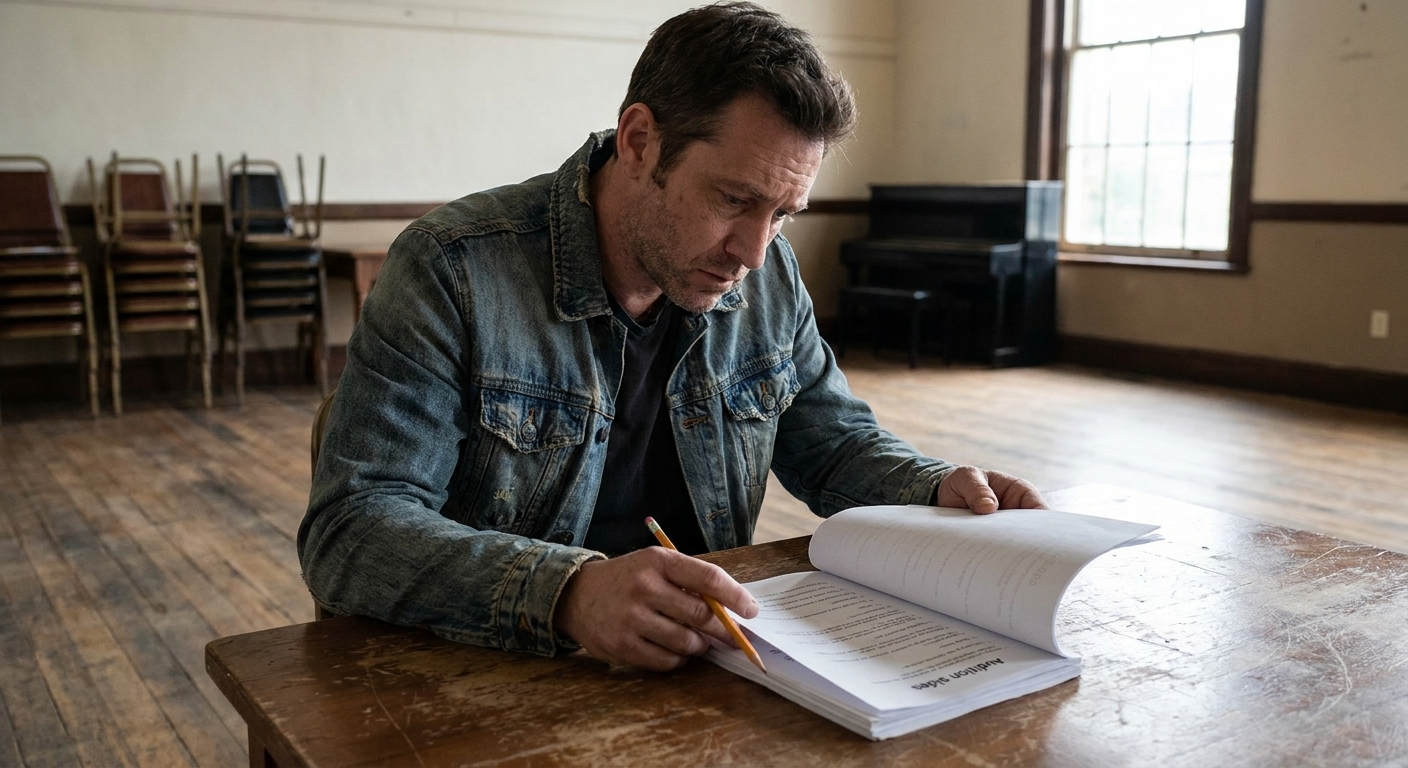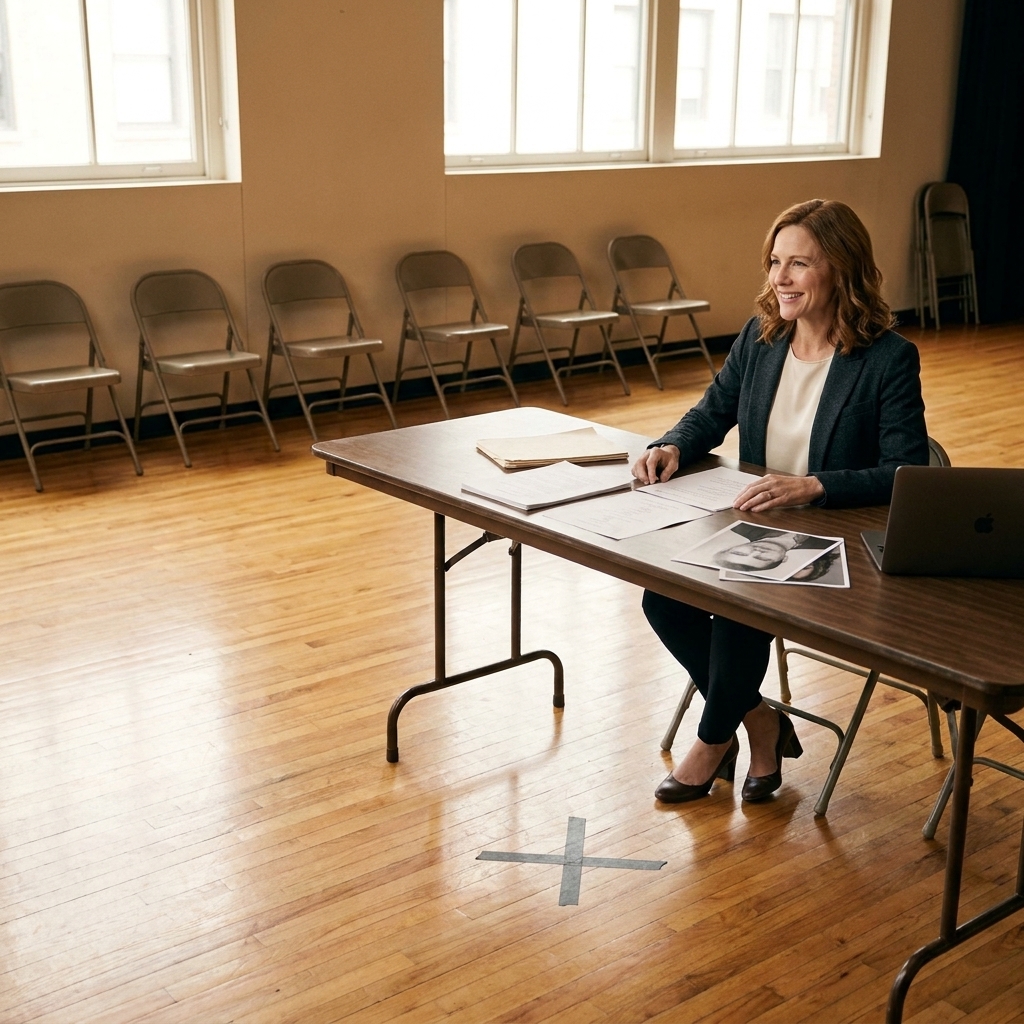
The first audition is the handshake. The callback is the conversation that follows.
A callback audition is a second audition that happens after an initial round of auditions. It means the creative team saw something they want to see again, usually with more context and more specificity. Callbacks are used to narrow the field, test combinations, and make final decisions about who fits a role in a particular production, not just who can perform well in general.

What a callback is, in plain terms
In round one, the team is often answering big questions: Can you handle the material? Do you have the skill set? Do you seem right for the world of the show, film, or commercial?
In a callback, the questions get sharper:
- Are you right for this specific role as the team now imagines it?
- Can you take direction and adjust quickly?
- How do you play opposite other people they are considering?
- Do you fit the production’s needs, like range, tone, movement style, or ensemble balance?
Most importantly, a callback is not a reward for a “perfect” first audition. It is a sign you are still in the running, and the team is making more detailed choices.
Who’s in the room
One reason callbacks feel more intense is that the room often gets bigger. Your first audition might be with just a casting director or an associate. At callbacks, you are more likely to meet the people who will actually shape the project day to day. Depending on the production, some or all of the following may be present.
Theater callbacks
You might see:
- Director, if they were not at the initial auditions
- Music director for musicals, to hear how you work musically and how you take tempo and phrasing adjustments
- Choreographer or dance captain, especially if movement is central to the show
- Stage manager, sometimes running the room and tracking the day’s flow, and in some settings observing consistency and practical logistics
- Producers or artistic staff, particularly for larger houses or commercial runs
- Casting director, still steering the process
Film and TV callbacks
Film and TV vary widely by project and budget, but callbacks commonly include:
- Director, especially if the first round was casting-led
- Producers or executive producers
- Network or studio representatives for projects with multiple stakeholders
- Writer or showrunner in TV, when tone and character language are under a microscope
- Casting team, coordinating reads, chemistry pairings, and availability questions

If you are thinking, “That is a lot of opinions,” you are not wrong. Part of what a callback reveals is how you land across multiple sets of eyes, each listening for something slightly different.
How the material changes
The first audition is often designed for efficiency. The team needs to see a lot of people in a short time, so the material is usually short and standardized.
Callbacks tend to be more tailored and more revealing. You may be asked to do:
- Sides that are longer, with more turns and more relationship detail
- Specific scenes that clarify the character’s function in the story
- New adjustments from the director to see how you pivot
- Partnered reads with another actor, either a fellow finalist or someone already attached
- Group work in theater, such as ensemble singing or movement calls
One of the biggest differences is that the team often stops looking for whether you can do the role and starts exploring how you do it. Two actors can both be “right,” but in different directions. Callbacks help the room decide which direction best matches the production’s overall concept.
How decisions differ
At an initial audition, the decision is typically: advance or be cut. At callbacks, the decision becomes: which version of the show are we building, and who makes the best company with the rest of the cast?
This is where choices can get surprisingly practical, even when everyone is focused on craft.
What the team is weighing
- Chemistry: How you connect with potential scene partners
- Story clarity: Whether your performance makes the character’s function legible
- Range and contrast: How your energy balances the ensemble
- Directability: How you respond to notes, pacing changes, or tonal shifts
- Consistency: Whether the work holds up over multiple takes or repeated reads
- Logistics: Scheduling, availability, union rules, or required skills for the production
None of this means the process is cold. It just means that by callbacks, casting is not only about the actor. It is about the whole machine of a production and how your work fits into it.
What happens in a callback
Every room has its own rhythm, but callbacks often include a mix of performance and conversation.
You might:
- Read or perform the requested material
- Get an adjustment and do it again
- Read opposite multiple partners
- Be asked brief questions about your background, training, or availability
- Wait while the team compares combinations
That waiting can be the hardest part. From the outside it can look like nothing is happening. Inside the room, it is usually a fast-moving puzzle of pairing, tone, and story math, like who reads older or younger, who balances the lead’s energy, or which two people make the relationship instantly clear.

How to prep and behave
Callbacks move quickly. The more you can show up ready to work, the more room you give yourself to play.
What to bring
- Whatever they requested, which might include headshot and resume, your book, or specific sheet music
- Water and a small snack, especially if you might be sitting for a while
- Dance shoes or appropriate footwear if movement is in play
- Pencil for quick notes and adjustments
How to handle adjustments
- Do not apologize for what you think you did wrong. Just take the note.
- Apply it plainly. Big, showy changes are not always the goal. Specific is the goal.
- If you do not understand, ask one clean clarifying question. Then go.
Video callbacks and self tapes
If the callback is remote, treat it like a higher-stakes version of your first tape. Prioritize clean sound, steady framing, and a reader who can give you something real to play off of. And if the sides are marked confidential, keep them that way.
Callback vs. screen test vs. chemistry read
People often use these terms loosely, especially outside the industry. Here is the cleanest way to think about it, with one caveat: terminology can vary by market and project.
- Callback: A second round to narrow choices, often with more involved material and more decision-makers present.
- Chemistry read: A focused callback designed to test how two or more actors play together, often for romantic leads, duos, or key partnerships.
- Screen test: Often filmed and more formal, used when a project needs to see how you read on camera. On some film and TV projects, a “test” can also mean a network or studio test with added stakeholders and tighter rules.
In practice, the line between these can blur. What matters is the goal: the deeper the process goes, the more the team is testing fit, not just talent.
Does a callback mean you got the part?
A callback means you are being seriously considered. It does not guarantee you will be cast.
I have watched callback lists that were tiny and callback lists that were sprawling. I have also seen performers give a beautiful callback and still lose the role because the production needed a different contrast, a different age range, or a different pairing. That is not consolation. It is the reality of a collaborative art form that is also, unavoidably, a logistics-heavy business.
What a callback reliably signals is this: your work made an impression, and the team wants more information before they commit.
FAQ
How soon after an audition do callbacks happen?
It varies. Some projects call people back within days, especially when schedules are tight. Others take weeks due to creative meetings, funding, availability of key decision-makers, or the need to coordinate partner reads.
Are callbacks always in person?
No. Some callbacks happen over video, especially for film, TV, and commercials, or when teams are in different cities. The purpose is the same: a second look with higher stakes.
Can you be called back for more than one role?
Yes. Especially in theater, a team might call you back for multiple tracks or ask you to read different scenes to see where you land best in the ensemble.
What does it mean if you do not get a callback?
It usually means the team has enough information to move forward in another direction. It is not necessarily a referendum on your talent. It can be as specific as height matchups, vocal blend, or a tonal choice for the production.
Is a callback the same as a table read?
No. A callback is part of casting, before roles are finalized. A table read typically happens once a cast is selected, or very close to final, and it serves a different purpose: getting everyone on the same page about story, tone, and pacing.