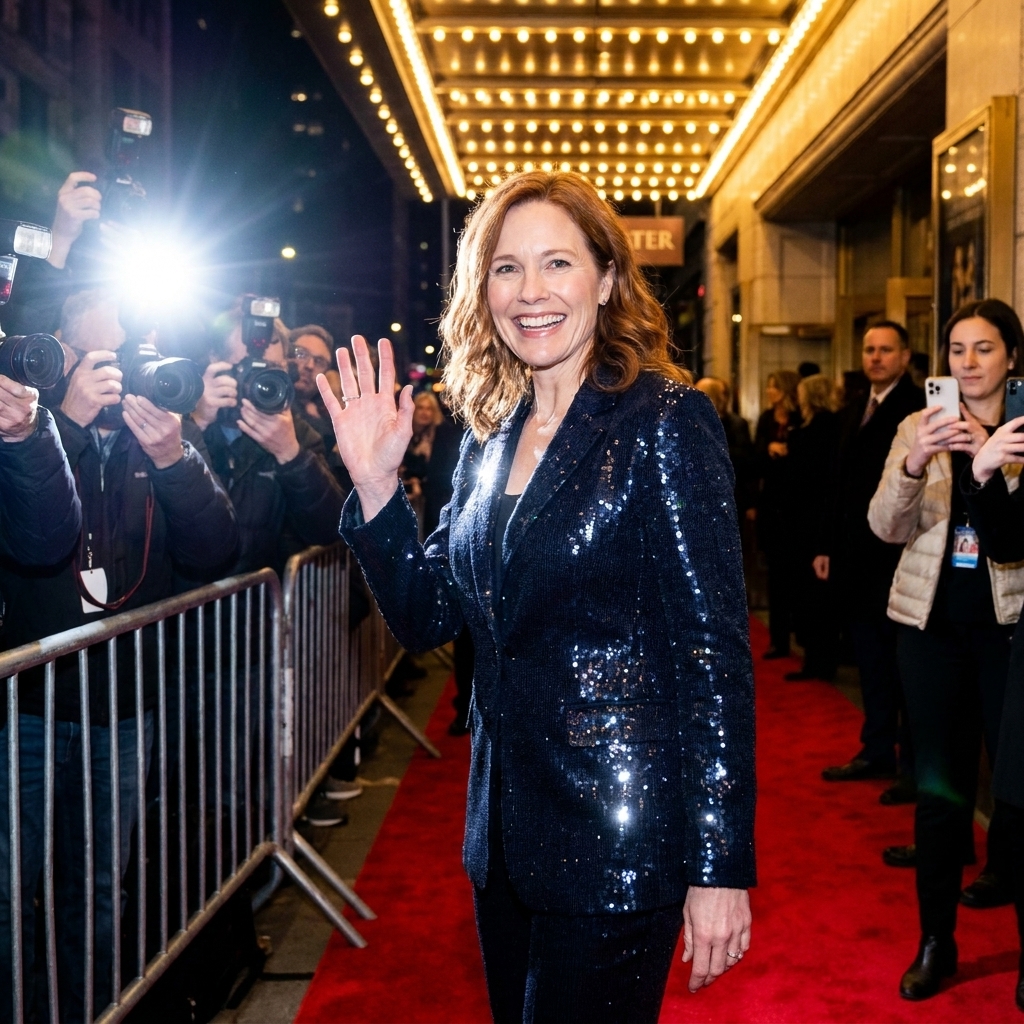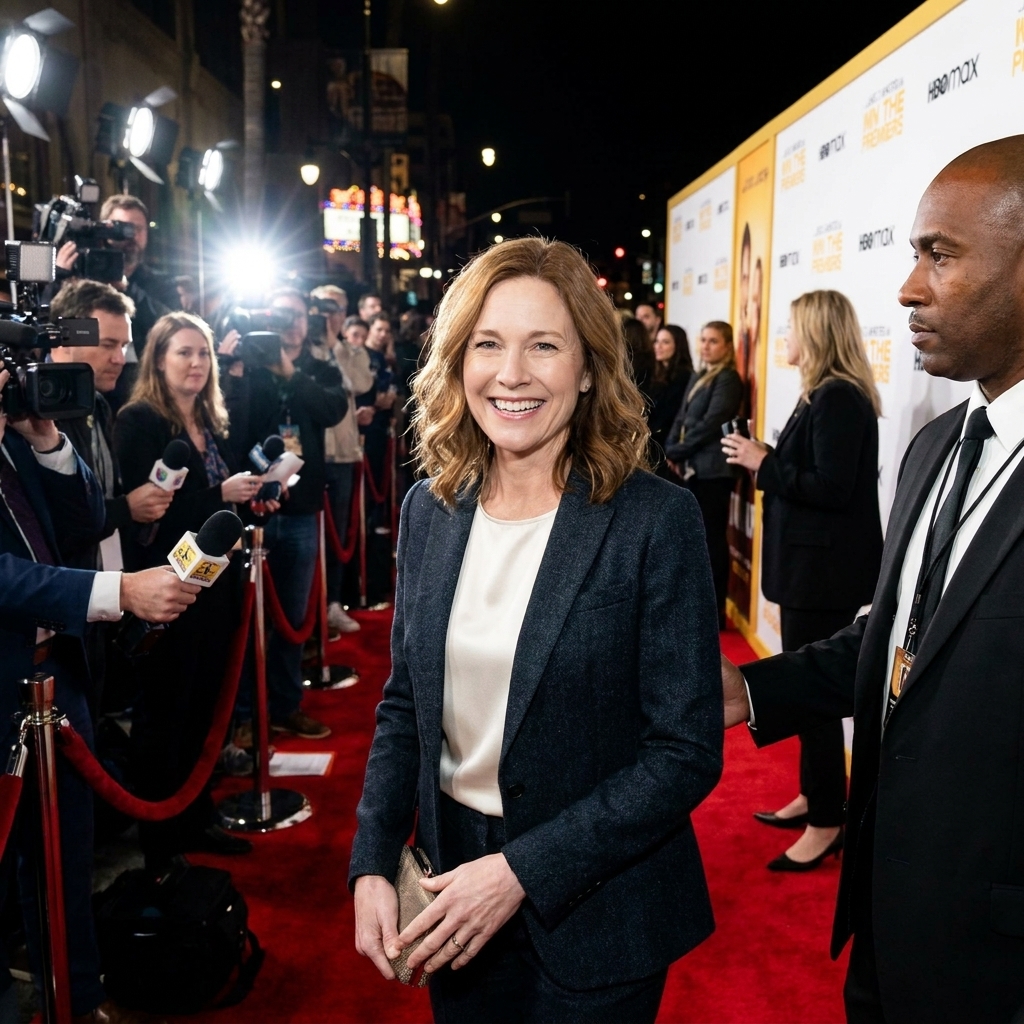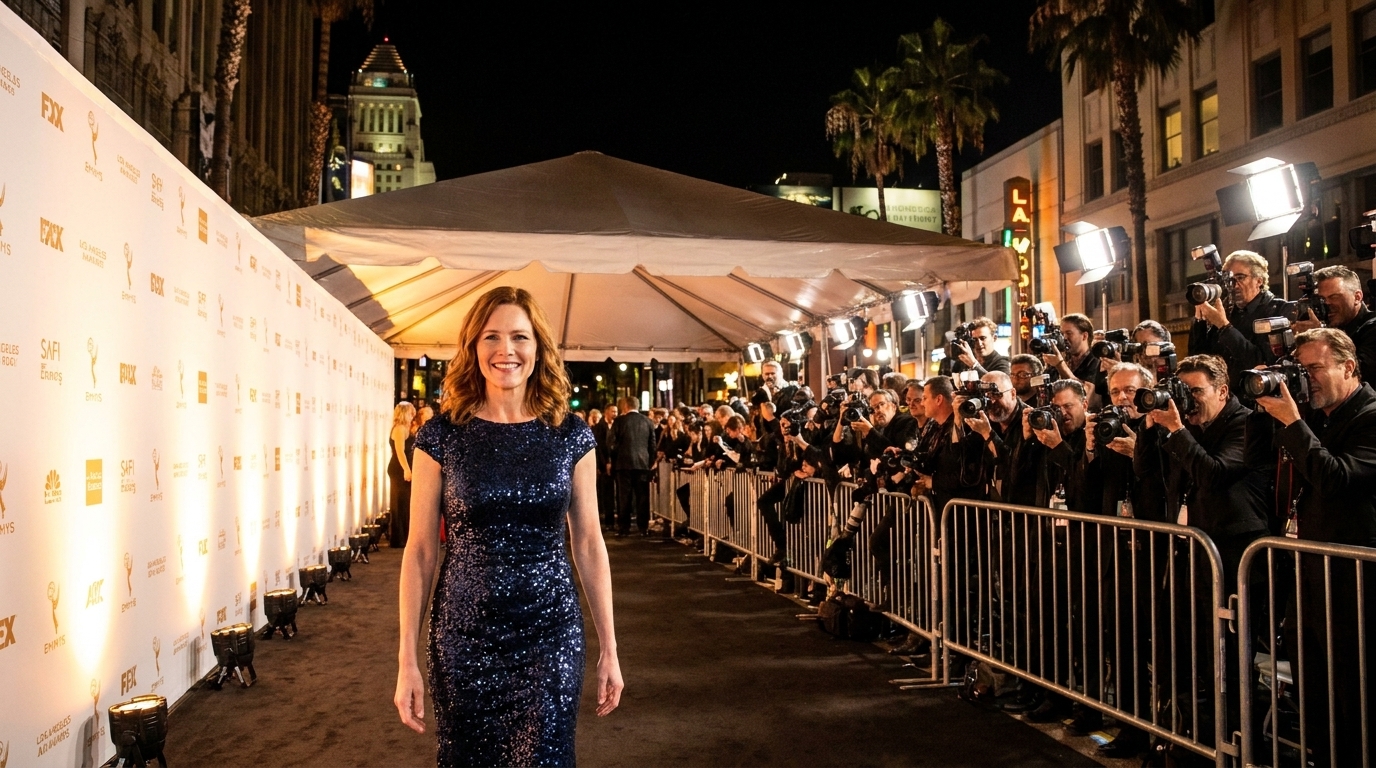
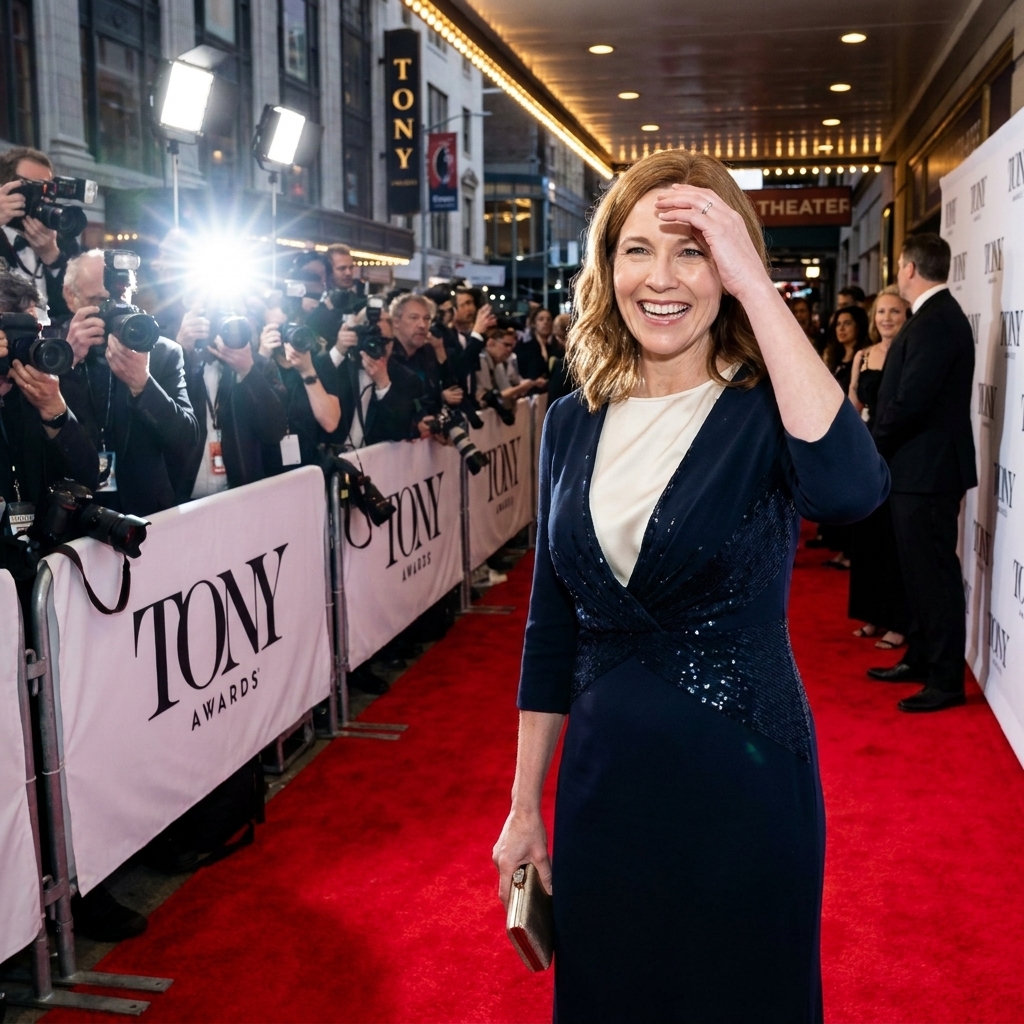
Theater people love a transformation. Give us a dimmer switch, a quick-change, a perfectly timed entrance. So it makes sense that the red carpet, that little pre-show corridor of photographers and flashing bulbs, has become its own kind of performance at the Tony Awards and the Olivier Awards. If the ceremony is the finale, the carpet is the warm-up where the cast, creatives, and presenters all agree to one shared rule: tell a story before you ever touch a microphone.
What makes stage-awards fashion so addictive is that it is rarely just about being pretty. The best looks feel like character work. They nod to a production’s palette, honor the labor of designers and dressers, and occasionally make room for a little theatrical mischief. These are the moments I still think about, chosen because they made the carpet feel like an extension of the night’s work, not a detour from it.
From custom to press
In earlier decades of major stage awards, red carpet fashion often followed the rules of the room: formal, respectful, and more interested in the work than in the spectacle around it. Not always, and not without exceptions, but the ecosystem was smaller. There were typically fewer live cameras, fewer outlets filing instant takes, and far less pressure for a look to travel beyond the theater district.
Now the audience is bigger and the news cycle is faster. With larger photo calls, livestream arrivals, and visible designer relationships, what happens on the carpet is built to circulate and stick, moving from a flashbulb to a global feed in minutes. Brand loans, custom commissions, and stylist-driven narratives have become part of the process. So has the publicist’s quiet calculus: what photographs well, what lands in a glance, what can be summarized in a caption without losing the point.
The Olivier Awards evolved in a different key. There is often a distinctly London ease to the carpet, with sharp tailoring, clever color, and the sense that a great coat is as legitimate a star as a sequined gown. The two carpets speak in different accents, but they are in the same conversation: how does theater dress for the camera without losing the intimacy and craft that make it theater?
What changed
- Silhouettes got bolder as arrivals became more camera-forward and social coverage expanded.
- Tailoring became a headline with suits, jumpsuits, and nontraditional formalwear taking up more space on best-dressed lists.
- Meaning moved forward through color symbolism, homage dressing, and accessories that reference a role or show.
One more practical note, because theater people live in the practical. Stage-awards nights can be long, with press lines, backstage traffic, and after-parties that start when your feet are already negotiating with you. Comfort and mobility are not the enemy of glamour here. They shape it. A look that breathes, moves, and survives the schedule is its own kind of craft.
Tony standouts
The Tonys are Broadway’s biggest night, but the carpet has increasingly become Broadway’s biggest close-up. The most unforgettable appearances are the ones that look like they were conceived with the same intention as a first act finale. And when the maker is clearly credited, the look gains another layer. You can see the hand behind the illusion, and you can appreciate the craft as craft, not just sparkle.
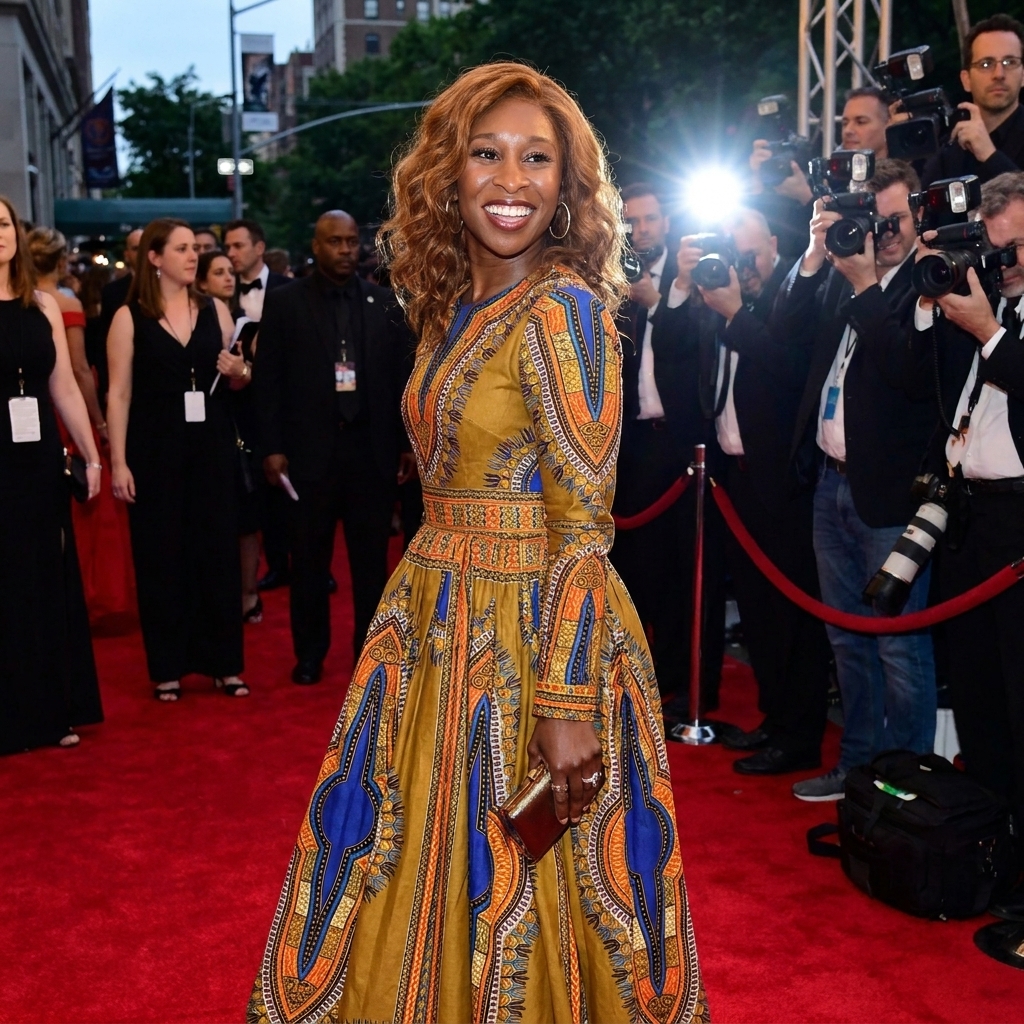
Cynthia Erivo: print and power
In 2016, during The Color Purple’s awards-season roar, Cynthia Erivo arrived in a bold patterned look that refused to blur under flash. The silhouette was structured and floor-length, with a neckline that frames the face instead of competing with it. The print did the loud work, and her posture did the quiet work, shoulders back, chin lifted, like she was already on the mark.
It hit like a Broadway rule: clarity from the back row, even when the back row is a camera lens.
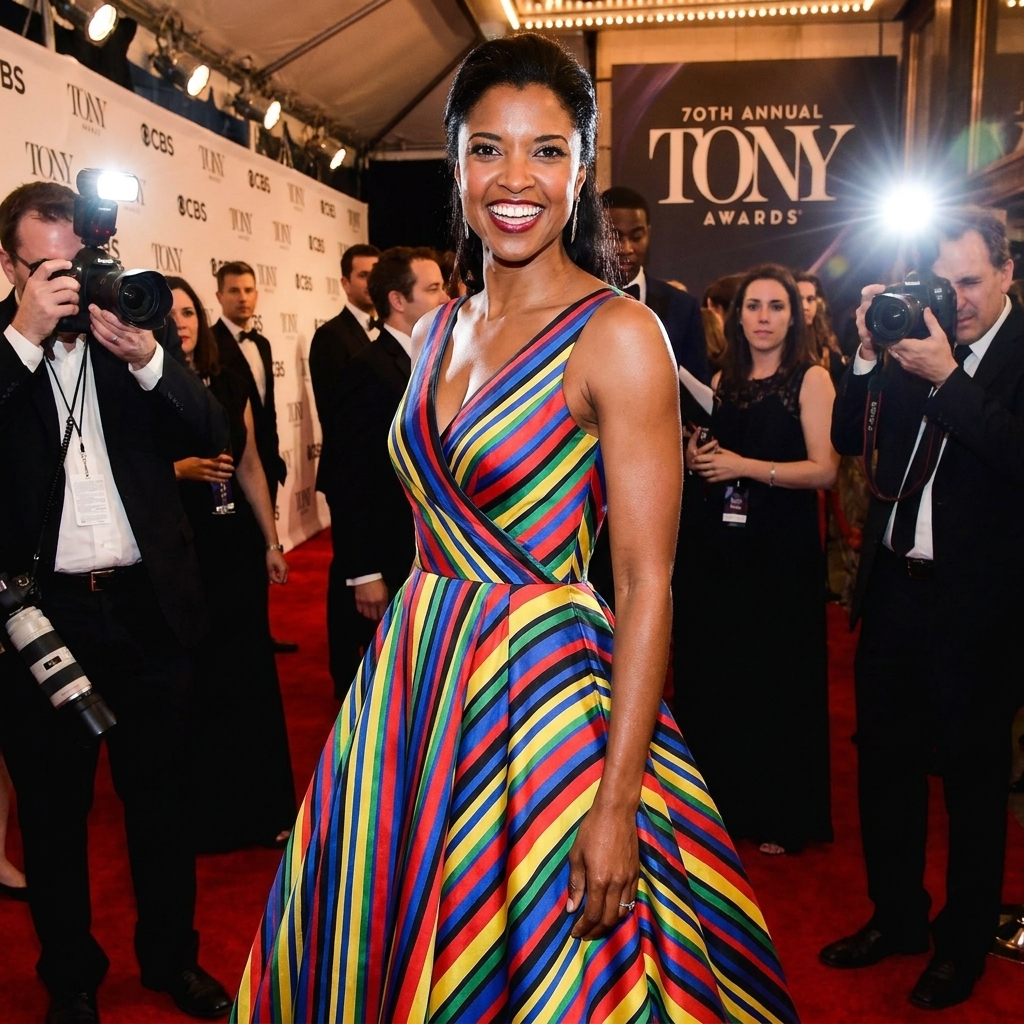
Renée Elise Goldsberry: stripes in motion
At the 2016 Tonys, Renée Elise Goldsberry wore a bright, multicolored striped gown that stayed crisp and legible under flash, which is harder than it sounds on a carpet that loves to flatten detail. The point is what the dress did: it held its color, held its line, and never swallowed her.
What made it stick was how it moved. Color on a red carpet can turn static if the cut is cautious. This one felt built to walk, turn, and hit the next mark without losing its energy, like she still had eight counts left in her.
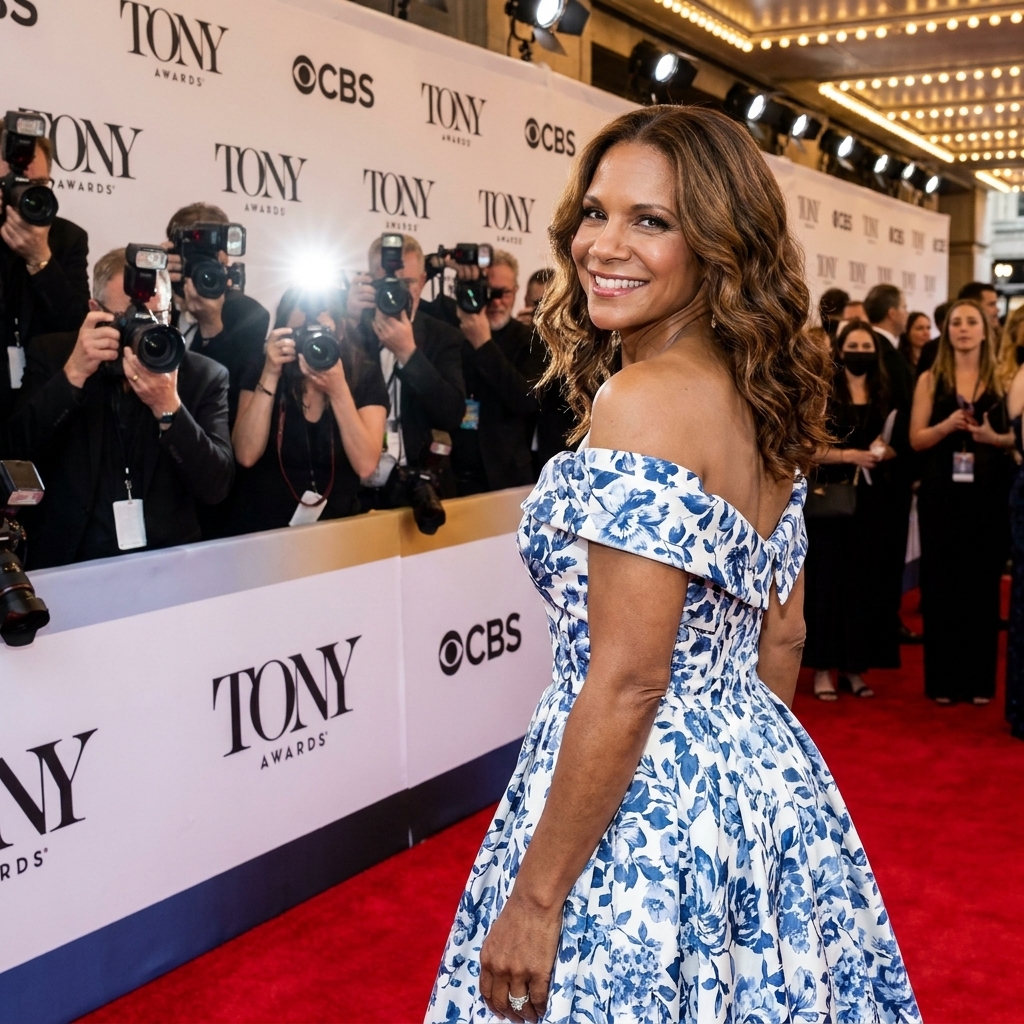
Audra McDonald: blue florals
Audra McDonald on a Tony carpet is practically its own masterclass in presence. In 2014, she wore a blue-and-white floral gown that balanced pattern with restraint, letting the print do the lighting work while the silhouette did what great stage costuming does: frame the performer first.
The moment still holds because it never begged for attention. It let her take it, and she did what she always does: made stillness feel like choreography.
Billy Porter: curtain-call drama
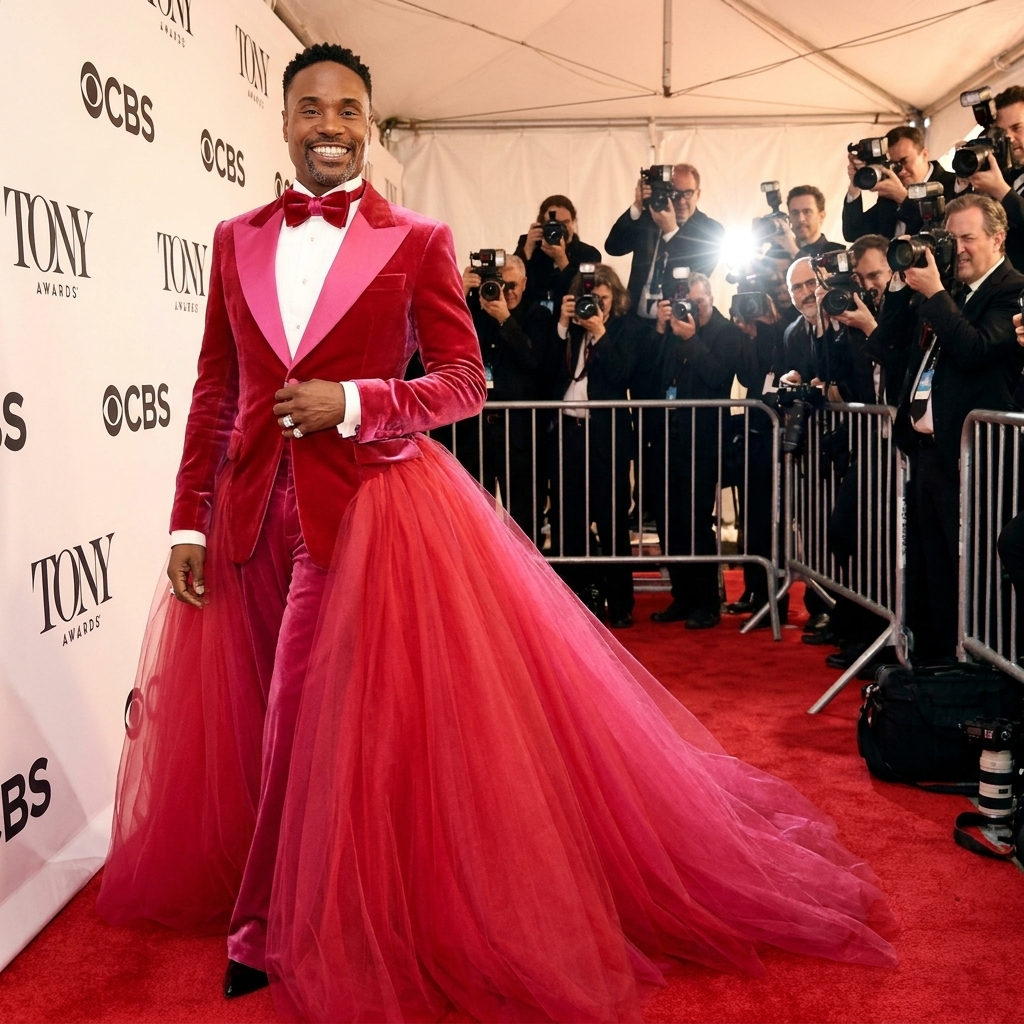
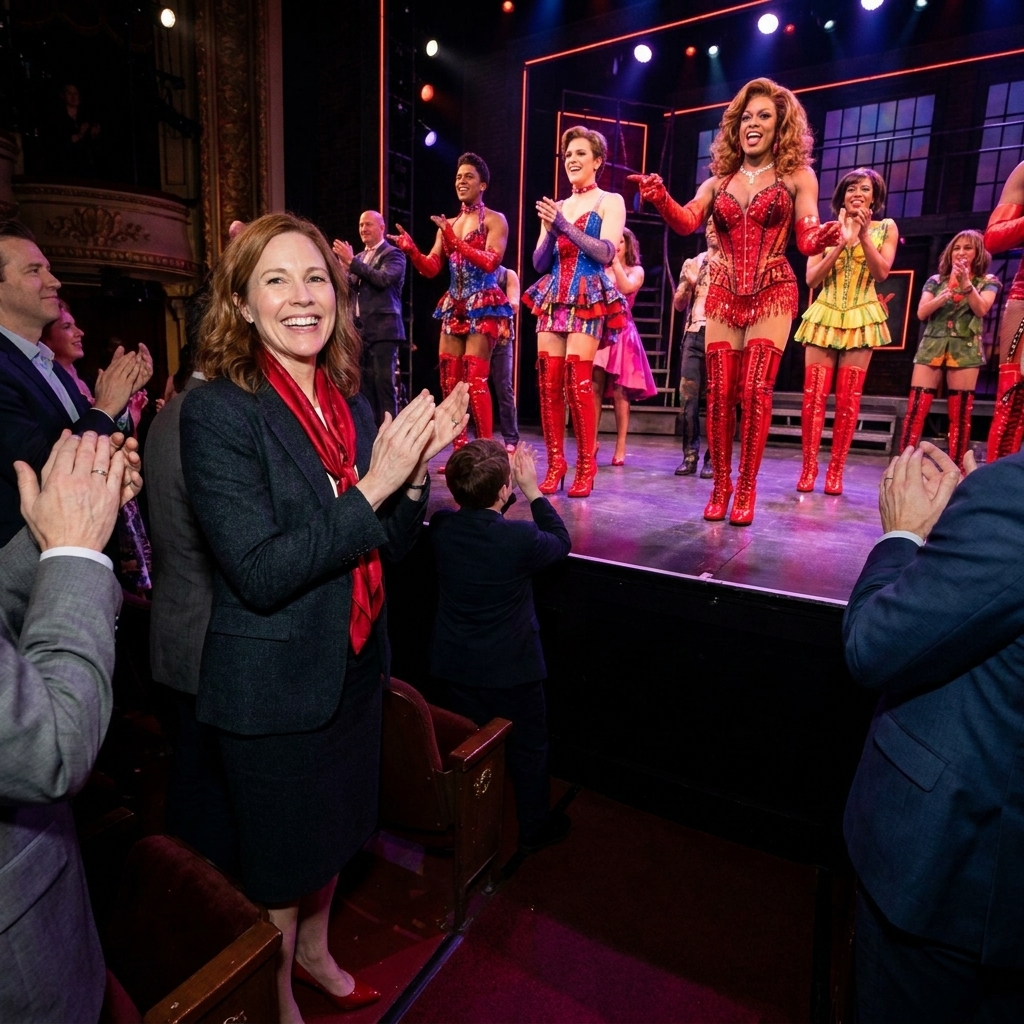
If you want a single Tony carpet moment that plays like a curtain-raiser, look to Billy Porter in 2019, in a custom Celestino Couture gown in vivid red and pink, upcycled from a stage curtain from Kinky Boots. The scale read instantly, but the material was the real punchline. Broadway literally stitched into formalwear, turning a piece of the show’s world into an entrance with a point of view.
Porter’s best carpet moments also do something very theater: they make room for the team. When the designer is named, and when the source of the fabric is part of the story, the outfit becomes credited work, not just spectacle.
Tailoring can shout
Broadway is not only about gowns and trains. Tony carpets have their own tailoring headlines, especially when someone treats a suit like a showpiece instead of a default. A sharp lapel, an unexpected color, a blousey shirt under a jacket, a silhouette that plays with proportion, all of it can land like a punchline when it is worn with the confidence of someone used to a spotlight.
And when you can name the maker, the intention sharpens. A distinctive designer suit registers like a signature, the way a costume sketch registers like a promise.
Lin-Manuel Miranda: fit over flash
During the Hamilton era, the carpet felt like the lobby of a sold-out house: buzzing, hopeful, proud. Lin-Manuel Miranda often kept it classic in tailored suiting, the kind of straightforward formalwear that makes the wearer the headline. The strength was in the fit and the ease, with sharp shoulders, a clean lapel line, and trousers that looked built for standing, moving, and then going inside to do the job.
In a night that loud with history, sometimes the smartest choice is to let your work be the sparkle.

Cast energy
Some of my favorite Tony fashion memories are less about one star and more about a full-company vibe. A nominated cast arrives with coordinated confidence, and suddenly the carpet becomes a visual extension of the production. It is marketing, yes, but it is also community. You can see the weeks of rehearsal in how they stand together, the way a shared story turns into a shared posture.
Olivier standouts
The Olivier carpet often feels like the chic older cousin of the Tony line. It is still glamorous, but with a British sensibility that prizes tailoring, texture, and a dash of mischief. If Broadway is a big, brassy showstopper, the West End is a perfectly timed aside.
Jodie Comer: red and precise
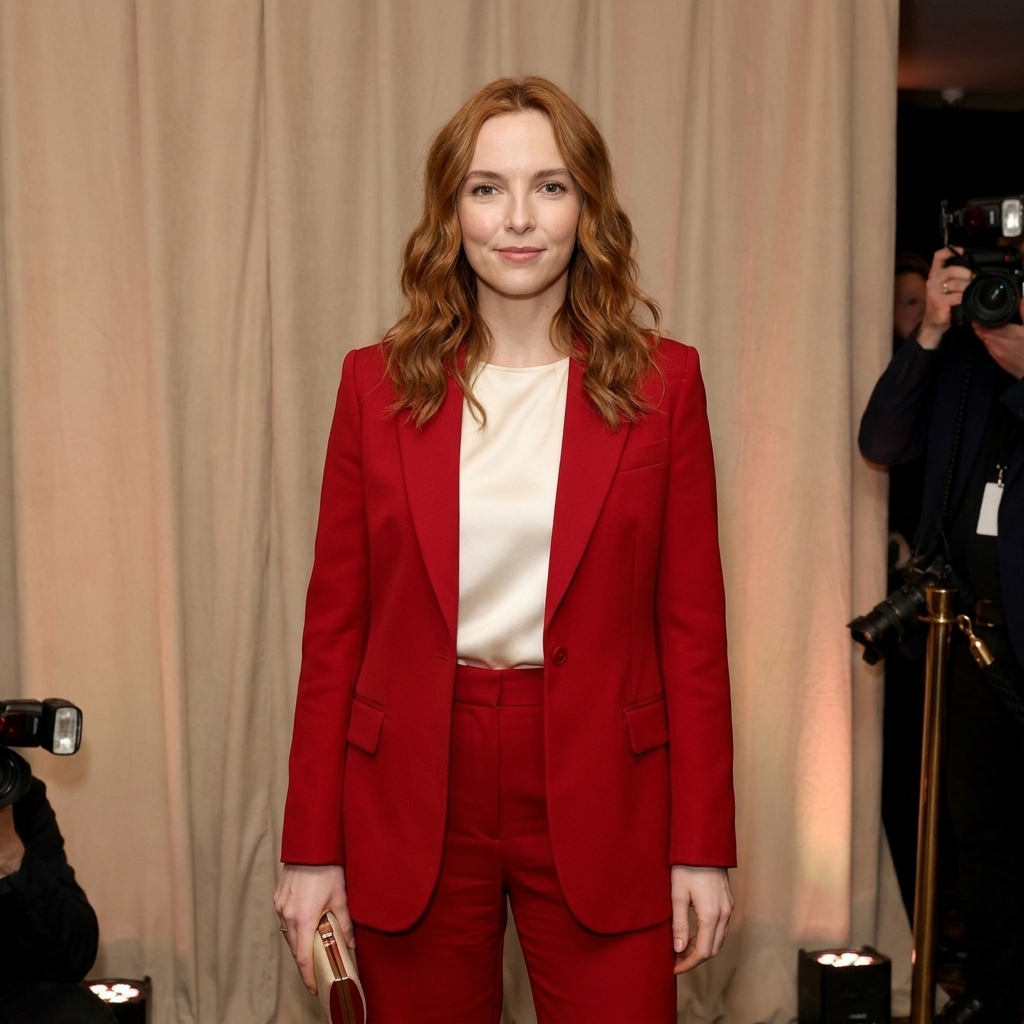
At the 2023 Olivier Awards, with Prima Facie still in the air around her, Jodie Comer arrived in a clean, high-impact red look by Alexander McQueen, with disciplined lines and styling that did not compete for the same spotlight. No distractions, no fuss, just a silhouette that held steady from photo call to step-and-repeat.
It photographed like a held breath, which is exactly the point. When the work is intense, the best fashion choice can be a frame, not a shout.
Emma Corrin: Loewe armor
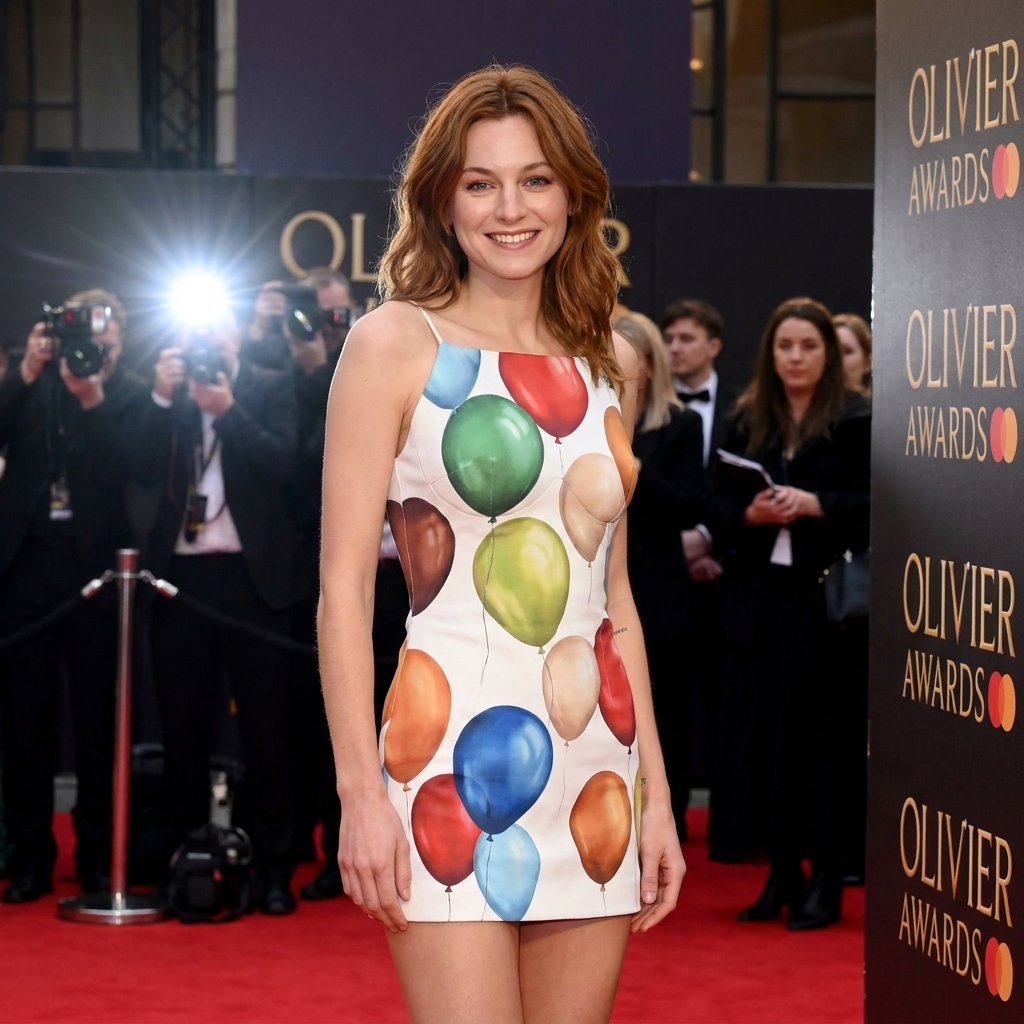
Emma Corrin’s most talked-about Olivier appearance is not tailoring at all, and that is precisely why it belongs here. At the 2022 Olivier Awards, Corrin wore Loewe: a sculptural, balloon-print breastplate-style mini dress that read like pop surrealism meets protective costume. The silhouette did that delicious theater trick of being funny and formidable at the same time, with the art-object structure up top and bare legs below, styled with deliberate restraint so the piece stayed the headline.
It was fashion as blocking. One step onto the carpet and the story was already playing.
Hannah Waddingham: lilac sparkle
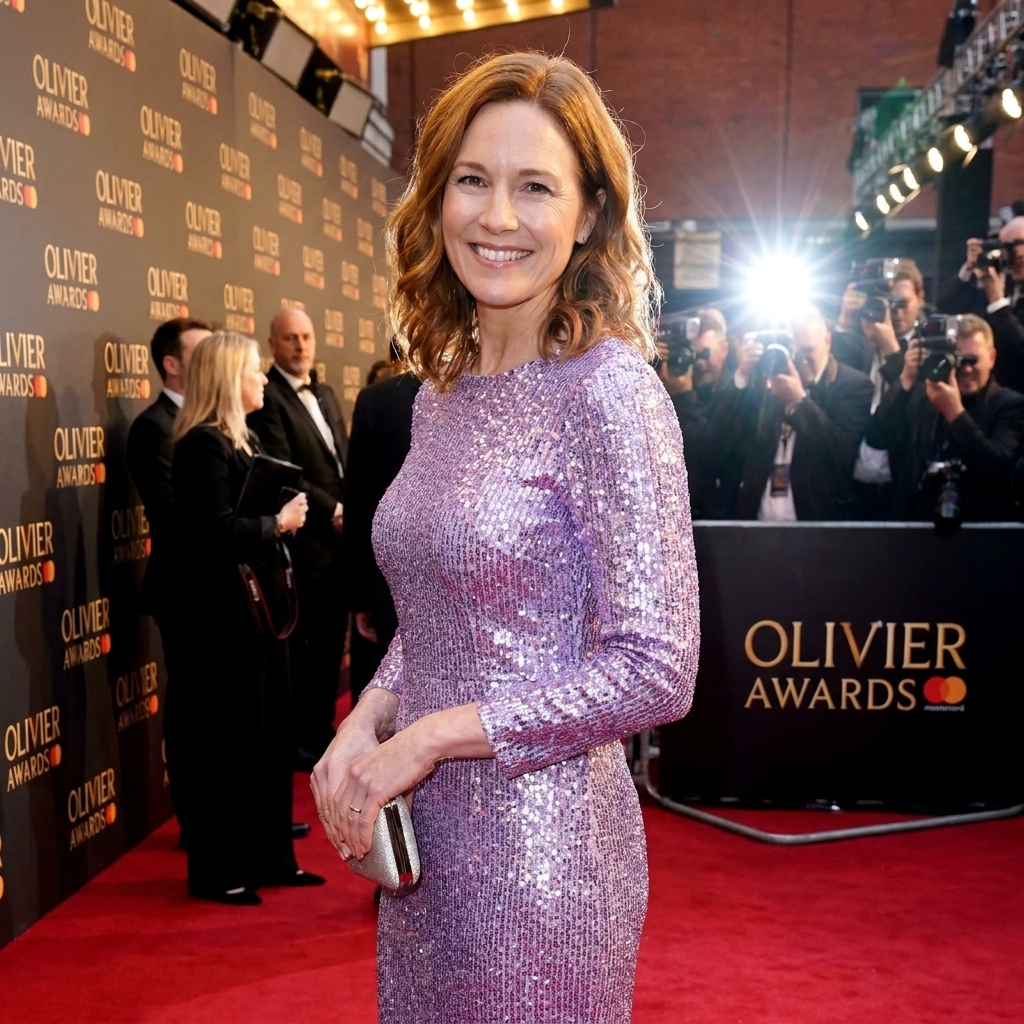
Hannah Waddingham knows how to wear glamour like it is part of the job, because it is. At the 2022 Olivier Awards, she stepped out in a lilac-purple gown that leaned into controlled, camera-ready shine. Think high-wattage embellishment placed with intention, a clean, stage-smart neckline, and a long line that let the sparkle read like lighting design rather than noise.
Shimmer, edited and precise, worn with total control.
Sheila Atim: modern shine
Sheila Atim’s best carpet choices tend to reward close looking, because they are rarely about volume for volume’s sake. At the 2019 Olivier Awards, she arrived in a sleek black look with a controlled silhouette and quiet detail. It read like contemporary stage costume translated into fashion: disciplined lines, intentional texture, and a finish that caught the light without shouting for it.
It is the kind of look that makes jewelry optional and posture mandatory, which is a very theater equation.
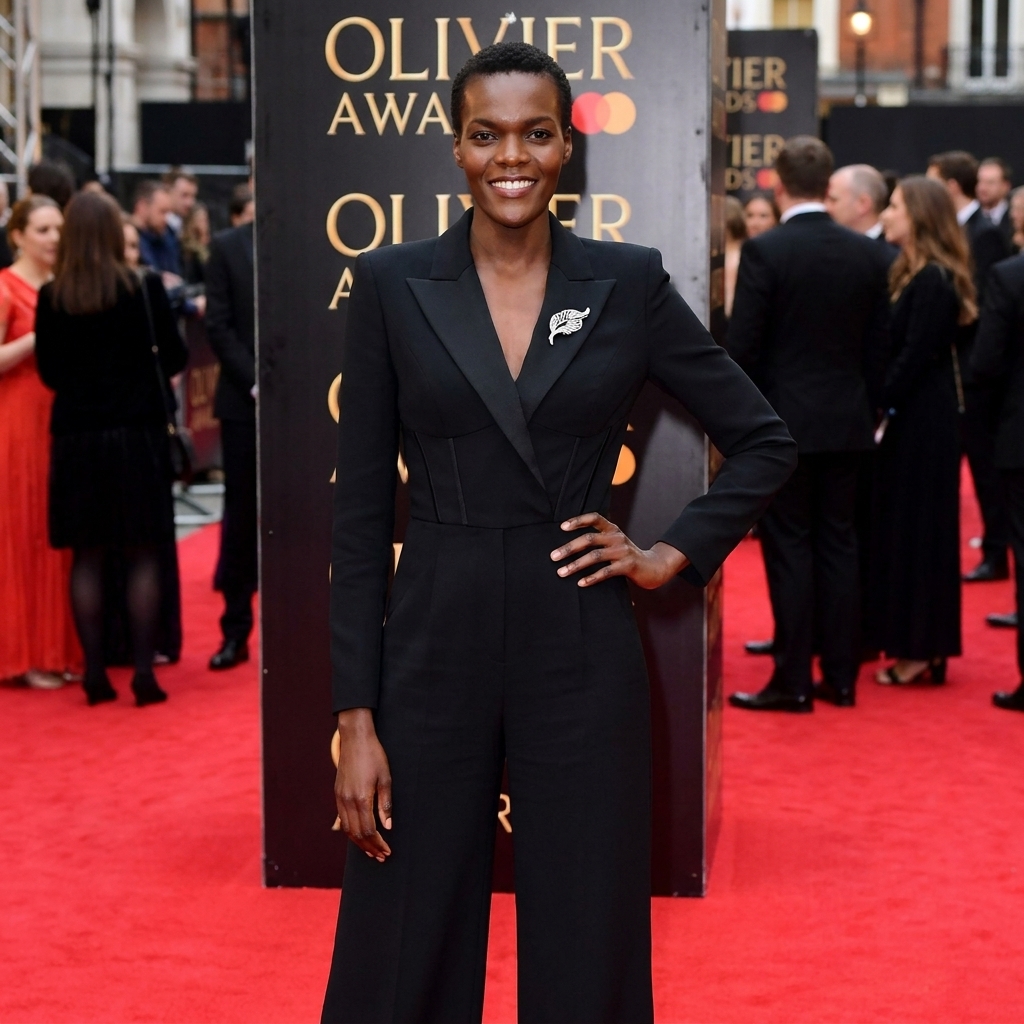
Cush Jumbo: tailored ease
Cush Jumbo has a way of making minimalism feel like a statement, because the statement is the cut. At the 2019 Olivier Awards, she wore a sharply tailored look with crisp structure and styling that stayed uncluttered so the fit could do the speaking.
It is not loud, but it is decisive, and that is often what reads best under Olivier flashbulbs.
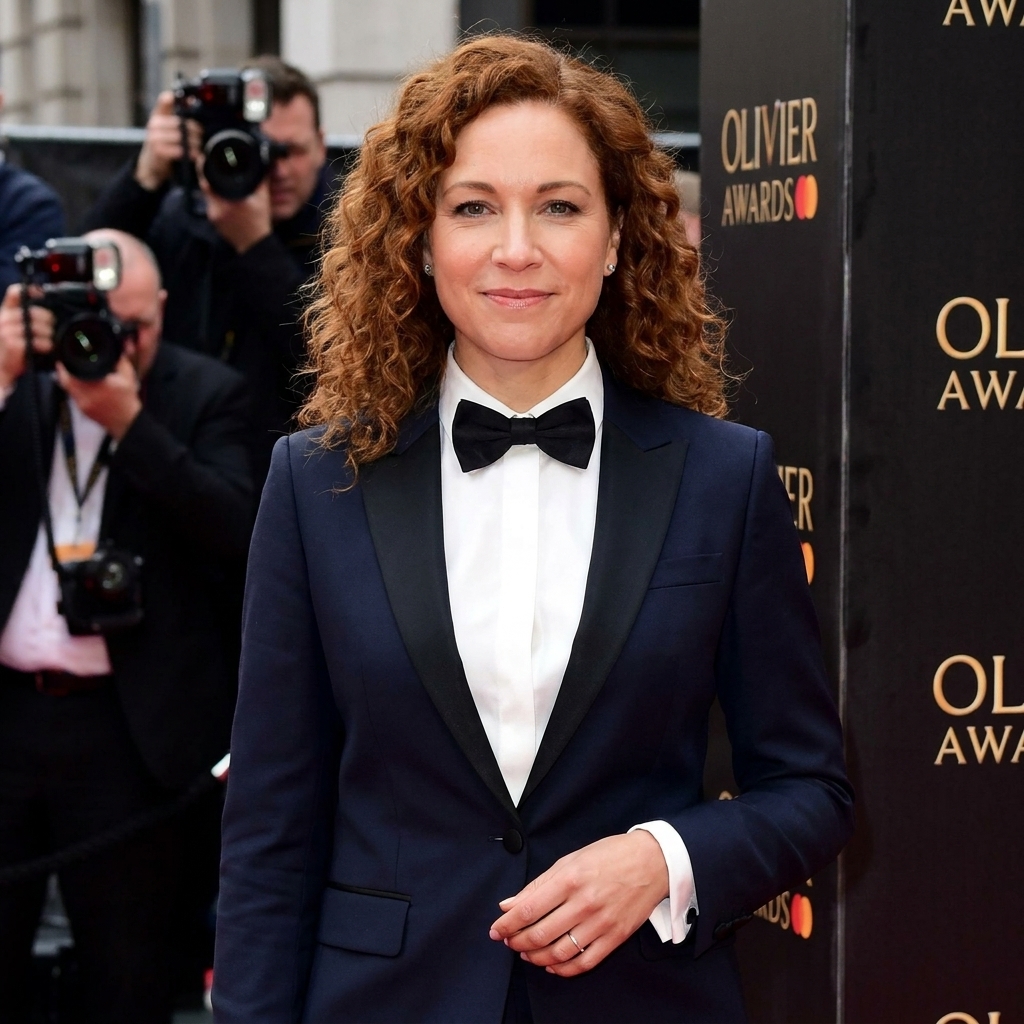
The Olivier flex
To me, the most Olivier-specific move is tailoring that feels theatrical without turning into costume. A sharply cut suit in an unexpected shade, a tuxedo that looks freshly sharpened, a waistcoat that means business, a lapel line that lands like a punchline. When a performer shows up in tailoring that is precise, modern, and unbothered, it proves the point: formalwear can be a character choice, even when it is just wool and conviction.
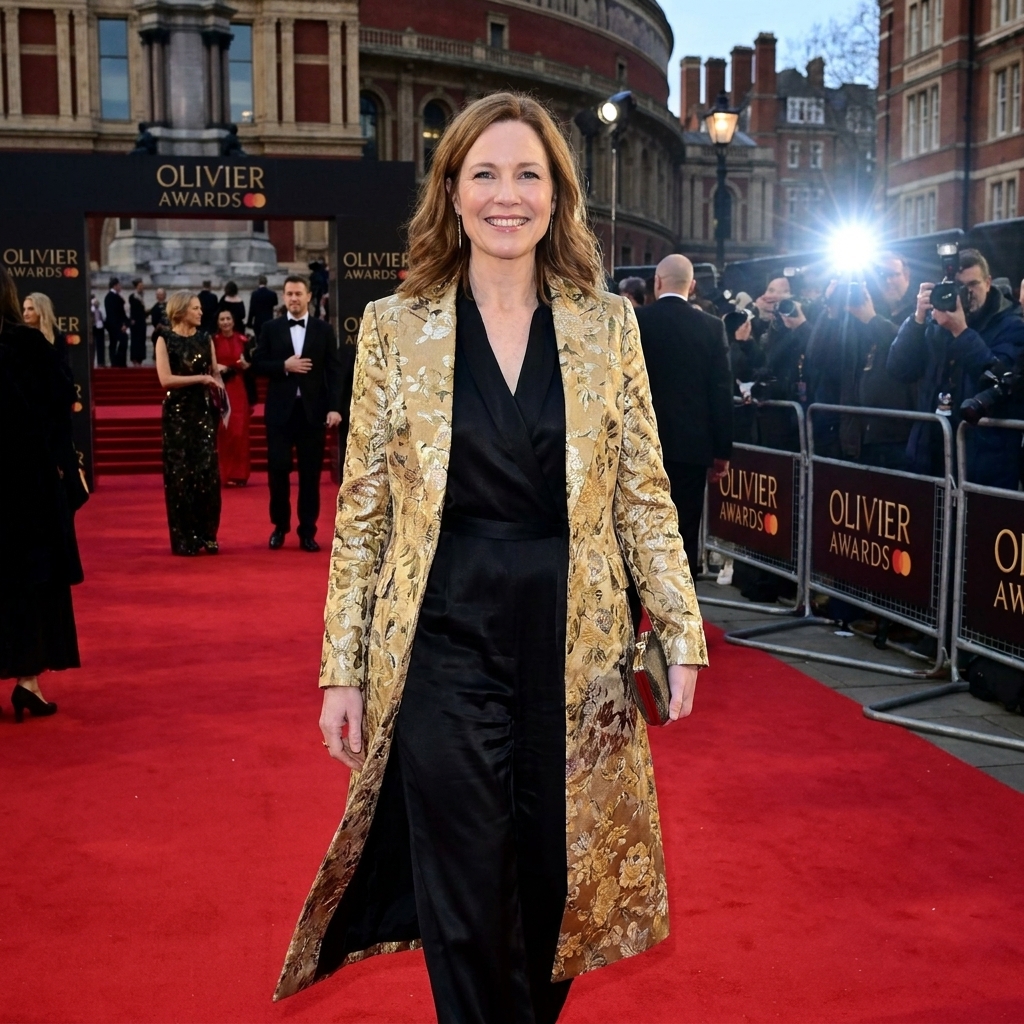
Coats count
If you want to spot the difference between a Tony and an Olivier carpet at a glance, look for outerwear. London arrivals can turn a coat into a thesis statement. Camel, charcoal, patent black, a tartan check that holds its own across the press line. Texture, sharp shoulders, a scarf that knows what it is doing. The result is red carpet fashion that feels lived-in, not just styled.
What makes it theatrical
Not every memorable look needs crystals or a train that requires its own union card. The unforgettable ones share a few common qualities that theater people recognize instantly.
- It is intentional. You can sense a point of view, whether it is minimalist or maximalist.
- It respects craft. The styling feels built, not bought, like it understands design is labor.
- It communicates. Sometimes the message is joy. Sometimes it is rebellion. Sometimes it is tribute.
- It moves well. A stage artist knows their body in motion. The best fashion moments do too.
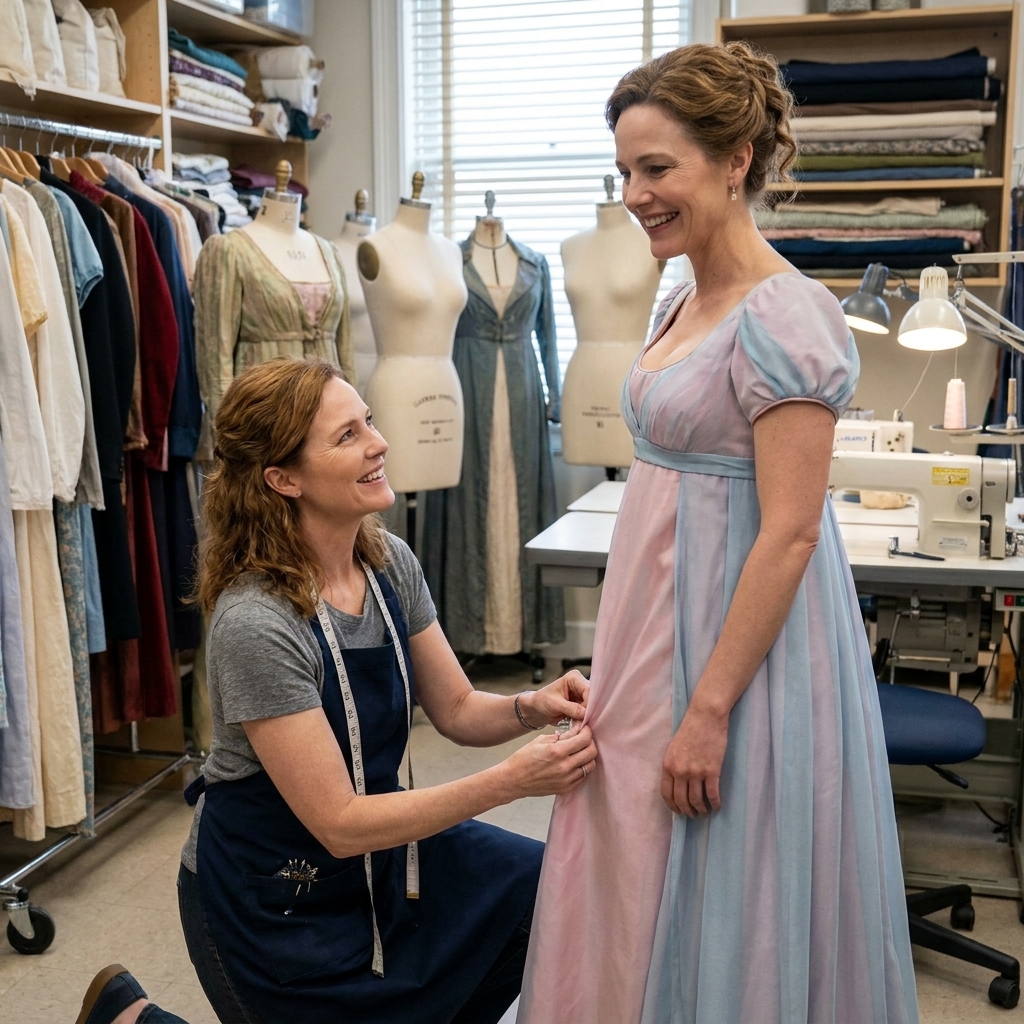
There is also a practical advantage at play: performers are used to fittings, notes, and collaboration. They know what it is to stand still while someone pins a hem, to treat comfort as part of the job, to repeat a change until it is seamless. Costume departments teach you early that clothes are not decoration, they are storytelling equipment. That muscle shows up on the carpet, even when the outfit is pure fashion.
It is also worth naming the collaborators who make these moments possible: stylists, tailors, ateliers, and the costume designers whose work trains performers to think in silhouette and story. Even when a look is not costume, the theater ecosystem is all over it. It is in the posture, in the confidence with a hemline, in the instinct to treat an outfit like staging.
Homage dressing
My soft spot will always be for homage dressing that feels earned. At its best, it is not cosplay. It is a thoughtful echo: a color that mirrors a set’s mood, a silhouette that hints at a character’s world, a choice that functions like a private thank-you note to the people who helped build the show. When it is done well, you can clock the reference even if you cannot name it, and you can feel the respect behind it.
Billy Porter’s 2019 Tony moment belongs here outright, not just in spirit. Upcycling a Kinky Boots stage curtain into a Celestino Couture gown is the kind of gesture that feels like a bow to the whole machine: the show, the crew, the materials, the history stitched into fabric that has already done a run.
Homage can also be quieter and just as theatrical: a performer wearing a color that matches their production’s world, a vintage silhouette that nods to a show’s period without reproducing it, a piece of jewelry that functions like a lucky charm. Theater people know what it means to dress with intention, to treat clothing like text, to build a silhouette the way you build a character. That is why expressive tailoring, gender-expansive formalwear, and deliberate styling choices feel so at home at stage awards. Even when the reference is private, the craft shows.
Closing
If you are wondering whether the Tonys or the Oliviers are more fashion-forward, I think the honest answer is: yes, just in different dialects. The Tonys tend to embrace big, camera-ready drama and showpiece moments. The Oliviers often lean into tailoring, texture, and cooler experimentation that feels very London.
And while stage awards are not always treated like the fashion Super Bowl, they can still have a quiet influence. Performers normalize expressive formalwear, especially in suits and tailoring, and those ideas travel outward, from best-dressed lists to wedding guest mood boards to office dress codes that suddenly tolerate a little more color and a little more point of view.
For a theater performer, the best red carpet look is the one that feels like them. Clarity is the job. When fashion amplifies presence rather than competing with it, the result is a look people remember even after the last award is handed out and the lobby lights come up.