Red carpets are part runway, part obstacle course. You have velvet ropes, frantic publicists, moving talent, and lighting that can swing from “moody premiere” to “interrogation room” in a single step. The goal is simple: make the look sing, make the face flattering, and make the moment feel like something the audience wishes they were there to witness.
Below are ten field-tested tips that will help you come home with images that feel intentional, polished, and worthy of a playbill photo page. Whether you are shooting a local film festival step-and-repeat or a major awards arrival, the fundamentals are the same.
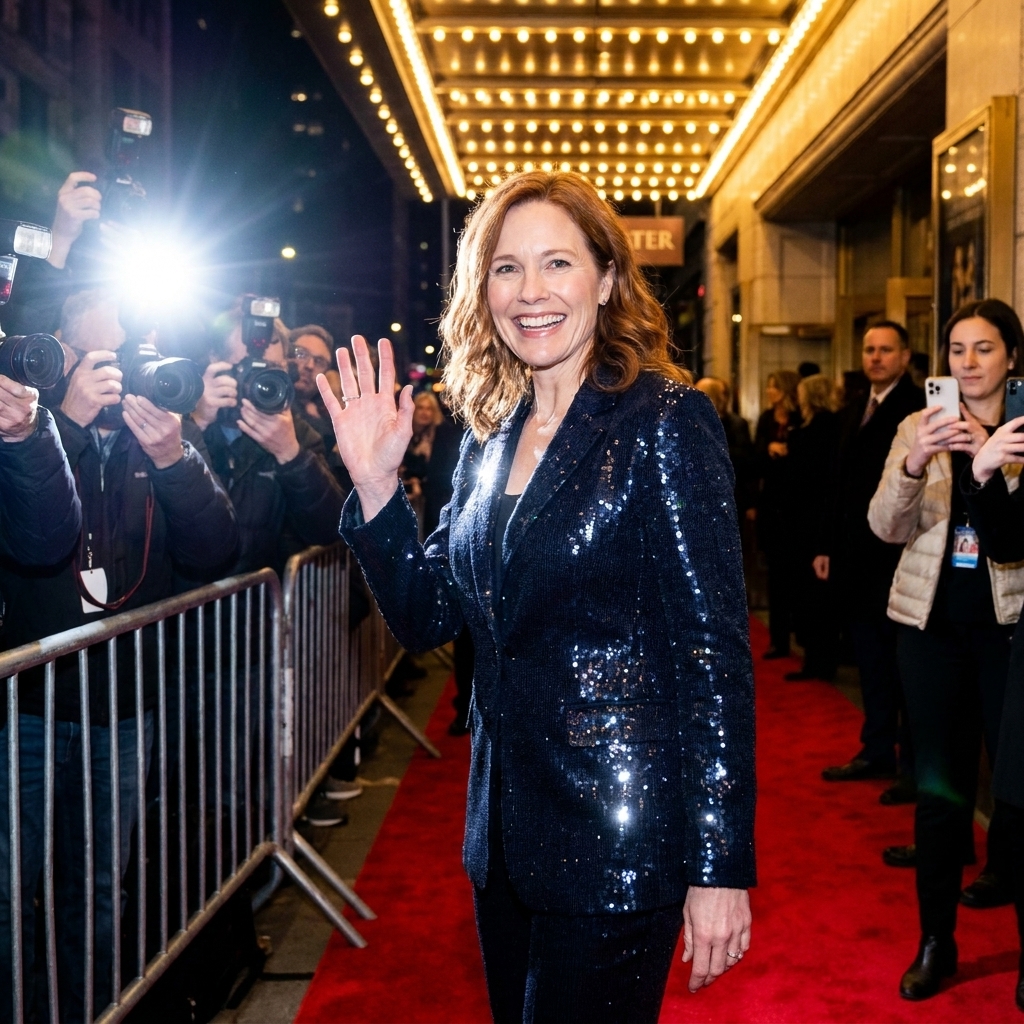
1) Start with settings that forgive chaos
Red carpets move fast. Your baseline setup should be steady, flexible, and quick to adjust.
- Mode: Manual exposure is ideal when lighting is stable. If it is not, try Manual with Auto ISO so your shutter and aperture stay locked.
- Shutter speed: With flash, start around 1/160 to 1/250 depending on your camera and trigger (sync limit rules everything). If you need to go higher, use HSS if allowed and if your flash can handle it. Without flash, start at 1/320 and go higher as needed (fast turns, quick waves, and brisk walks can push you to 1/500+).
- Aperture: f/2.8 to f/4 for a clean subject and controlled background. For groups, move toward f/5.6.
- ISO: Keep it as low as the venue allows, but do not be precious. A sharp ISO 3200 image beats a blurry ISO 800 one every time.
- Drive mode: Low continuous burst helps you catch the exact expression between blinks without turning the moment into a spray-and-pray marathon.
If you only memorize one thing: prioritize shutter speed, because motion blur is the red carpet’s most common heartbreak.
Fast test-frame checklist: exposure on skin, highlights on sequins, eyes sharp, catchlights present, backdrop logos readable, verticals not leaning.
2) Choose a lens that matches your lane
Your spot on the line dictates your focal length. If you are pressed against the barricade, a long zoom can be too tight. If you are shooting from a second row, a short prime can leave you cropping for dear life.
- 24 to 70mm: The step-and-repeat workhorse. Great for full looks, pairs, and quick reframes.
- 70 to 200mm: Your second-row lifesaver. Excellent for expressions and detail shots like jewelry and styling.
- 35mm or 50mm prime: Beautiful, but risky if you cannot control distance. If you use a prime, know your position and commit.
Fashion note: extremely wide angles near the edge of frame can distort bodies and hemlines. For a flattering full-length, keep your subject closer to center and avoid going too wide up close.
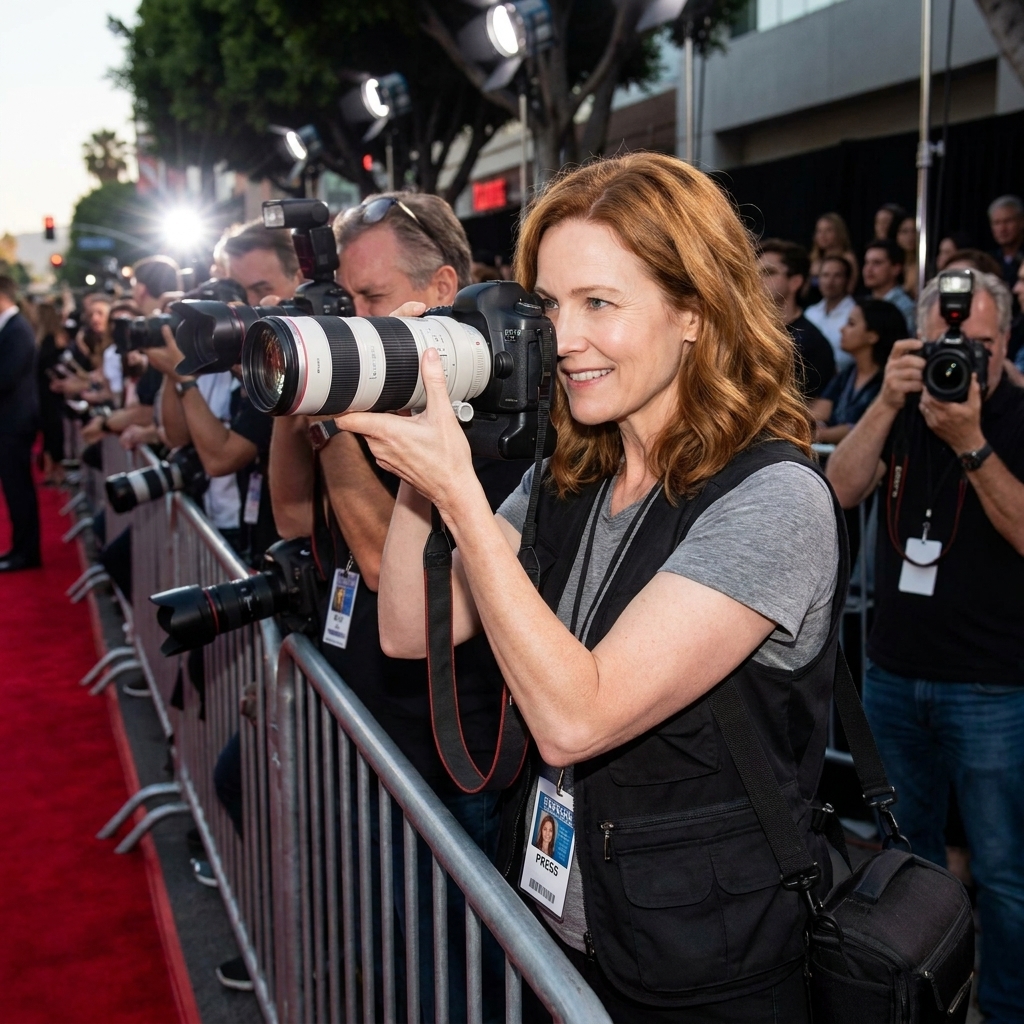
3) Stand where the light is kind
On paper, “center of the backdrop” sounds perfect. In practice, it can be the worst place if the key light is off-axis or the overhead LEDs are creating unflattering shadows.
Arrive early and watch how light hits faces at different marks. Look for:
- Catchlights: Small reflections in the eyes that make portraits feel alive.
- Shadow direction: A slight cheek shadow can be sculpting. A hard shadow under the nose is usually not.
- Specular highlights: Sequins, satin lapels, and glossy makeup can blow out quickly, especially under flash.
If you find one sweet spot where skin looks smooth and outfits keep detail, guard it like a coveted orchestra seat.
4) Master flash without flattening the glamour
Flash is not the enemy. Bad flash is. The trick is to use it as polish, not punishment.
Keep it controlled
- Start modest: Try 1/16 to 1/4 power depending on distance, ISO, and aperture.
- Feather the light: Aim slightly off-center so you are not nuking the forehead and washing out contour.
- Use a modifier if permitted: A small bounce card or compact diffuser can soften edges, but be mindful of crowding and event rules.
- Do not outrun your flash: High power means slower recycle. If your flash is still charging, your “perfect expression” frame may be the one that comes back dark.
TTL or manual
TTL can be a lifesaver when distance changes constantly. Manual is calmer and more consistent when you are shooting the same mark on a step-and-repeat. If TTL swings too bright, use flash exposure compensation and keep moving.
Balance flash with ambient
A common rookie look is “subject lit, background dead.” To avoid it, raise ISO or slow shutter (within reason) so the venue atmosphere still exists behind the talent. Think: flash for the face, ambient for the story.
5) White balance for better skin
Red carpets are a buffet of mixed lighting: warm tungsten from the venue, cool LEDs from sponsor walls, and flash popping like popcorn all along the line.
- Shoot RAW so you can correct color later without wrecking skin.
- Set a Kelvin value when lighting is stable. Many shooters start around 5200K to 5600K with flash, then adjust.
- Watch the backdrop because branded walls often skew color. If the logo wall is cyan or magenta, it will reflect onto faces and clothing.
The goal is not clinical perfection. It is consistent, flattering tone that respects makeup artistry and wardrobe color design.
6) Focus settings that keep up
On a carpet, your subject is constantly changing distance, turning, and stepping into other photographers’ flashes.
- AF-C / Servo: Continuous autofocus is your friend for walking talent.
- Eye AF: Use it if your camera does it well, especially for tight portraits.
- Single point or small zone: Helpful when the backdrop logos are high-contrast and your camera wants to “help” by focusing on text instead of eyelashes.
- Back-button focus: Optional, but it can reduce accidental refocus when you are recomposing quickly.
Pro habit: take a quick glance at focus confirmation after your first few frames of a subject. If you missed, fix it immediately. Do not assume the next look will wait.
LED flicker note: If you see banding under LED panels, turn on your camera’s anti-flicker setting (if available) or nudge shutter speed until the bands disappear.
7) Give pose guidance with respect
Most celebrities and talent know their angles, but you can help without barking directions like a drill sergeant. Keep it short, kind, and specific.
- For full-length: “Can I get one head-to-toe?”
- For detail: “One with the bag,” or “Can you show the nails?”
- For clean background: “One step to your left,” so you lose clutter behind their head.
- For variety: “Eyes here for one, then to your right,” which gives you multiple options and reduces blink risk.
If you are giving face direction, “chin forward, slight down” is a gentle classic for definition, but only if it is comfortable for them and the moment allows it.
Also: if someone is clearly being rushed, take what you can get, thank them, and move on. The best red carpet energy is collaborative.
8) Compose for outfit and person
Red carpet photos are fashion documentation and character portrait at once. The strongest frames do both.
Full look rules
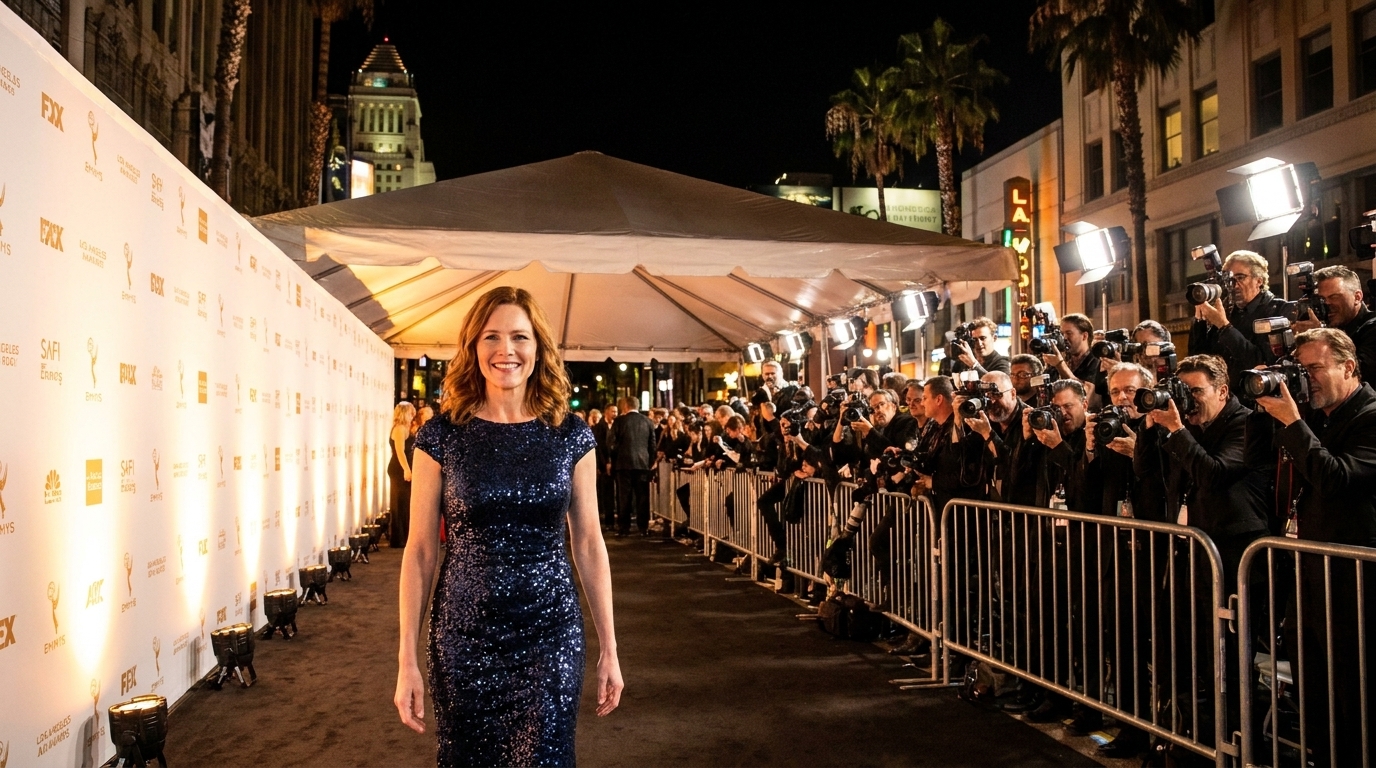
- Leave room for hems: Cropping at ankles is rarely flattering, and it shortchanges the design.
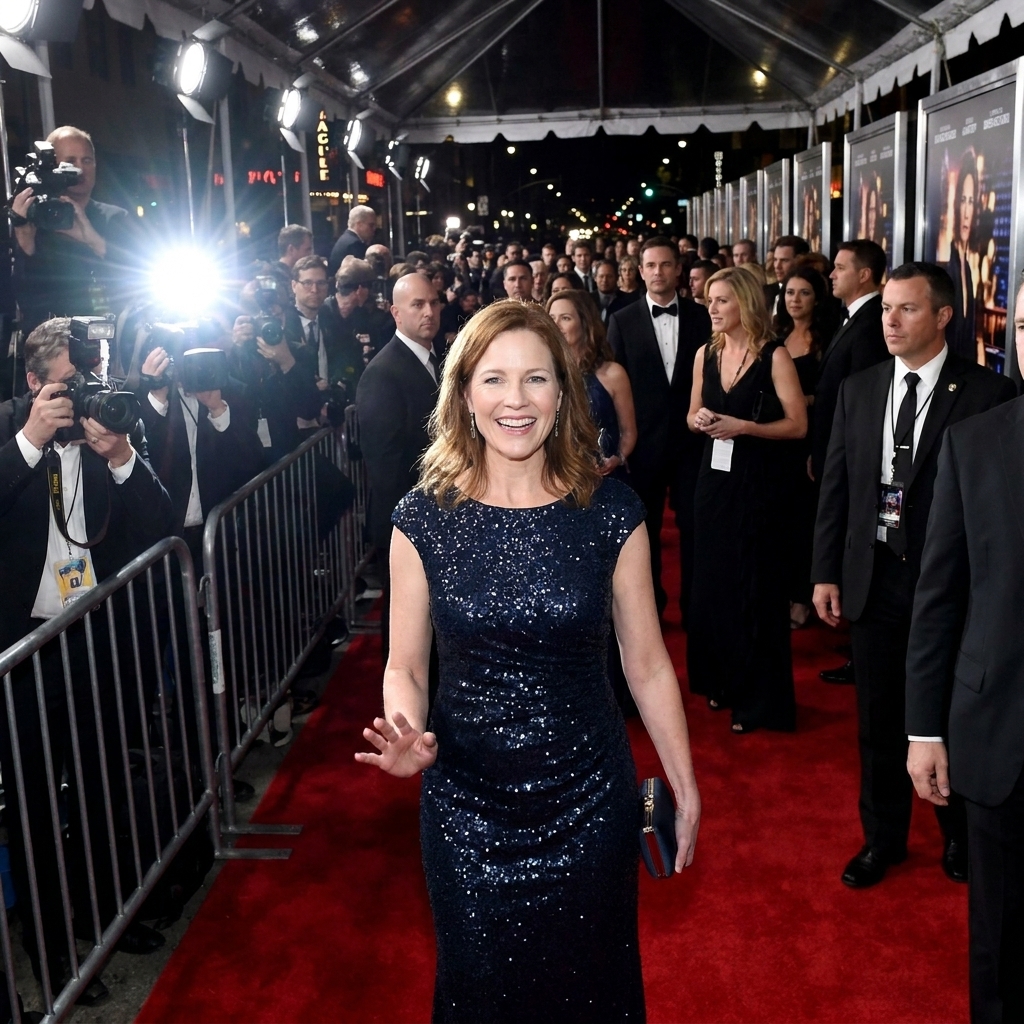
- Watch hands: Clutch placement, waving, and awkward finger splay can make or break a frame.
- Keep verticals clean: Tilted sponsor walls scream “rushed.” Straighten in-camera if you can.
Portrait rules
- Eyes first: If the eyes are sharp, audiences forgive a lot.
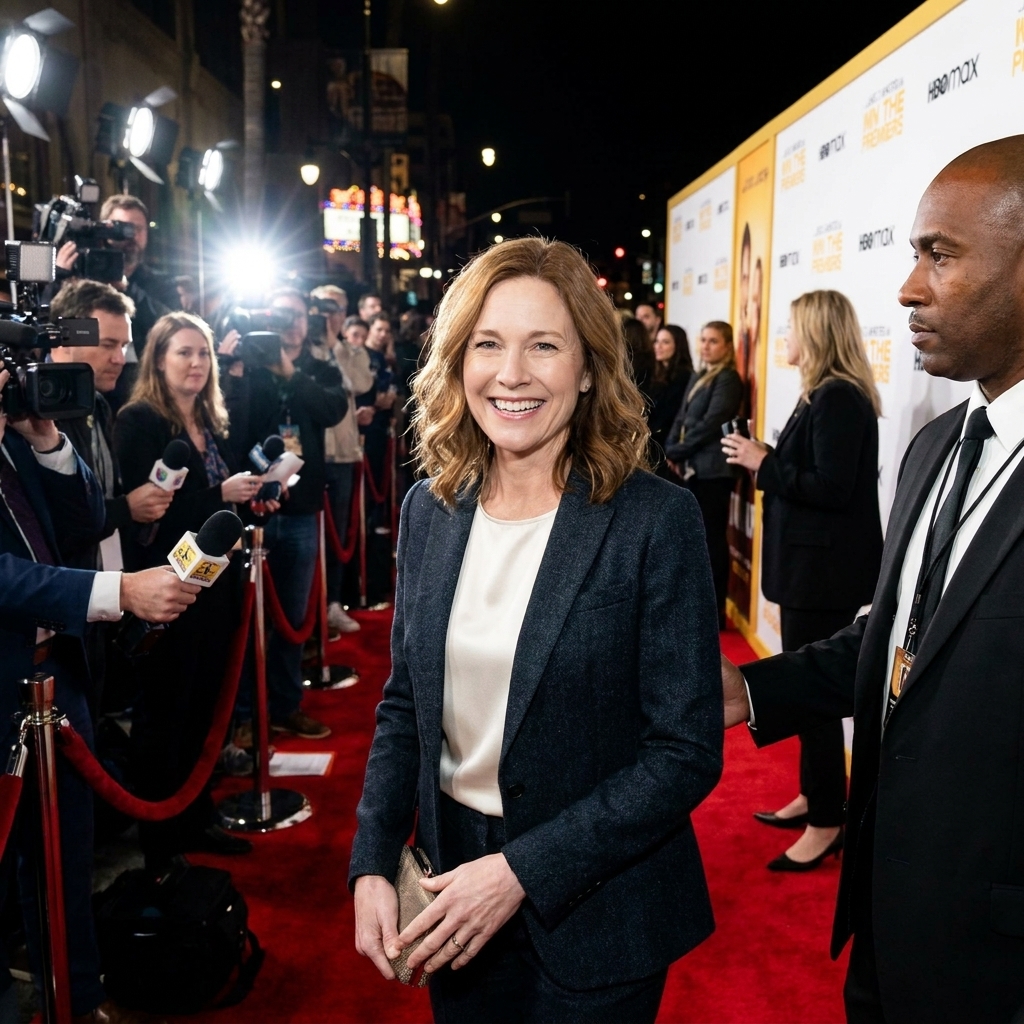
- Mind the mic flags: Interview stations can creep into frame. A half step or a small shift in angle can clean it up.
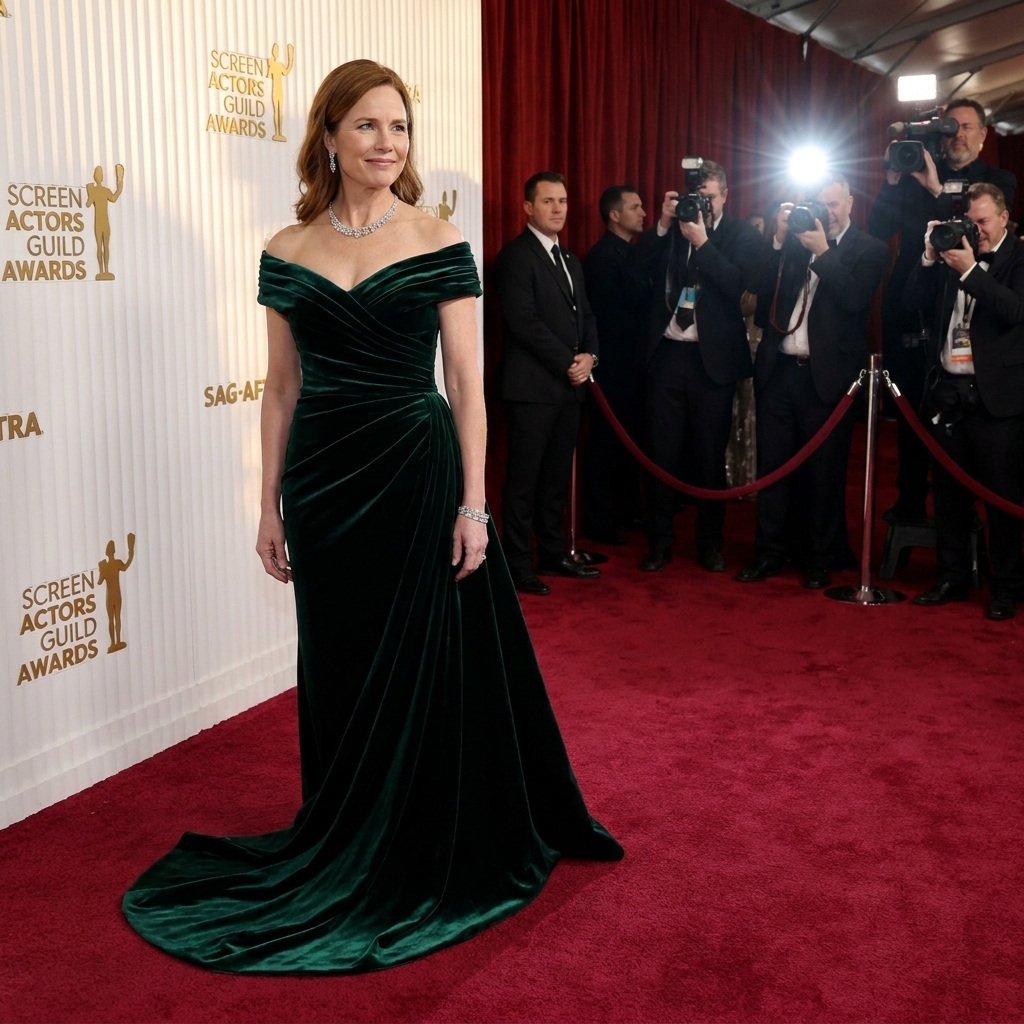
9) Capture the in-between
The step-and-repeat is the official record. The magic often lives just before and after it: a laugh with a co-star, a quick wardrobe adjustment, a glance back to the crowd, a hand squeeze from a designer. Those images feel human, and they are often the ones editors remember.
- Watch arrivals: The first three seconds are pure expression before the pose locks in.
- Stay ready on exits: People relax after the shots are “done.”
- Track interactions: Stylists, directors, castmates, and fans can create story beats worth capturing.
As someone who reads the whole playbill, I promise: context is not clutter. It is narrative.
10) Workflow and etiquette that gets you re-booked
Red carpet photography is a craft, but it is also a community. Your professionalism shows up in the work and the way you move through the space.
Access realities
Every carpet has rules: assigned spots, pool rotations, house photographers with priority, and publicists who decide who gets the pause. Ask where you are allowed to stand, learn the flow, and build a plan that fits your lane.
Delivery standards
- Label and cull fast: Flag your best frames on breaks. You will thank yourself later.
- Caption the basics: Who, what event, where, and when. Add designer and jewelry credits when you have them. Editors love accurate metadata even more than they love a perfect smize.
- Protect highlights: Glittering fabrics and oily T-zones can clip quickly. Slight underexposure is often easier to recover than blown skin.
- Be mindful of sightlines: Do not step into another shooter’s frame unless you absolutely must.
- Keep it respectful: No comments on bodies. No intrusive angles. The job is to celebrate craft, not manufacture discomfort.
- Stay calm: The carpet is loud. Your decisions should not be.
The best compliment in this niche is not “you got the shot.” It is “they were easy to work with.” That reputation travels.
Quick cheat sheet
- Flash on: 1/160 to 1/250, f/2.8 to f/4, ISO 400 to 1600 (adjust to venue)
- Flash off: start 1/320+, f/2 to f/2.8, ISO 1600 to 6400 (depending on light, go faster if movement is quick)
- Lens pick: 24 to 70mm for versatility, 70 to 200mm for distance and details
- Focus: Continuous AF, eye AF or small zone, check early frames
- Color: RAW, consistent Kelvin when possible, watch mixed lighting and color casts
FAQ
What is the best camera setting for red carpet photos?
A reliable starting point with flash is 1/160 to 1/200, f/3.2, ISO 800, then adjust flash power to taste. Without flash, start around 1/320 and raise shutter speed as needed, letting ISO rise to match the venue.
How do photographers avoid shiny faces on the red carpet?
You cannot control makeup, but you can control light. Lower flash power, feather the flash slightly, and avoid blasting straight-on from close range. Shooting RAW also helps you recover highlights and reduce hot spots in post.
How do you shoot a full-length look without distortion?
Back up and zoom in rather than stepping close with a wide lens. Keep the subject near the center of frame, keep the camera level, and leave breathing room at the hemline.
Do I need a flash for red carpet photography?
Not always, but often. Flash can give you crispness and more consistent exposure, and it can produce cleaner color when flash is dominant. In heavy mixed light, ambient can still contaminate skin tones, so watch your balance and white balance choices.