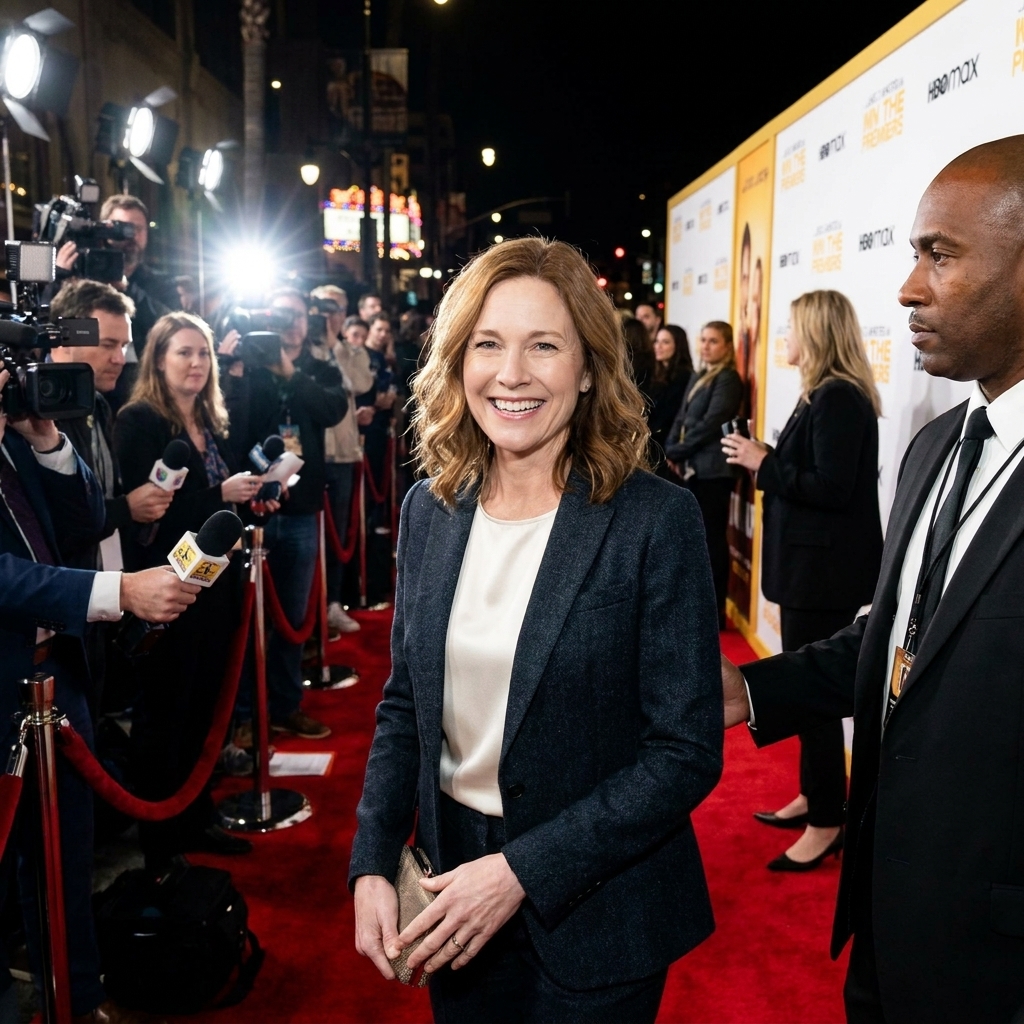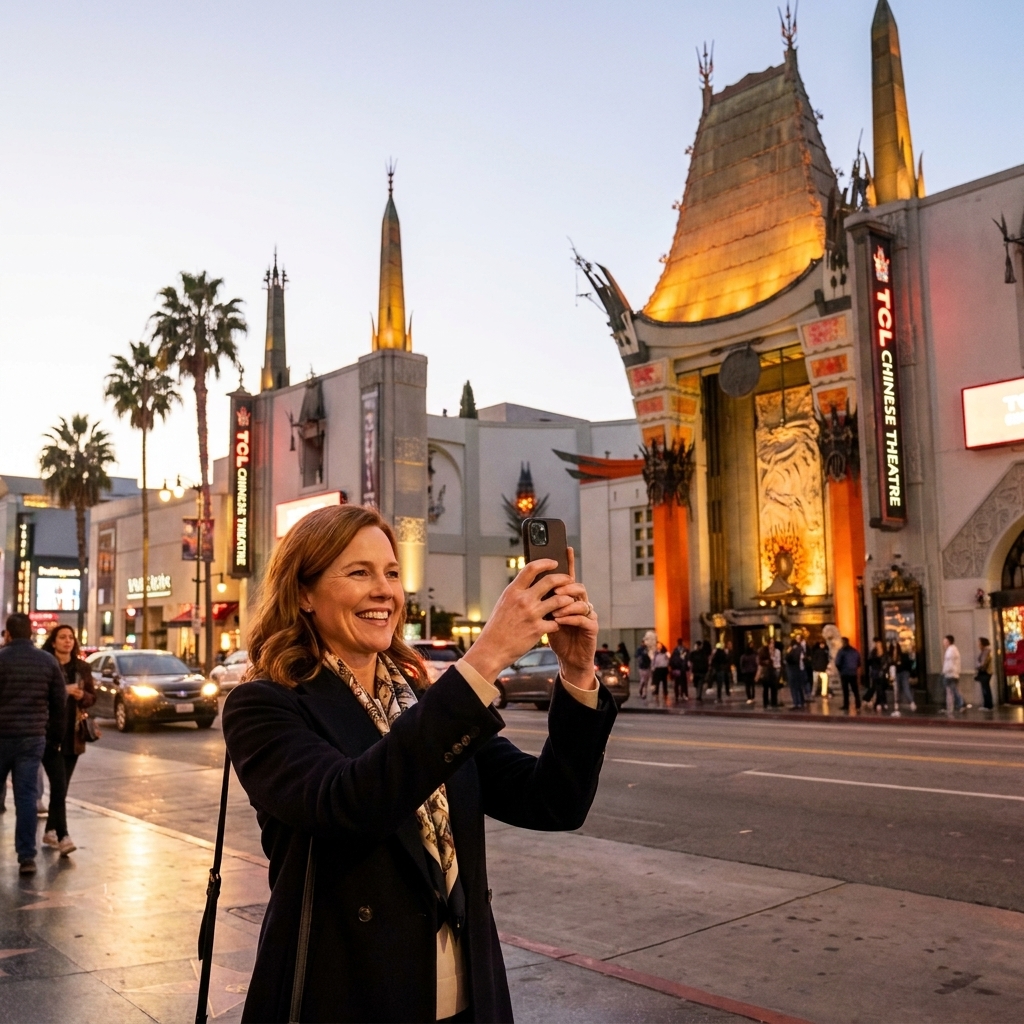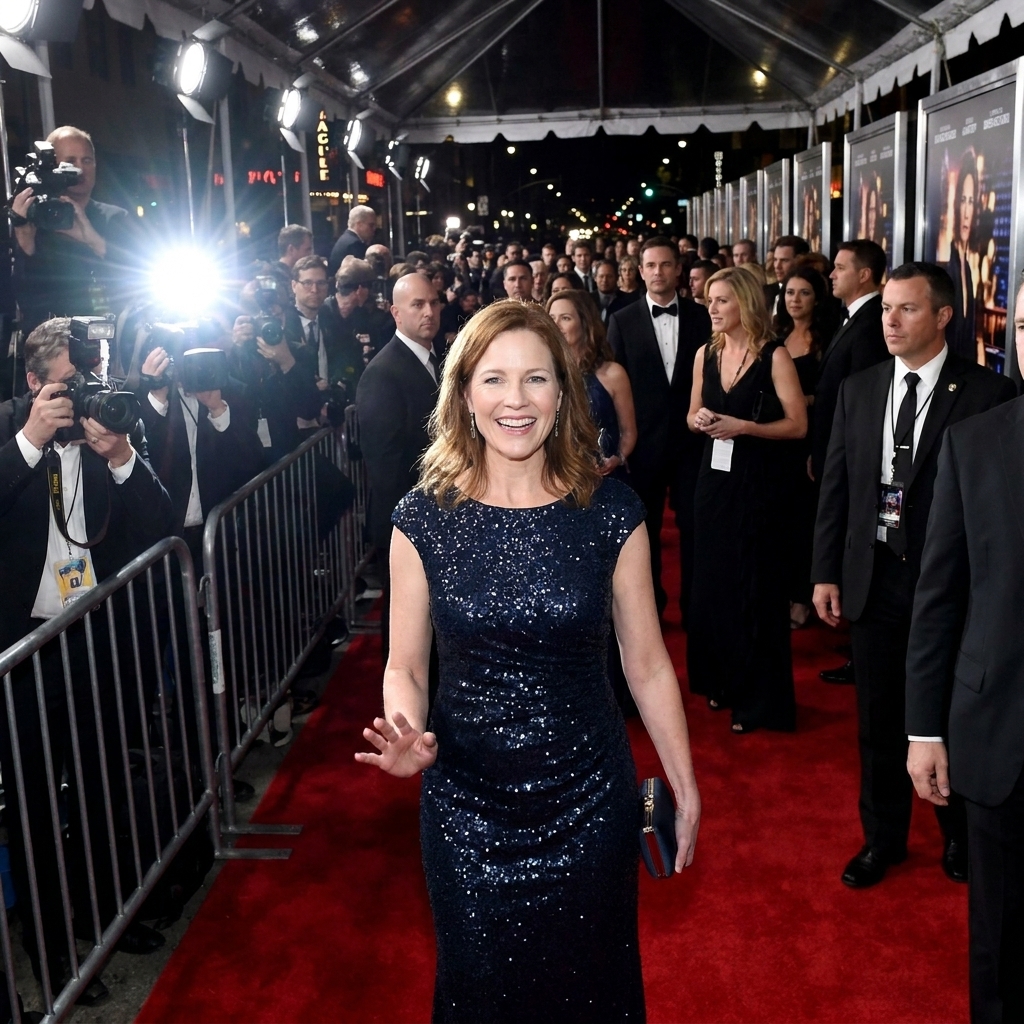
The red carpet is supposed to feel effortless. Like the venue simply is: a clean sweep of glamour, a perfectly framed logo moment, a staircase that flatters every silhouette, and lighting that makes sequins behave. But if you have ever spent time backstage, you know the truth. That “effortless” look is usually the result of hundreds of small decisions made by production designers, art directors, scenic teams, lighting designers, engineers, and a small army of people with tape measures clipped to their belts.
Production design for an award show is its own genre of storytelling. Unlike a film set, the environment has to function as both a stage and a live broadcast machine, while surviving crowds, weather, security protocols, and the unpredictable physics of a thousand heels on a temporary floor. Here’s how the best teams turn a curbside arrival into an iconic cinematic moment.
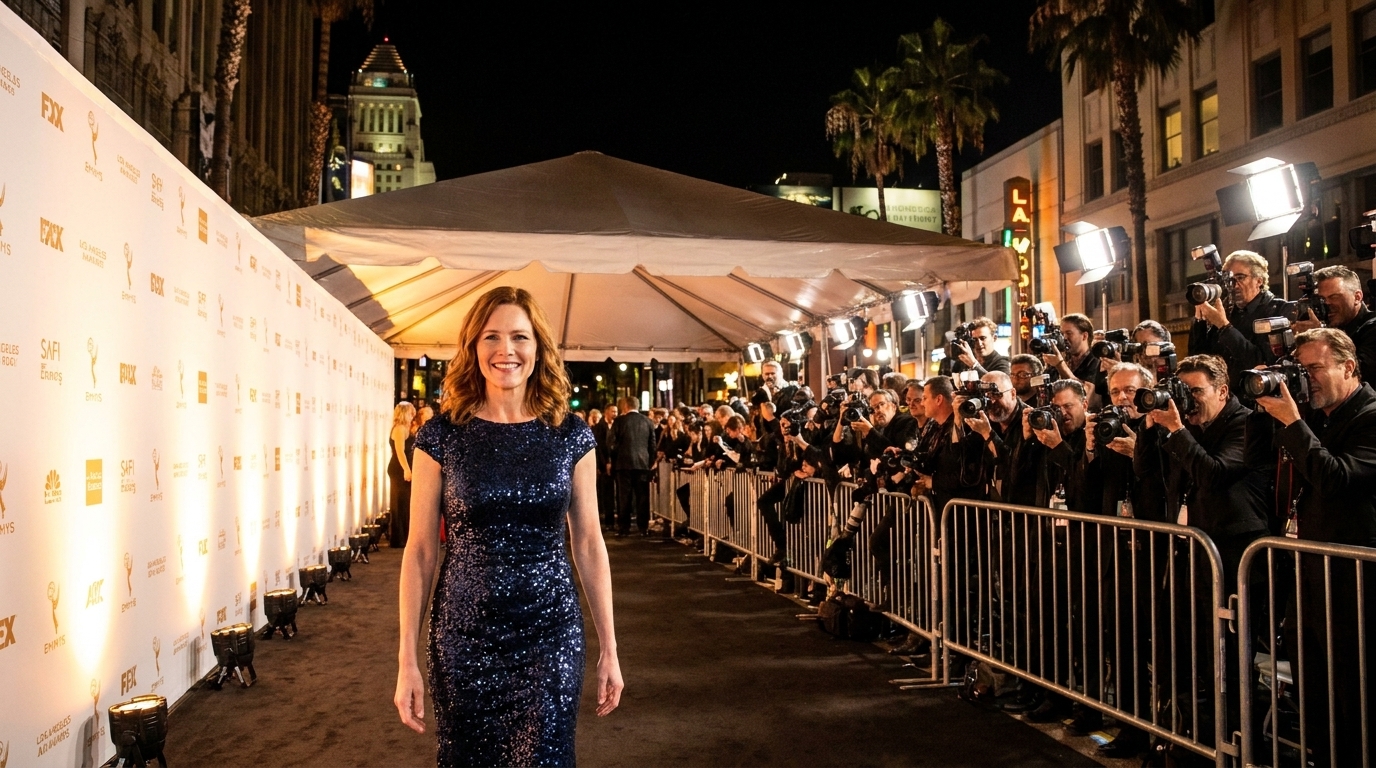
The brief: what is the venue saying?
Before anyone orders a single truss, production designers start with the same question any theater director asks in rehearsal: what are we saying, and to whom?
The “to whom” matters because an awards carpet has at least three audiences at once:
- The guests, who need to feel welcomed and guided, not herded.
- The cameras, which require clean sightlines, flattering angles, and consistent color.
- The public, who see the venue as part of the brand identity of the show.
The initial brief usually includes the show’s creative theme, sponsor obligations, broadcast requirements, and any must-haves from the venue itself. Sometimes the mandate is obvious: a classic, “timeless” look that lets fashion take center stage. Sometimes it is more architectural, like leaning into a city’s landmarks or a venue’s history. Either way, the red carpet is the first chapter of the night’s visual narrative, and production design sets the tone long before the opening monologue.
Step one: research and references
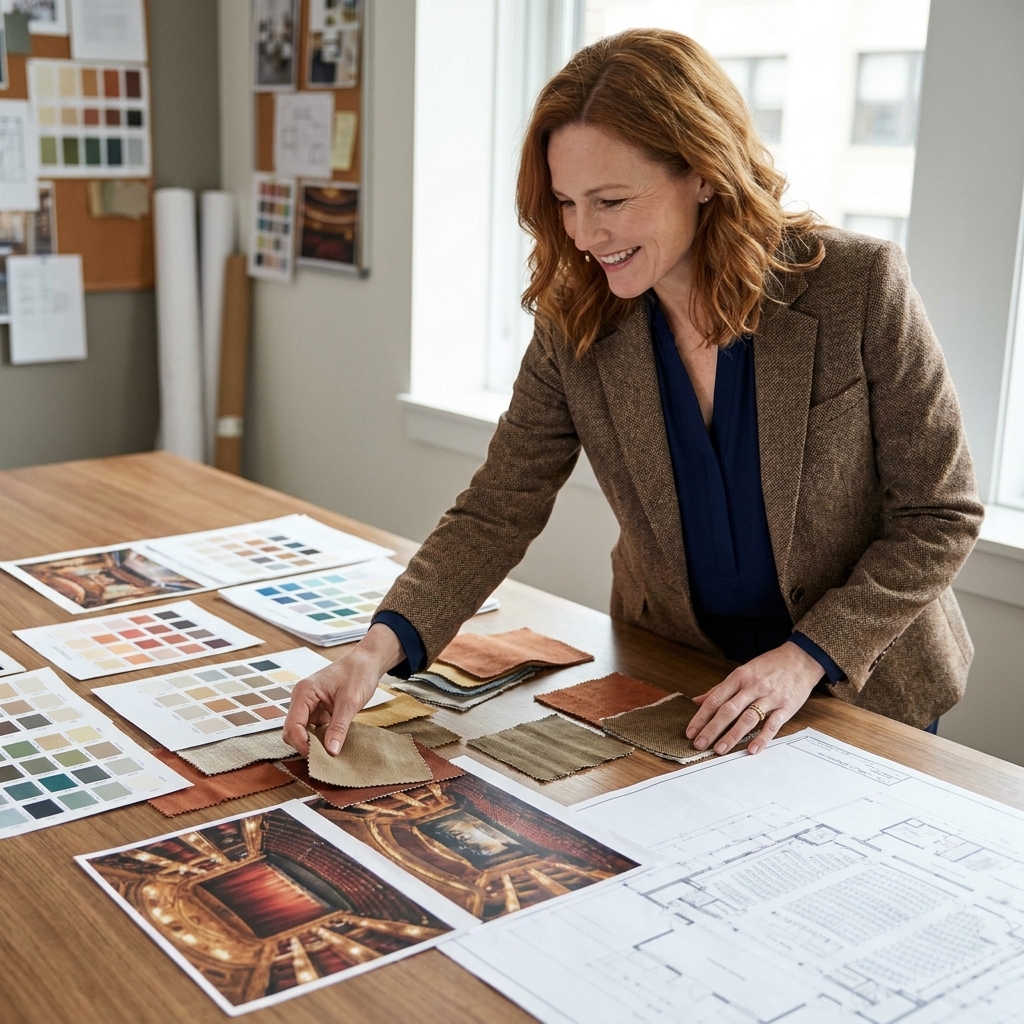
“Mood board” can sound like a Pinterest daydream, but at this scale it becomes a working document. Designers pull references from fashion editorials, museum exhibitions, contemporary architecture, and past ceremonies, then translate them into practical choices: finishes that read on camera, shapes that funnel foot traffic, and color palettes that play nicely with a wide range of skin tones and wardrobe colors.
One of the most important early decisions is the visual hierarchy. What is the main image?
- Is it a statement staircase where presenters pause?
- A portal or arch that feels like an entrance to a world?
- A canopy that transforms an outdoor carpet into a controlled environment?
- Or a more minimalist approach where the carpet becomes negative space for the talent?
Great boards do not just say “glam.” They say “glam, but with warm metallics that won’t blow out under LEDs,” or “modern, but with textures that add depth when the camera is wide.”
Step two: the site survey
Then comes the location walk-through, the moment when the sketch meets the sidewalk. The team surveys everything: load-in docks, ceiling rig points, power access, nearby streets for crew parking, and how the sun and streetlights behave at arrival time. In a perfect world, every carpet would be built in a black box. In real life, you are negotiating with concrete, wind, fire codes, and the fact that there is always one column exactly where you wanted your cleanest frame.
Site surveys also reveal what the audience at home never sees but always feels: how long the walk is, where guests can breathe, and where the venue needs to hold people without making it look like a holding area. A smart production designer builds in soft landings: small zones that feel intentional while giving publicists, security, and talent managers a moment to coordinate.
Step three: design for broadcast
Red carpet venues are essentially broadcast sets in couture’s waiting room. That means designing for lenses. The team works closely with the broadcast director and the lighting and camera team to plan:
- Primary camera axes and the angles that will be used most.
- Step-and-repeat placement so logos are readable but not oppressive.
- Depth and layering, which keeps shots from looking flat.
- Controlled backgrounds so the frame does not drift into chaos.
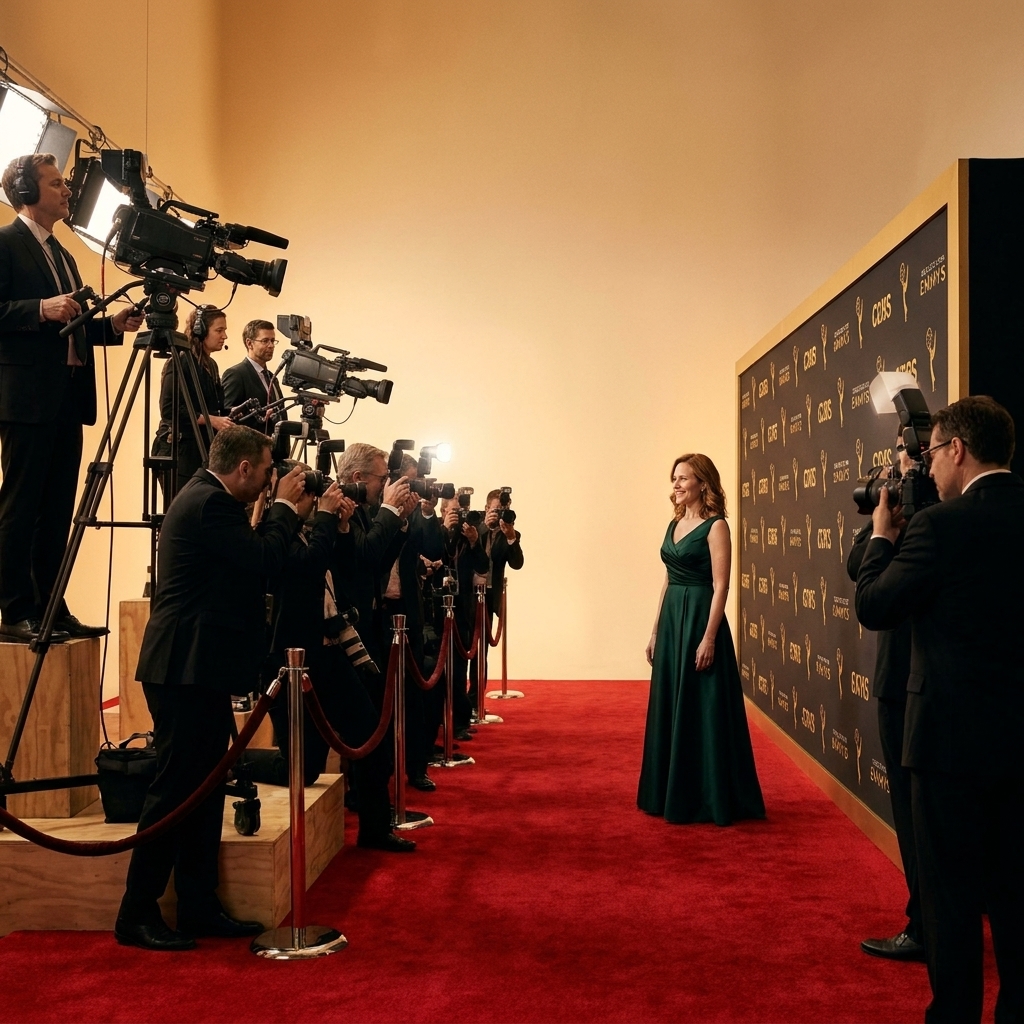
This is why you will often see architectural framing devices: arches, portals, corridor-like drapes, or sculptural walls. They are not just pretty. They give the camera a composed picture frame so even a quick interview feels deliberate, not like a hurried hallway moment.
Color is also a technical conversation. Highly saturated reds, for example, can be tricky under certain lighting and can clash with a wide range of outfits. Many modern carpets lean into slightly deeper or more nuanced tones, or add texture so the surface reads as luxurious rather than a flat color field.
Step four: engineer the build
Once the design is approved, the build becomes a puzzle of materials, labor, and safety. Production designers collaborate with scenic fabricators and structural engineers to create environments that are:
- Load-bearing enough for crowds and equipment.
- Weather-resistant if outdoors, or able to handle condensation and temperature changes.
- Fire-rated where required, especially with drape, foam, and decorative treatments.
- Fast to assemble and fast to strike, because venues often have tight turnaround windows.
This is where “award-winning” design often hides in plain sight: the seams. A carpet can look like an endless ribbon, but it is usually a meticulously joined surface designed to avoid wrinkles on camera and prevent tripping in real life. Staircases and ramps are engineered for stability, accessibility compliance (ADA in the U.S.), and camera blocking. Even the barricades are considered part of the aesthetic, dressed or disguised so crowd control does not become the dominant visual.
And yes, sound matters too. Hollow platforms can amplify footsteps in a way that makes every arrival feel like a drum solo. Designers and builders often add underlayment and dampening so the venue feels smooth in person and in broadcast audio.
Step five: light the room
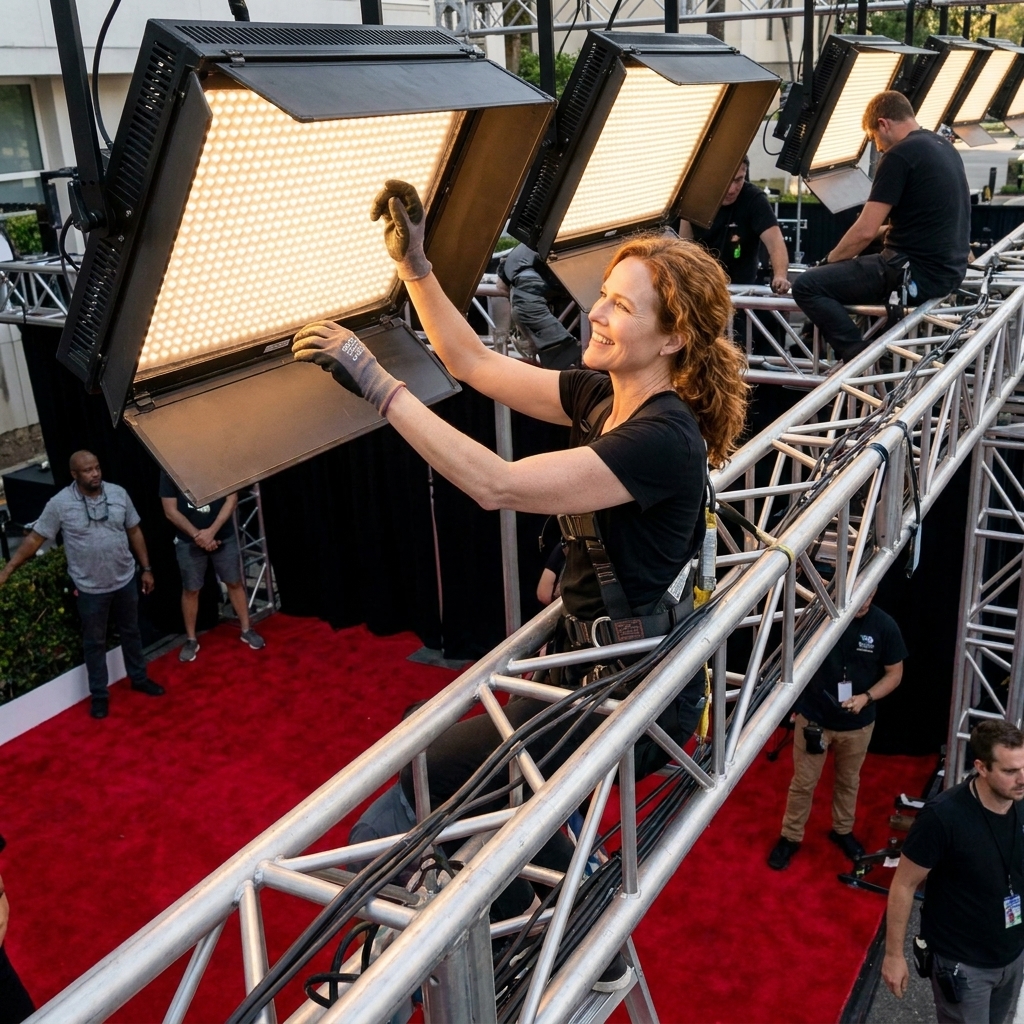
If production design is the wardrobe, lighting is the tailoring. No matter how gorgeous the set pieces are, bad lighting will flatten them, and worse, it will flatten the people inside them.
Red carpet lighting has to do several jobs at once:
- Flatter faces across a wide range of skin tones.
- Maintain consistency as guests move through different zones.
- Avoid harsh shadows from overhead truss or nearby architecture.
- Control color temperature so cameras do not swing between warm and cool.
Designers often use a blend of soft frontal sources for interviews, overhead washes for safe walking light, and architectural accent lighting to sculpt the space. Uplights can add verticality to walls and columns. Practical fixtures, like sconces or lantern-style elements, create depth while feeling real rather than purely technical.
One of the most unsung red carpet miracles is the absence of glare. Shiny floors, metallic backdrops, and glossy sponsor panels can turn into a funhouse of reflections. Great teams test finishes under the actual lighting package, not just in the shop.
Step six: graphics and branding
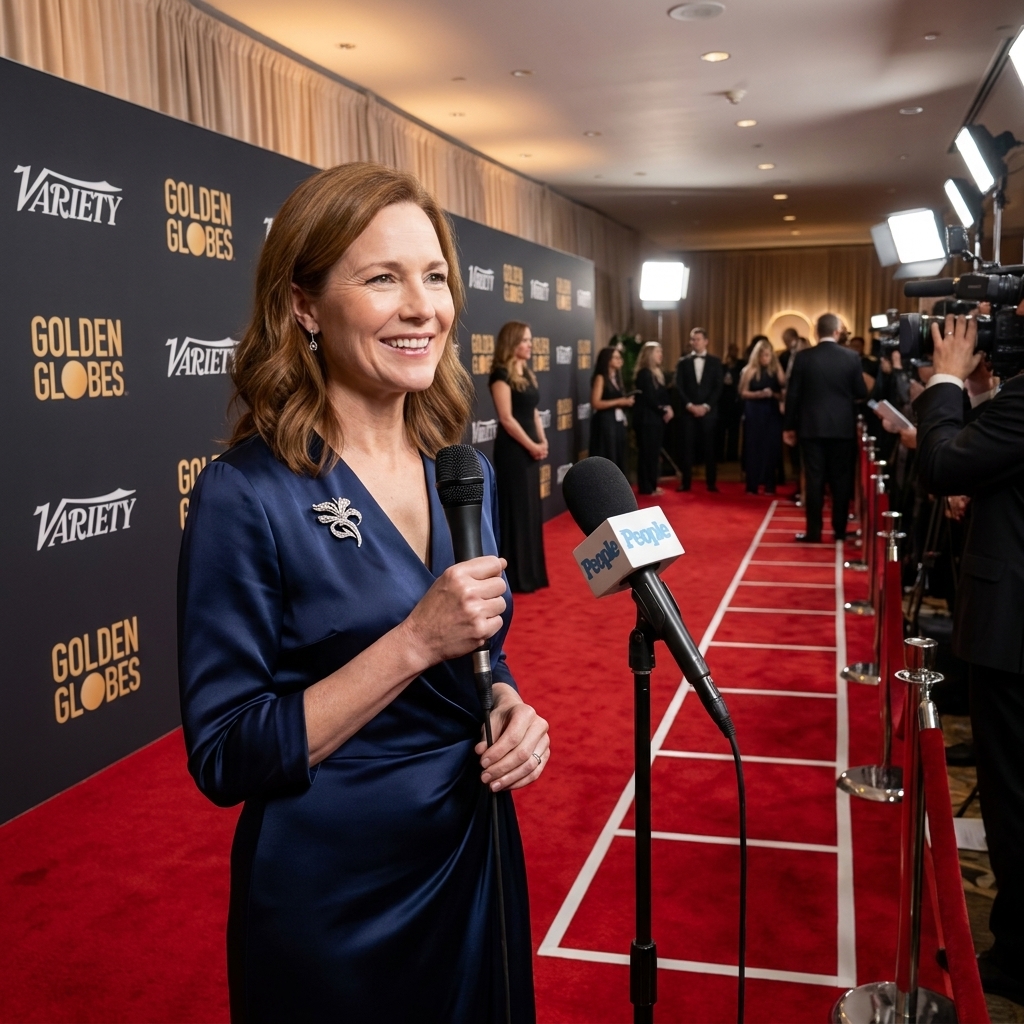
Sponsor and network branding is unavoidable, but tasteful integration is a craft. The best production designers treat logos like typography in a good playbill: present, legible, and aligned with the overall design language rather than pasted on as an afterthought.
That means thinking about scale and spacing, but also about where branding lands in the frame. A step-and-repeat can be calibrated for close-ups, while larger environmental branding might live in wide shots or transitional areas. Done well, it feels cohesive. Done poorly, it feels like the venue is wearing a jacket covered in bumper stickers.
Material choices also matter. Matte finishes reduce hotspots. Slightly textured surfaces photograph more richly. And the font weight that looks elegant in a mockup might disappear under live lighting, so designers often adjust for on-camera readability.
Step seven: flow and security
There is an entire performance happening behind the performance. Guest arrivals run on schedules, security requirements, publicist priorities, and talent comfort. Production design supports that choreography by creating intuitive pathways:
- Clear entry and exit points that keep traffic moving.
- Interview bays that look stylish but function like mini studios.
- Buffer zones where guests can reset without being in the main frame.
- Photo moments that encourage a natural pause for cameras.
The best-designed carpets feel calm, even when they are packed. That calm is not accidental. It is the result of thoughtful wayfinding, consistent lighting, and barriers that are disguised as design elements. It is also the result of crews who understand that a red carpet is a workplace as much as it is a spectacle.
Step eight: tests and notes
Just like theater tech, award show prep is a cycle of tests and adjustments. Teams do camera walk-throughs to check:
- Where the frame breaks, including awkward corners and accidental background clutter.
- Whether the carpet reads true under show lighting and broadcast settings.
- How reflective elements behave once cameras and flashes arrive.
- How the venue looks at different times, especially if arrivals begin before full darkness.
This is also when the most practical notes come in: add a little more light on that turn, adjust the angle of the backdrop so it does not distort, move a decorative element that blocks a camera, widen a pinch point to prevent bunching. Production design at this level is less big reveal and more ten small fixes that save the whole night.
Step nine: day-of reality
Even with perfect planning, the day of the event is a living thing. Wind picks up. A delivery runs late. A last-minute sponsor element needs to be integrated. Someone realizes the wrong finish is catching highlights. The carpet gets scuffed. A guest’s train snags on an edge that looked harmless in rehearsal.
High-functioning teams build contingency into the plan. That includes spare material, touch-up paint, backup signage, extra cable runs, and weather covers. If rain is even a remote possibility, you will also see covered transitions, slip-resistant surfaces, and drainage and matting plans that keep the walk safe without telegraphing panic. The goal is not perfection in a vacuum. It is resilience in public.
Budgets, scale, and choices
Not every carpet gets a tented village and a custom staircase, and that is not a failure. It is a design problem with different constraints.
A major network show can afford longer builds, heavier scenic, more lighting positions, and more controlled coverage. A smaller guild event might rely on an existing lobby, a tighter footprint, and a graphics-forward look that photographs well with fewer pieces. Outdoor carpets tend to spend money on protection and predictability: tenting, flooring systems, and covered routes from curb to door. Indoor carpets often spend it on polish: architectural dressing, cleaner backgrounds, and lighting that can hold up under mixed venue fixtures.
Sustainability and reuse
One quiet shift in live events is the push toward smarter material choices. More teams are building modular scenic that can be re-skinned, renting instead of fabricating one-offs, choosing low-VOC paints, and planning strikes so usable flooring, drape, and decking can live another show. Sustainability does not have to look austere. It can look like good planning.
What makes it feel award-worthy?
By the time the doors open, the best carpets have already told you what kind of night you are about to watch. The difference between good and unforgettable is rarely about spending the most money. It is about coherence and care.
1) A clear focal point
Whether it is a staircase, a portal, or a sculptural wall, there is usually one primary image that becomes the show’s visual shorthand.
2) Texture that photographs well
Layered materials, subtle patterns, and dimensional surfaces keep the camera interested without competing with fashion.
3) Lighting that respects faces and fabric
Great lighting makes a tux look rich, not flat, and makes a gown sparkle without turning it into a glare bomb.
4) Invisible problem-solving
The most impressive venues hide the practical stuff: cable management, crowd control, accessibility, and weather mitigation. When you do not notice those things, it means someone did their job very, very well.
Quick FAQ
How long does it take to build an award show red carpet venue?
It varies by location and complexity, but the physical build is often a matter of days, sometimes with overnight pushes. The design and planning phase can take weeks or months, especially when multiple stakeholders must approve the look.
Who is in charge of the red carpet look?
Typically a production designer or art director leads the visual environment, collaborating with scenic fabricators, lighting, graphics, engineering, and the broadcast team. The final result is deeply collaborative, even when one person is steering the ship.
Why do some carpets look different on TV than in photos?
TV cameras, still photographers, and phone videos all interpret color and light differently. Add in flash photography and shifting white balance, and a carpet can read warmer, cooler, or more saturated depending on the lens and settings.
The last word
We talk a lot about what people wear on the carpet, and we should. Fashion is part of the art form of these nights. But the venue is the silent partner in every iconic image, a designed world that makes a two-second pause feel like a premiere, a coronation, or the first shot of a movie you cannot wait to see.
So next time you watch arrivals, look past the sparkle for one moment and notice the craft: the way the space guides the eye, the way the light hugs a cheekbone, the way a backdrop becomes architecture. That is production design doing what it does best: making a temporary world feel inevitable.