Lights down. Curtain up.
If you’ve ever heard live strings swelling under a big theatre moment and wondered, where are all those musicians? chances are they are in the orchestra pit. It is one of the most important spaces in a performing arts venue and one of the easiest to mix up with audience seating terms.
Orchestra pit definition
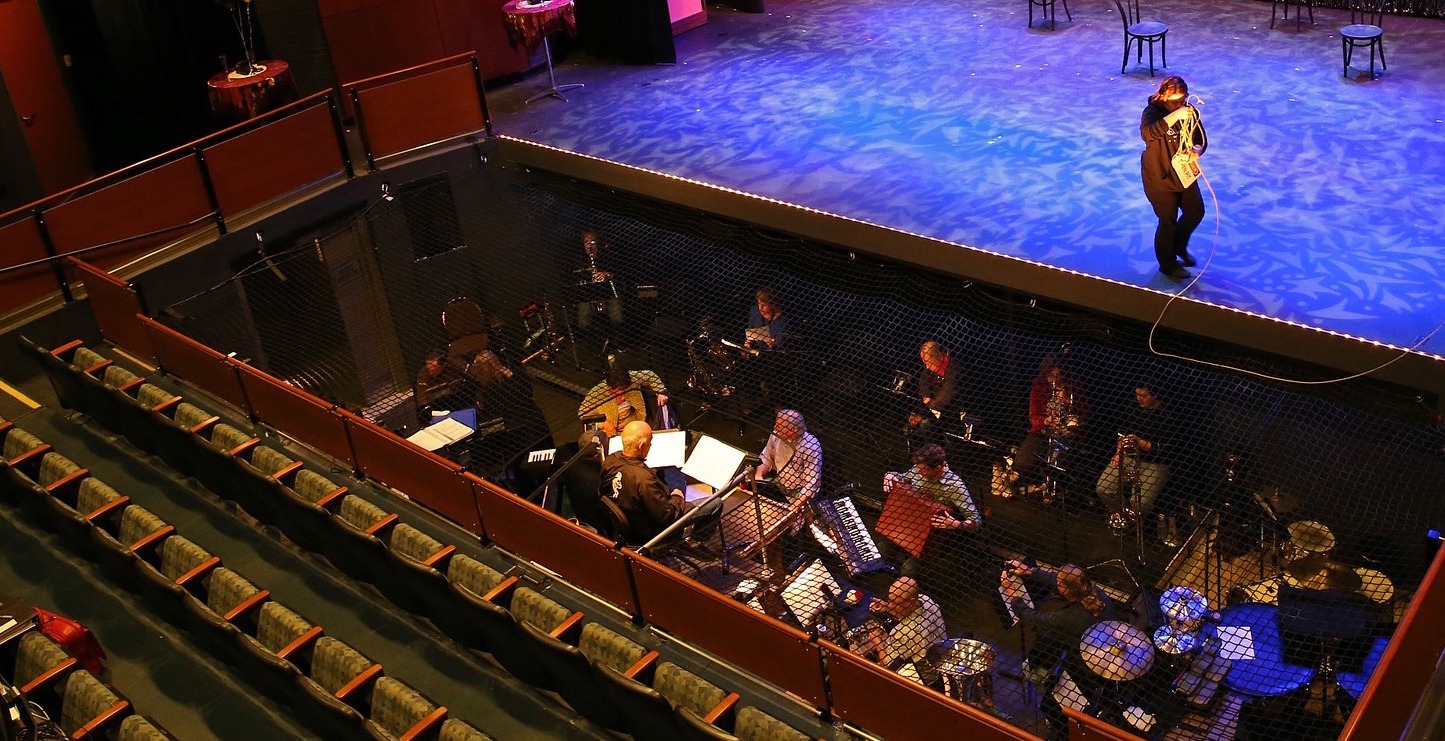
An orchestra pit is a recessed or designated space near the front of the stage, often partly or fully below stage level, where musicians play during a live performance such as a musical, opera, ballet, or some plays.
The pit is designed with a simple goal in mind: help the music blend with the action onstage. In practice, acoustics vary by venue, so some theatres also use shells, reflectors, or other design features to help the sound carry clearly into the house.
Where is the orchestra pit?
In many traditional theatres, the orchestra pit sits between the stage and the first rows of the audience. But not every venue has a pit, and not every production uses it. When a pit exists, it may be:
- Below the stage (a classic setup, especially in many opera houses and proscenium theatres)
- At floor level but separated from the audience by a barrier or rail
- Partly covered by a stage lip, with the musicians tucked under the edge of the stage
Some venues use pit lifts that can raise or lower the pit floor. That allows the same area to function as pit space for musicians, extra stage extension, or additional audience seating for certain events.
And sometimes the band is not in a pit at all. Depending on the show and the building, the ensemble might be placed offstage, behind a scrim, in side spaces, or in a separate room with audio and video monitoring.
Who is in the pit?
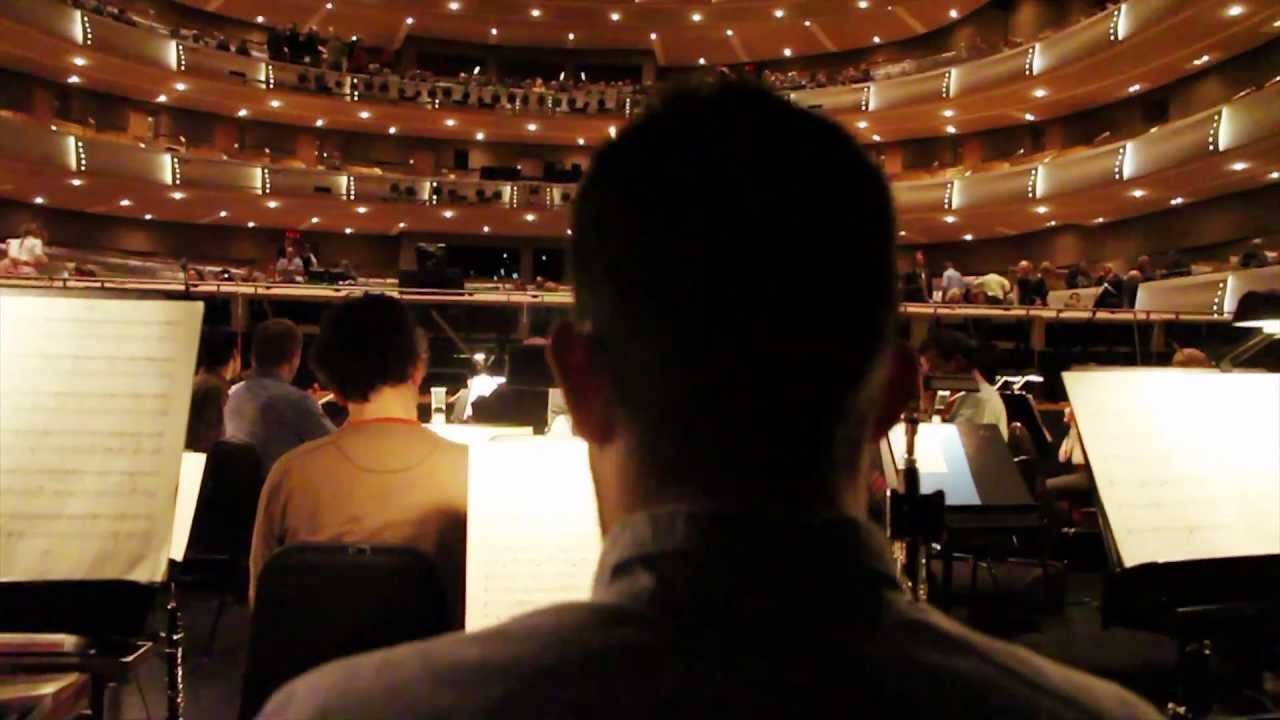
The orchestra pit is for the musicians and the conductor, plus occasionally music staff depending on the production.
Musicians
The exact lineup changes by show, but pits commonly include:
- Strings (violins, viola, cello, bass)
- Woodwinds (flute, clarinet, oboe, saxophone)
- Brass (trumpet, trombone, horn)
- Percussion (drums, mallet instruments, specialty percussion)
- Keyboard and harp (piano, synthesizer, celesta, harp)
- Guitars and bass (common in modern musicals)
In louder shows, you might also notice acoustic shields (often clear panels) used around brass or percussion to help balance volume and protect nearby players.
The conductor
The conductor usually stands at the front edge of the pit where they can see the stage. In musical theatre, the conductor may also be called the music director.
Because the pit can sit below stage level, conductors often use a slightly raised podium. In some productions, performers rely on monitors or a conductor video feed so everyone stays together even when sightlines are tricky or the music is tightly timed.
Can you see the pit?
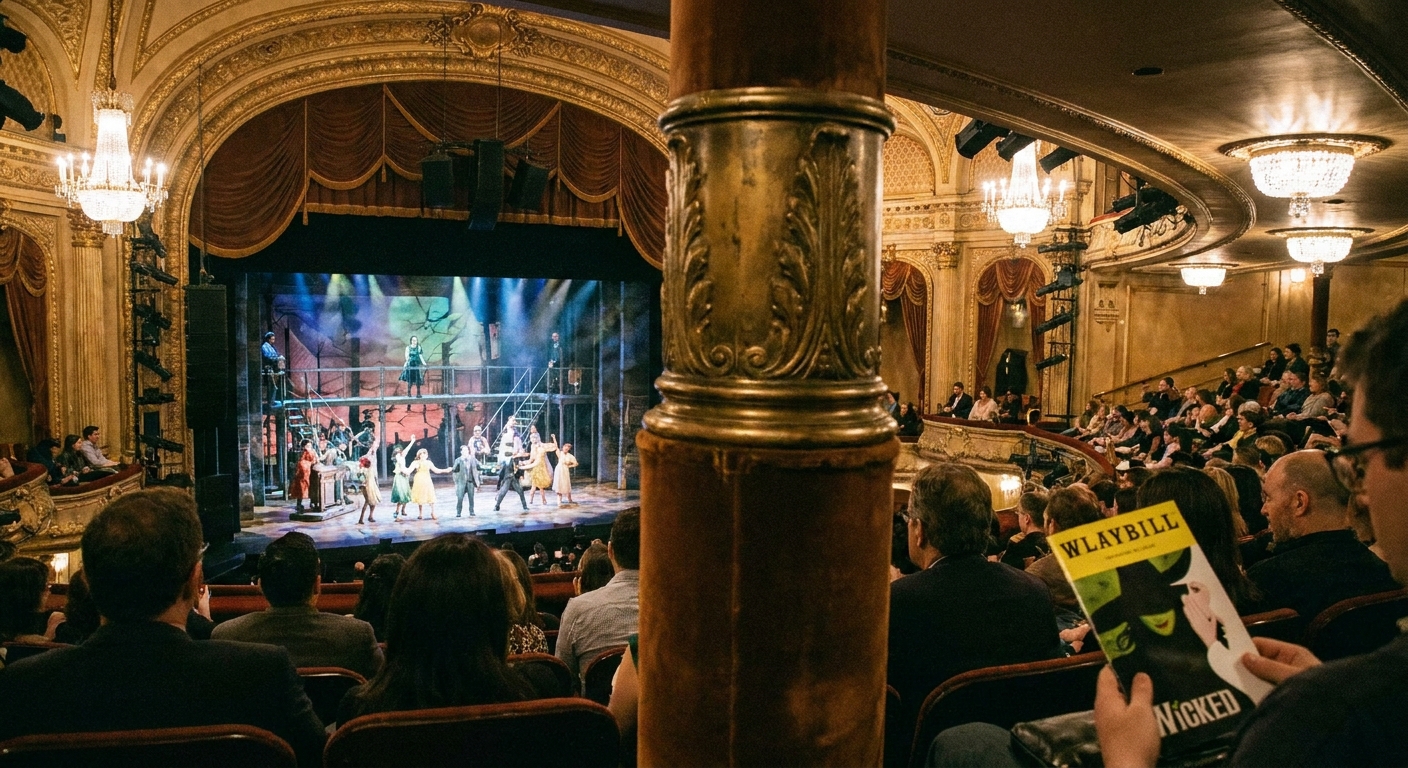
Sometimes yes, sometimes no. It depends on how deep the pit is and where you are seated.
- If the pit is deeply recessed, you might only see the conductor’s head and hands, or nothing at all.
- If the pit is shallow or at floor level, you may see many of the players, especially from side seats or front rows.
- In some theatres, the pit is covered or partially hidden under the stage overhang, so the musicians are mostly out of view even if you are close.
Either way, the goal is the same: the music is present and powerful, but the visual focus stays on the story unfolding onstage.
Pit vs orchestra seating
This is the mix-up that trips people most often.
Orchestra seating is a section of the audience. It is typically the main floor seating level, closest to the stage in many theatres and concert halls.
The orchestra pit is a workspace for musicians, positioned in front of or below the stage. It is not a place the general audience sits during a typical theatre, opera, or ballet performance.
If you are buying tickets and see “Orchestra” on a seating chart, you are almost always looking at audience seats, not the musicians’ pit.
Pit vs pit tickets
Another common confusion is between an orchestra pit and a pit ticket.
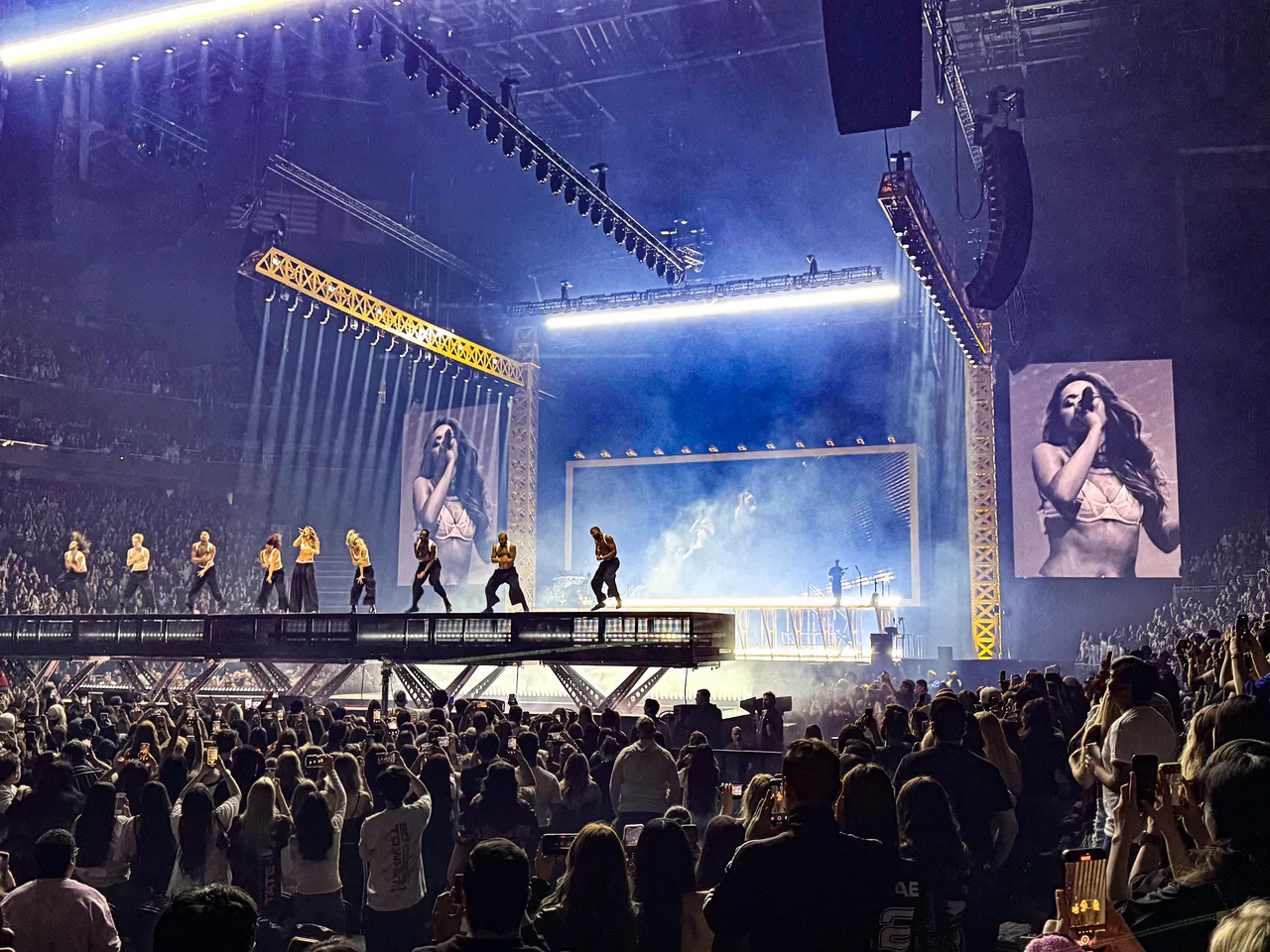
In many concert settings, “the pit” can mean a standing-room area directly in front of the stage for fans.
In theatre settings, “the pit” usually means the musicians’ orchestra pit.
When in doubt, look at the event type and the venue’s seating chart. In many Broadway-style theatres, the pit most often refers to where the band plays, even though some productions place players onstage, split them into multiple locations, or use other configurations.
Why is the pit below the stage?
Lowering the musicians slightly serves a few practical purposes:
- Sightlines: it helps keep music stands and instruments from blocking the stage view for front-row audience members.
- Sound balance: it can help the orchestra support voices and onstage action without overpowering them.
- Separation: it creates a clear boundary between performance space and audience space.
That said, every venue is different. Some modern theatres use adjustable acoustics, partial enclosures, and pit layouts that can change depending on the production.
Quick FAQ
Is the orchestra pit always used?
No. Some productions use recorded music, smaller ensembles placed elsewhere, or no music at all. Some venues also cover or convert the pit depending on the event.
Is the orchestra pit dangerous?
It is a working area with cables, tight spacing, and limited light, so it is treated like any backstage space with safety rules. For audiences, it is typically separated by barriers and staff protocols. For musicians, volume can also be a factor, so hearing protection and careful sound management are common in many pits.
Can audience members ever sit in the orchestra pit?
Occasionally, yes, but only when the venue has converted that area into seating for a specific event or configuration. For a standard musical, opera, or ballet performance, that space is reserved for musicians.
The takeaway
The orchestra pit is the musicians’ home base near the front of the stage, often below it, where the live score is performed in real time. It is different from orchestra seating (audience seats) and different from pit tickets at many concerts (standing-room audience areas).
Next time the overture starts and the stage is still, you will know exactly where that music is coming from.