The first time I heard someone say, “Honeywagon’s around the corner,” I pictured something charming and old-timey, like a circus cart with bunting. What I found instead was far more glamorous in its own way: a clean, climate-controlled restroom trailer, doing the quiet hero work of keeping a long shoot moving.
In film and TV slang, a honeywagon (sometimes written as honey wagon) usually means the production’s portable restroom trailer. Depending on the region, the crew, and the vendor, people may use it more narrowly (bathrooms only) or more loosely (a comfort-station setup that can also include small changing space). Either way, if someone tells you where the honeywagon is, they are telling you where to find the bathrooms.
What it is
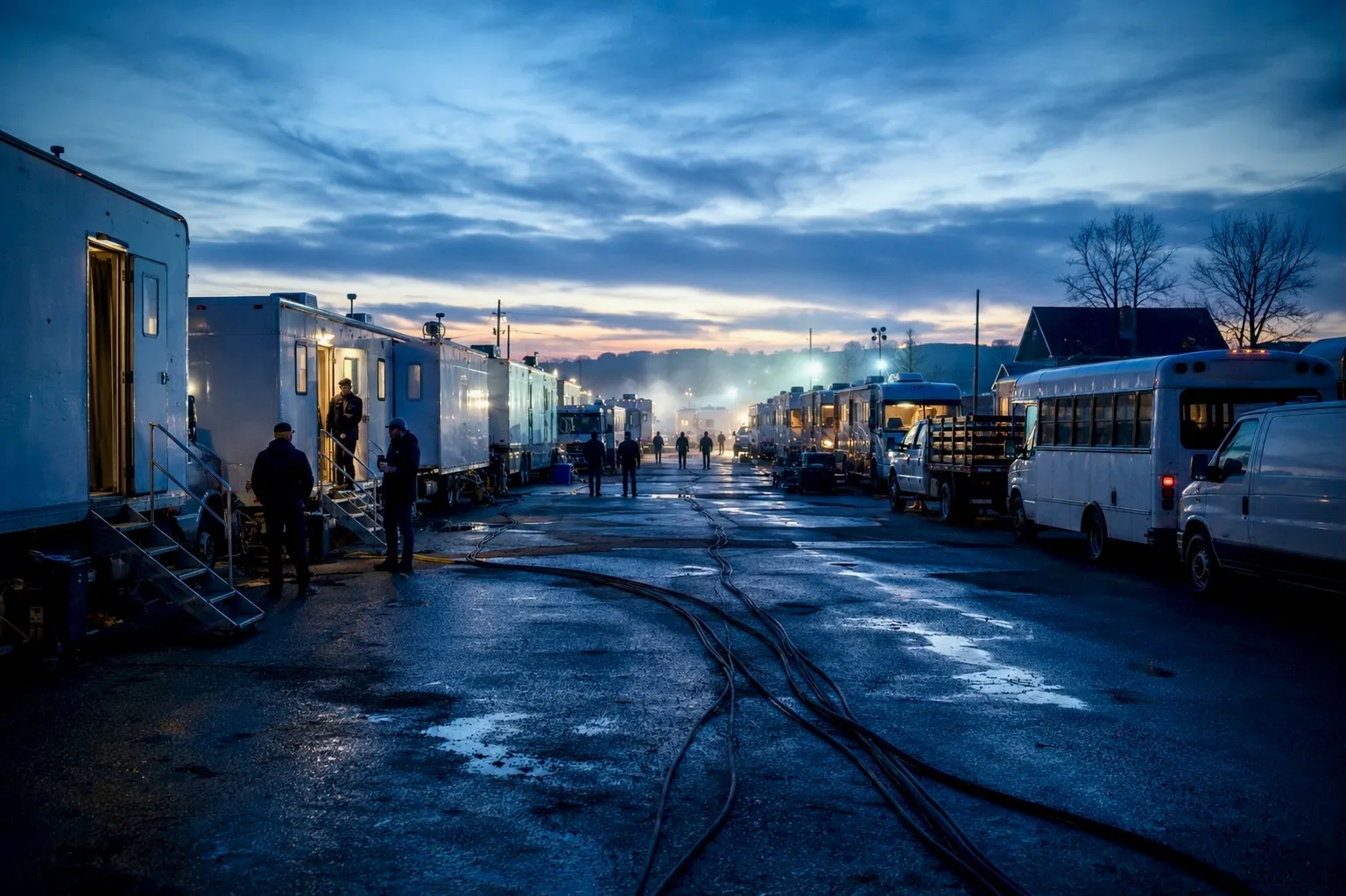
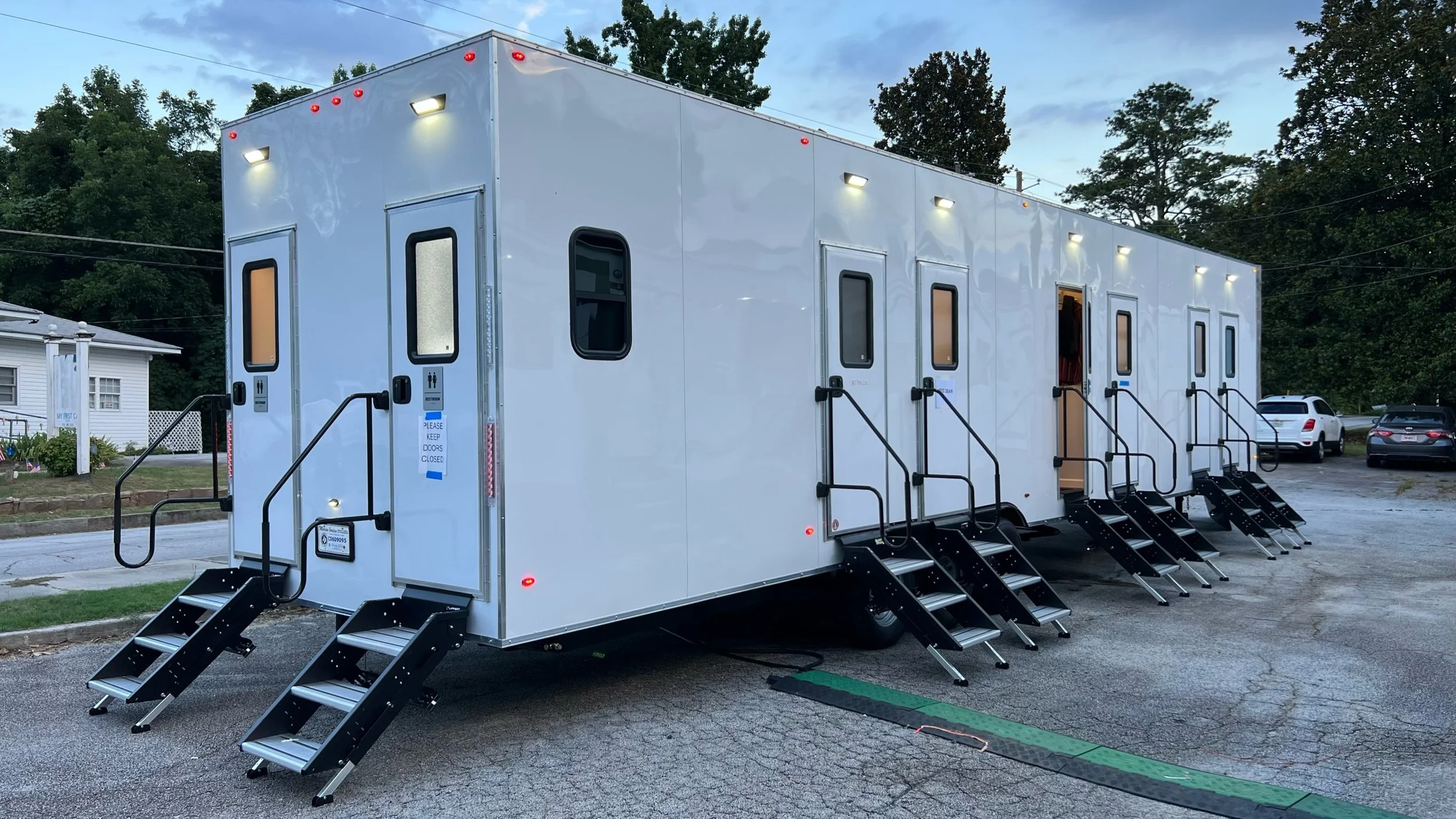
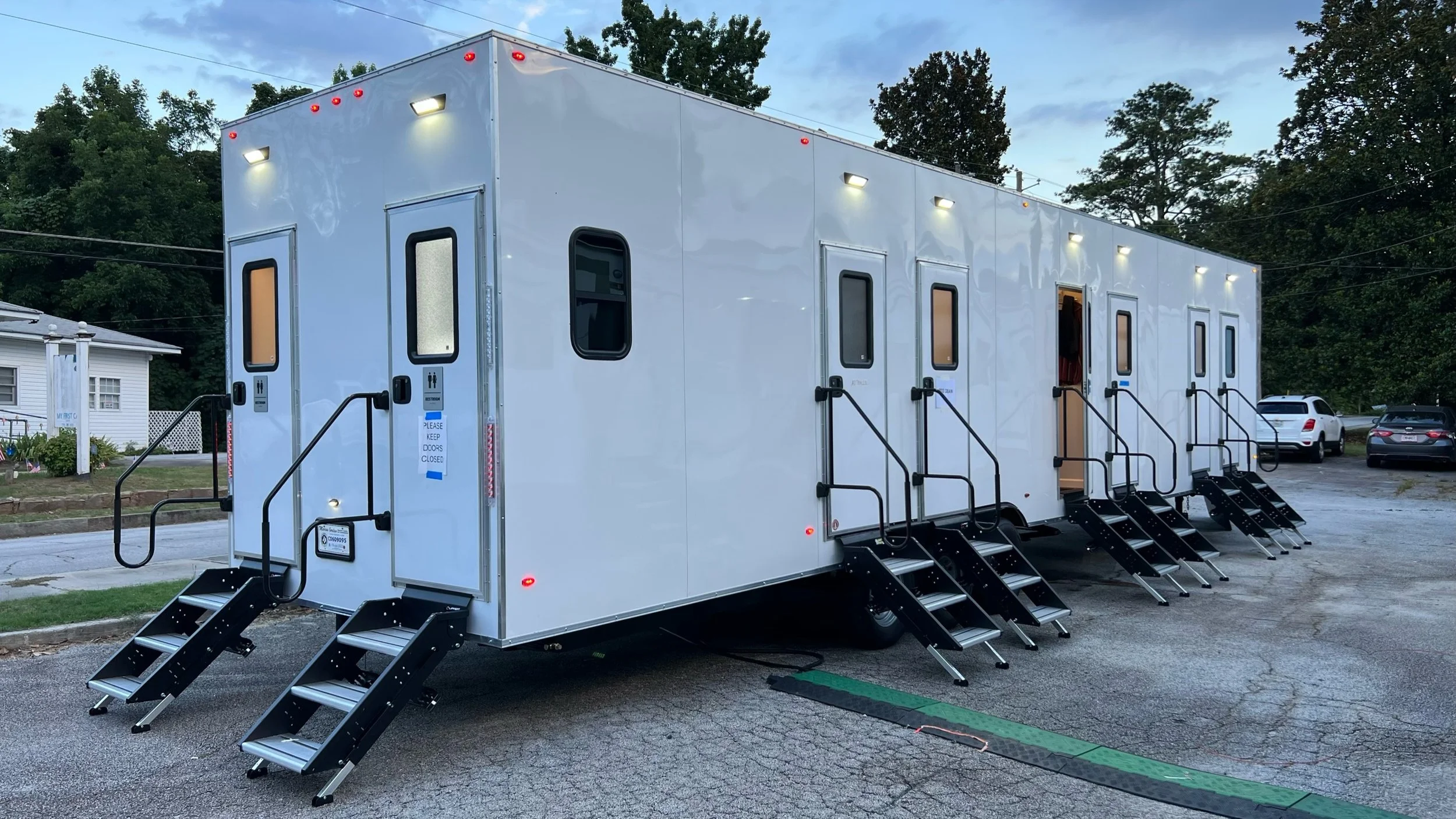
A honeywagon is a trailer designed to provide multiple restrooms for cast and crew. Think of it as the upgraded cousin of the standalone porta-potty: enclosed, well-lit, usually air-conditioned or heated, and built to handle heavy use across a long day.
On many sets, “honeywagon” is used as a catch-all for the restroom trailer. Some productions will call the same thing a comfort station or just “the restroom trailer.” The exact label varies. The function does not.
What’s inside
- Multiple stalls (often separated by gender signage, sometimes labeled more neutrally)
- Sinks with running water, soap, and paper towels
- Mirrors and decent lighting
- Trash bins and basic ventilation
- Steps and handrails at the entrance
Some units include tiny dressing or changing nooks, but do not assume you can use them for wardrobe unless someone tells you explicitly. The trailer’s primary purpose is exactly what you hope it is.
On better-equipped shows, you may also see an ADA-accessible restroom built into the trailer or staged as a separate accessible unit nearby. If you need it, ask a PA so you are routed to the closest option without a scavenger hunt.
Where it parks
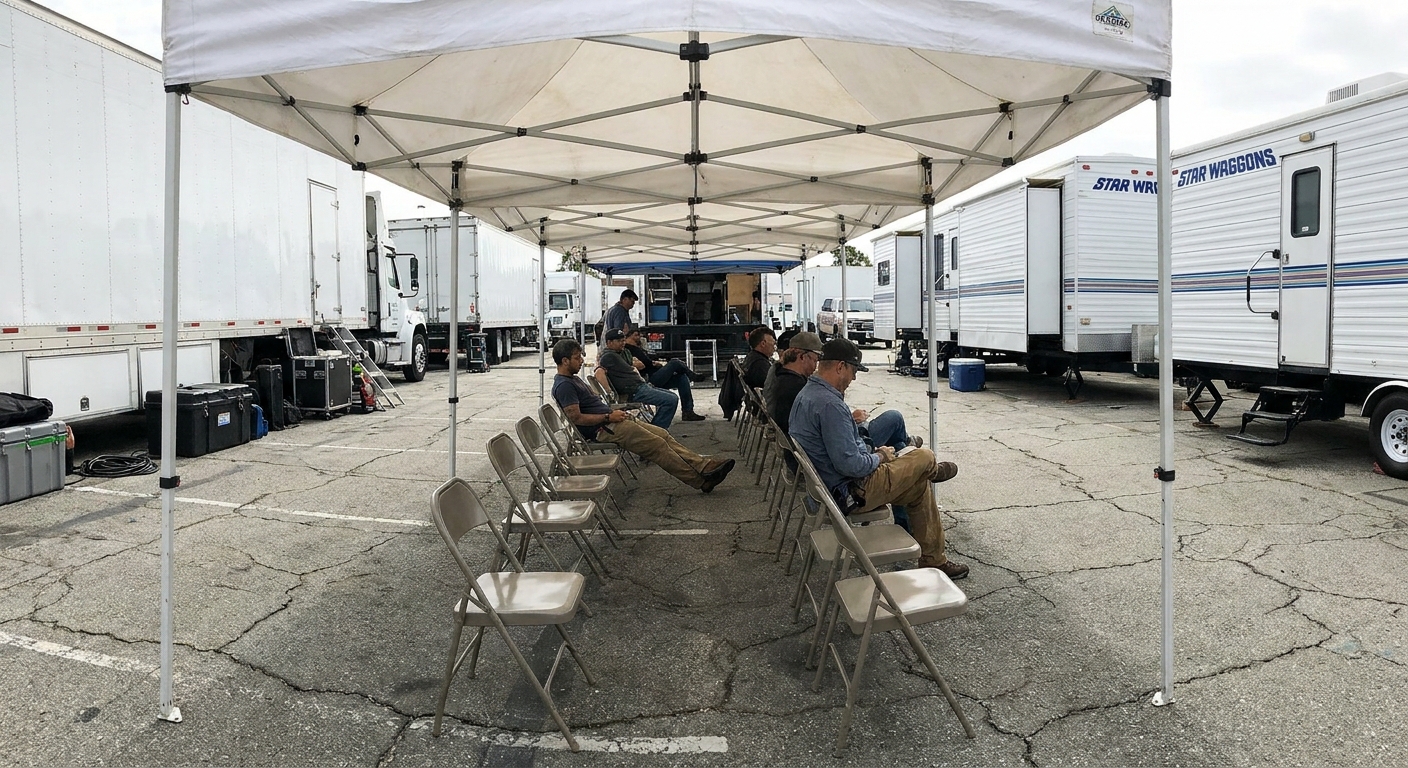
Often, the honeywagon is parked at base camp, not right next to the camera. That is intentional. Base camp is where the support infrastructure lives. It is also where big vehicles can sit without turning the filming location into a crowded loading zone.
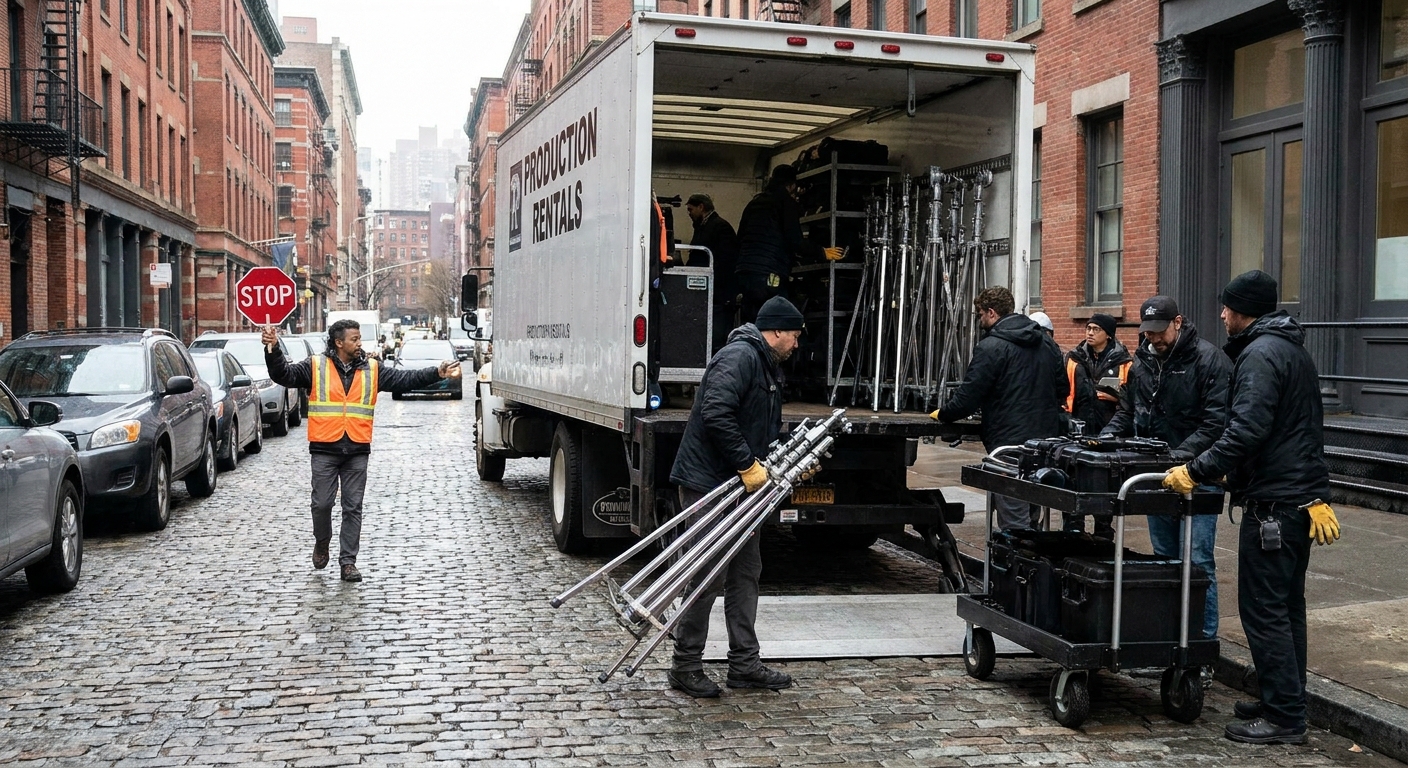
But “often” is doing real work here. Tight city permits, limited parking, or a spread-out company move can change the plan. Productions place restrooms wherever they can keep them accessible and serviceable without disrupting the shoot.
Common setups include:
- At base camp when the set is close by and the walk is reasonable.
- In a nearby lot or side street when base camp has limited space.
- In multiple spots on larger shoots, when the unit is spread out.
If you are working background, a production assistant will usually point you toward restrooms during check-in or as part of the holding area orientation. If you are ever unsure, ask a PA quietly and directly. “Where’s the nearest restroom trailer?” is a completely normal question.
Who uses it
In general, the honeywagon is for everyone working the day, but how access is organized can vary based on the production’s size, the location’s layout, and simple crowd management.
Crew
Crew members are often in constant motion and tend to use the closest available facilities. If the main restroom trailer is parked farther away, there may be additional portable toilets staged closer to set. The goal is to keep people safe and to avoid work slowdowns.
Cast
Principal cast typically have access to the honeywagon like anyone else, but they may also have private facilities connected to their dressing trailers depending on budget and logistics. On a leaner indie shoot, it is common for everyone to share the same restroom trailer. On a big studio day, there may be more separation simply because the footprint is larger.
Background actors
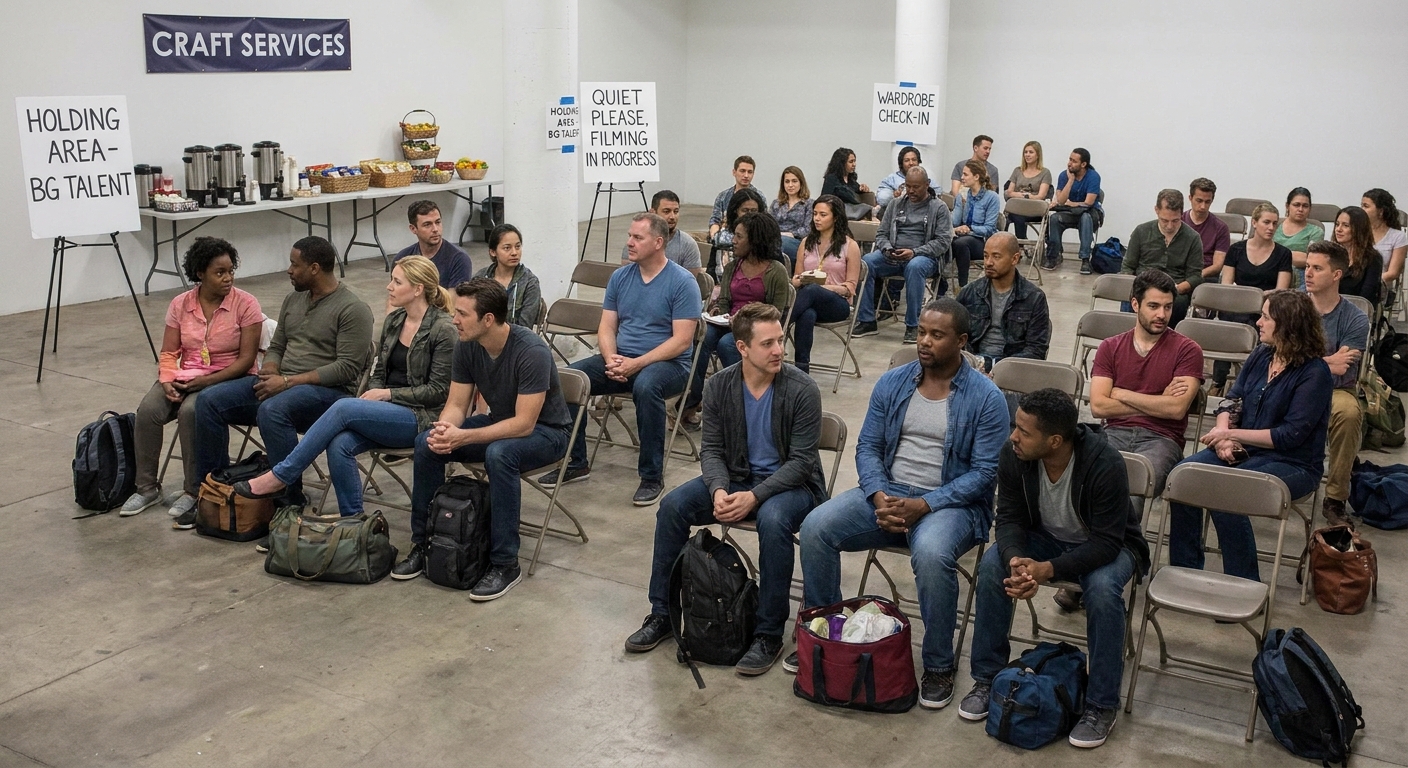
Background performers usually use the restrooms located nearest background holding or base camp. That might be the honeywagon, or it might be additional portable restrooms staged nearby. If you are in holding for hours, restroom access is part of the basic setup, right alongside water and a place to sit.
How it fits with base camp
If you have never been on a set, here is the simplest way to picture the geography:
Base camp
Base camp is the production’s home base for the day. Departments stage gear there. Support services cluster there. The honeywagon is frequently placed there because it is easier to stock, clean, and service without interfering with filming.
Catering
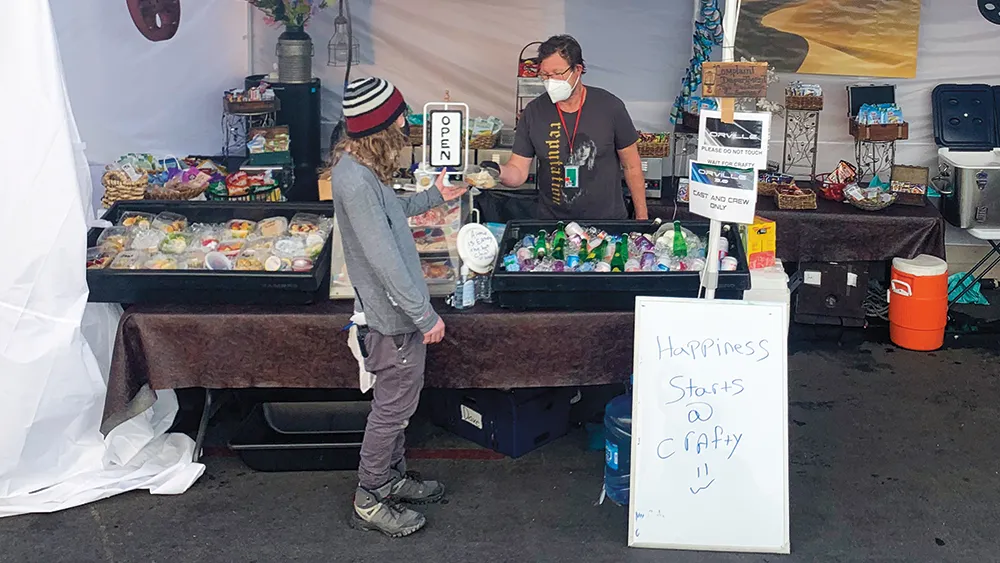
Catering is usually at or near base camp too, because feeding people requires trucks, food-safe setup, and space. Since large groups move through catering at predictable times, it is practical to have restrooms nearby. If you have ever watched a lunch line form with the urgency of a Broadway intermission, you understand why.
Background holding
Background holding is the designated waiting area for background actors when they are not needed on camera. Holding might be a tent, a rented room, a corner of a warehouse, or a section of a parking lot. Wherever it is, it typically sits within the broader orbit of base camp. Restrooms for background are commonly positioned so that leaving holding for a bathroom break does not mean getting lost, crossing active set, or missing a cue.
Etiquette
Restroom trailers are a small space shared by a lot of tired people. A little etiquette goes a long way, and it is quietly appreciated by everyone.
- Be fast, not frantic. If there is a line, keep things moving.
- Do not camp out at the sink. If people are waiting, this is not the moment for a full makeup reset or a five-minute face-wash routine.
- Leave it better than you found it. It is not your bathroom at home, but it is also not a place to treat like it is someone else’s problem.
- Do not do wardrobe changes unless told. Some units have changing space, but that does not automatically make it open season.
- Skip phone calls inside. Privacy and basic courtesy matter, and sound carries.
- Follow the route you were given. Do not cut through set just because you know a shortcut. If cones, signs, or PAs point you a certain way, there is a reason.
- Flag issues early. If supplies are out, something is broken, or the trailer needs attention, tell a PA or locations so it can be handled quickly.
One more practical note: if you are in background and you get the call that you are “up,” wrap up quickly. The assistant director team is not being cruel. They are trying to keep a very expensive machine on schedule.
Honeywagon vs. porta-potty
Not quite the same thing. A porta-potty is a standalone portable toilet. A honeywagon is a restroom trailer with multiple stalls and sinks, and it is usually more comfortable, better lit, and easier to keep sanitary across a long day.
Many sets use both. If the day involves a long walk from base camp to the filming location, you might see the honeywagon stationed at base camp and additional portable toilets placed closer to set for convenience.
Quick FAQ
Why is it called a honeywagon?
It is long-running crew slang for the restroom trailer. Ask five people and you might get five versions of the origin, and not all of them agree. What is consistent is the on-set meaning: it is where the bathrooms are.
Can anyone use it?
Typically, yes, it is intended for cast and crew. On some productions, there may be separate facilities for specific areas of work or for practical traffic flow. If signage or a PA directs you to a particular restroom, follow that guidance.
Where should I go if I cannot find it?
Ask the nearest production assistant: “Where’s the restroom trailer?” They will point you the right way, or tell you which restrooms are designated for your area.
Is it usually at the filming location?
Sometimes, but often it is staged at base camp or in a nearby support area. Sets try to keep heavy trailers and extra foot traffic away from the shooting area to reduce noise, crowding, and interruptions.
The quiet luxury of a well-run set
Movie magic is built on a thousand practical details, and the honeywagon is one of the most essential. It is not glamorous, but it is part of what makes a set humane and functional. When you see a honeywagon parked neatly where people can find it, stocked, clean, and ready for a long day, you are looking at production logistics doing their job perfectly. Which, in its own behind-the-scenes way, is a kind of artistry too.