There is a particular kind of theater thrill that only happens on a sold-out night: the lobby buzzes like a beehive, the house staff moves with purpose, and someone near the box office whispers the three magic letters, SRO. A standing-room-only ticket is exactly what it sounds like, but in theater, the details matter. Where do you stand? Can you see? And if an empty seat appears like a mirage halfway through Act One, do you get to take it?
What standing room means
A standing-room-only (SRO) ticket is a legitimate ticket that some theaters offer for certain performances, usually when seated inventory is gone or effectively at capacity. Instead of a standard assigned seat, you are admitted to the performance with the expectation that you will watch from a designated standing area.
SRO is most commonly associated with plays and musicals that are hot, sold out, or in that word-of-mouth moment where everyone decides this is the week they must go. It is also an old-school solution. Before lotteries became apps and rush lines got social media famous, SRO was one of the reliable last chances for getting in the building.
Where you usually stand
Standing areas vary by theater, but in plays and musicals they typically fall into one of a few patterns:
- Along the back wall of a seating section where there is a narrow strip of space behind the last row, sometimes with a railing or a clear boundary.
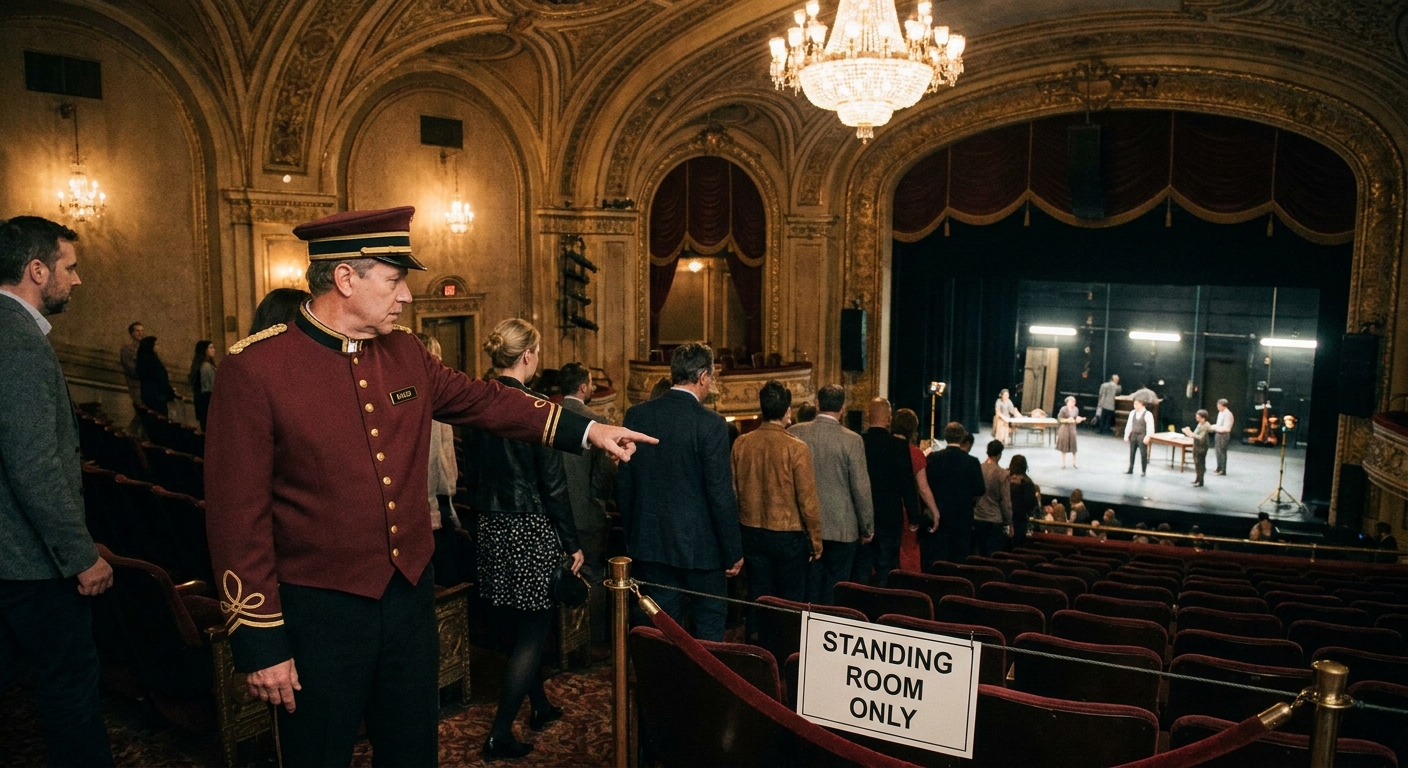
- In designated standing areas that are marked out by stanchions or staff direction, meant to keep sightlines reasonably consistent and aisles clear.
- On side areas behind seating where the architecture creates an extra sliver of standing room that does not block other patrons or exits.
What it is not: standing in an aisle, blocking a doorway, or floating wherever you like. Legitimate SRO is controlled by the house for safety and sightline reasons, and in my experience ushers tend to be firm about keeping walkways clear.
What the view is like
The honest answer is: it depends on the theater, the standing location, and the staging, but you should expect a view that is serviceable, not luxurious. You are usually positioned at the back of a section, so you are farther from the stage and your view can be affected by the people seated in front of you, especially if you are shorter or the rake of the seating is shallow.
Common sightline realities
- You might lose the very bottom of the stage. In some houses, standing patrons can miss feet, floor choreography, or low-placed props.
- You are more likely to see “pictures” than micro-acting. You will catch the overall composition, lighting, and movement, but tiny facial expressions may be harder.
- Side standing areas can clip stage corners. If you are off to one side, you may miss entrances, exits, or moments played far stage left or right.
That said, for certain shows, especially big, bold musicals with strong design and clear storytelling, SRO can still be a great night out. The energy of being in the room is real, and the sound can be surprisingly good even when your vantage point is not.
When SRO tickets are sold
Procedures vary by theater and by production, and some shows simply do not offer SRO at all. When SRO is offered, it is usually sold when a performance is sold out or close enough to sold out that the venue is not expecting to release meaningful seated inventory, and only when the theater has confirmed it can safely accommodate additional patrons in standing locations.
Common timing patterns include:
- Day-of at the box office. Many theaters treat SRO as an in-person, day-of option.
- Close to curtain. Some venues wait until shortly before showtime to be sure they will not need to hold space for operational reasons.
- After holds are resolved. The theater may need to release or confirm house holds reserved for accessibility, operations, VIPs, or press before it can decide how many SRO spots exist.
If you are chasing SRO, build your plan around flexibility. Think of it as a last-minute door that sometimes opens rather than a guaranteed category you can always buy in advance. It also never hurts to ask the box office what their policy is tonight, because rules change faster than the average theatergoer’s memory.
Do you ever get a seat?
Sometimes, yes. But it is not a promise, and it is not the central deal of SRO. It is more like a possibility that depends on how the audience shakes out that night and how the house manages late arrivals and holds.
How seats can open up
- No-shows. A patron who bought a ticket simply does not arrive.
- Late releases. House seats or holds that were kept back for creative, VIP, press, accessibility, or operational needs may be released once it is clear they are not needed.
- Occasional relocations. In some situations, the house might move people for sightline or technical reasons, freeing a seat elsewhere.
How it works in the room
Each theater has its own etiquette and policy. In many cases, an usher may identify open seats and either invite SRO patrons to take them at a specific point in the performance or hold the seats until intermission to reduce disruption.
It is also possible that nothing happens at all, even if you spot empties. The theater may be holding those seats for latecomers, accessibility needs, or internal use. The best practice is simple: do not self-seat unless an usher instructs you to. If you are unsure, ask at intermission.
What it feels like
Standing for a full-length musical is an athletic commitment. Even a well-paced play can feel long if you are shifting your weight and trying not to block anyone’s view. Wear shoes you can actually stand in, and assume you will be upright for longer than you think you will.
In exchange, you get something oddly invigorating: you are hyper-present. You are not settling into a seat and disappearing. You are watching with your whole body, the way stage managers and crew watch from the wings.
I grew up in Chicago around musicians and set builders, the kind of people who spend shows standing anyway, monitoring cues and listening for the room. SRO audiences remind me of that. There is a quiet camaraderie in the back, a shared agreement that you are here because you really want to be here.

Accessibility note
SRO is not a good fit for many people, including patrons who cannot stand comfortably for long periods. If you have a mobility or access need, call the box office and ask about accessible seating, late seating policies, or other options for that performance. The staff can usually tell you what is realistic in that particular house.
SRO etiquette
- Arrive early. Even in standing areas, position matters. Early arrival can mean a cleaner sightline.
- Follow usher instructions. They are balancing safety, traffic flow, and other patrons’ experience.
- Keep belongings compact. Large bags can trip people or block narrow spaces.
- Stay aware of people behind you. If you can adjust slightly to avoid blocking another patron’s line of sight, do it.
- Plan for standing. Some venues have rails you can lean on. Some do not. Assume you will be upright.
Is SRO good for a musical?
It can be, particularly if your priority is simply being in the room for a show you cannot otherwise access. Musicals often play large, with visuals and sound that still read from the back. But if the production relies heavily on subtle acting details, floor-level choreography, or intricate staging at the very front edge of the stage, SRO can feel like watching a painting from across the gallery.
The key is to treat SRO as what it is: a real ticket that trades comfort and guaranteed sightlines for access. When that trade-off fits your night, it can feel like getting away with something.
SRO FAQ
Are SRO tickets cheaper?
Often they are priced lower than many seated options, but pricing is set by each production and can vary widely. The defining feature is not the price, it is that you are admitted without a seat.
Will my ticket show a seat number?
Sometimes it will simply say SRO, and sometimes the ticketing system may print a placeholder location for tracking. Either way, you should expect to be directed to a standing area, not an assigned chair.
Can you leave your spot and come back?
You can usually step out to the lobby or restroom, but you may not be able to reclaim the exact same sightline if the standing area is crowded. If you have a great view, think carefully before you surrender it.
Is SRO the same as rush?
No. Rush usually refers to a limited number of tickets sold at a set time, often day-of, sometimes at a reduced price. Rush tickets can be seated or standing depending on the show’s policy.
Is there a limit per person?
Often, yes. Many box offices limit how many SRO tickets one person can buy, and some pick-up situations may involve ID or a card match. Policies vary, so it is worth asking when you get to the window.
Will the show mention that you are standing?
No. Once the lights go down, you are simply part of the audience. The only difference is your vantage point.