Rush tickets are one of the last genuinely old-school Broadway thrills: you wake up, you take your chances, and you might end up in a great seat for a fraction of the usual price. They are not glamorous. They are not guaranteed. They are also one of the best ways to see a hot show without handing your budget over to resale markups.
Below: what rush tickets are, how they usually work (in person and digital), when to show up, where to buy, and how to improve your odds whether you are a student, a tourist on a tight schedule, or a last-minute planner who just wants to be in the room.

What rush tickets are
Rush tickets are discounted, same-day tickets offered by a show, typically through the theater box office or an official ticketing partner (including authorized apps and platforms). The goal is simple: get more people in the room at an accessible price, whether that is to move last-minute inventory, broaden access, or both.
What rush is not:
- Not advance cheap tickets. Rush is usually same-day only.
- Not resale. If you are seeing huge “processing” or “delivery” fees and the URL is not the show’s official seller, you are probably not buying rush.
- Not always the worst seats. Sometimes rush is partial view, sometimes it is front row, sometimes it is an unexpectedly excellent side orchestra seat. It depends on the show, the day, and what is left.
Every production sets its own rush policy, so details vary. But the big picture stays consistent: rush is limited, priced below standard tickets, and generally first-come-first-served, whether that means a physical line or an in-app queue.
What rush tickets cost
Prices vary by production, but rush is usually positioned as a true discount. You will often see rush tickets in the $30 to $60 range, with some shows lower and some higher depending on demand, seat location, and policy.
Best practice: treat any specific price you read online as “as of that day.” Confirm on the show’s official site, official ticketing partner, or by calling the box office.
When rush goes on sale
Most rush tickets go on sale when the box office opens for the day, or at a set time for digital rush. That timing can change by day of week, holidays, and the theater’s schedule.
Typical timing
- In-person rush: Usually begins at box office opening. For Broadway, that is often late morning, but each theater can differ.
- Digital rush: Often opens at a set time, frequently in the morning (commonly 9 to 11 a.m., show-dependent), and tickets can disappear fast.
- Extra same-day releases: Some shows may release additional seats later (for example, when holds are released). If you miss the initial drop, it can still be worth checking back.
Best practice: confirm the show’s rush policy the night before. Look at the show’s official website, the theater’s box office page, or the official ticketing app or partner platform. If the policy is unclear, call the box office and ask what they recommend.
Where to buy rush
There are two main lanes: in-person box office rush and digital rush. Both can be great. Both can be mildly chaotic. Only one requires standing outside in weather that makes you question your life choices.
In-person rush
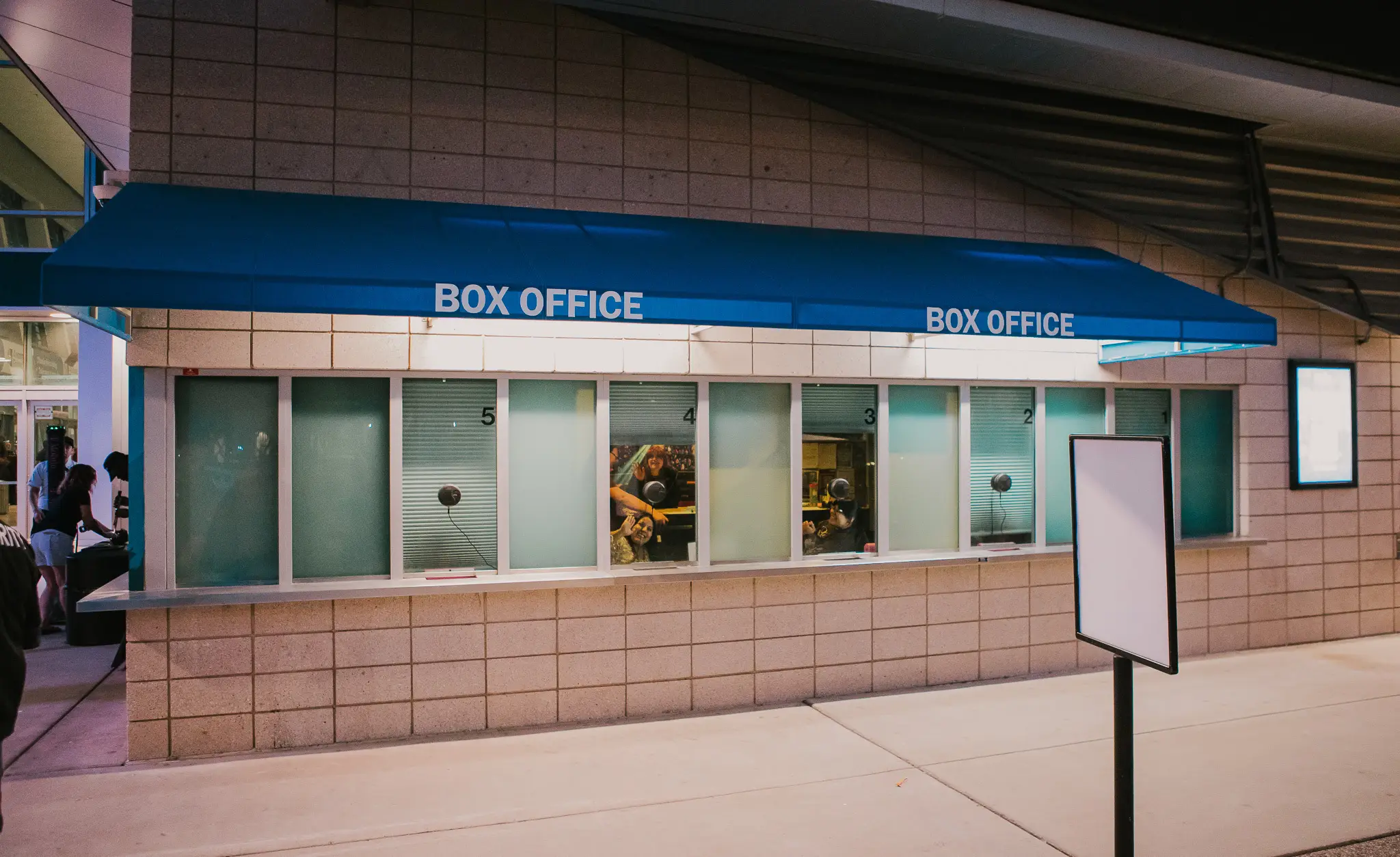
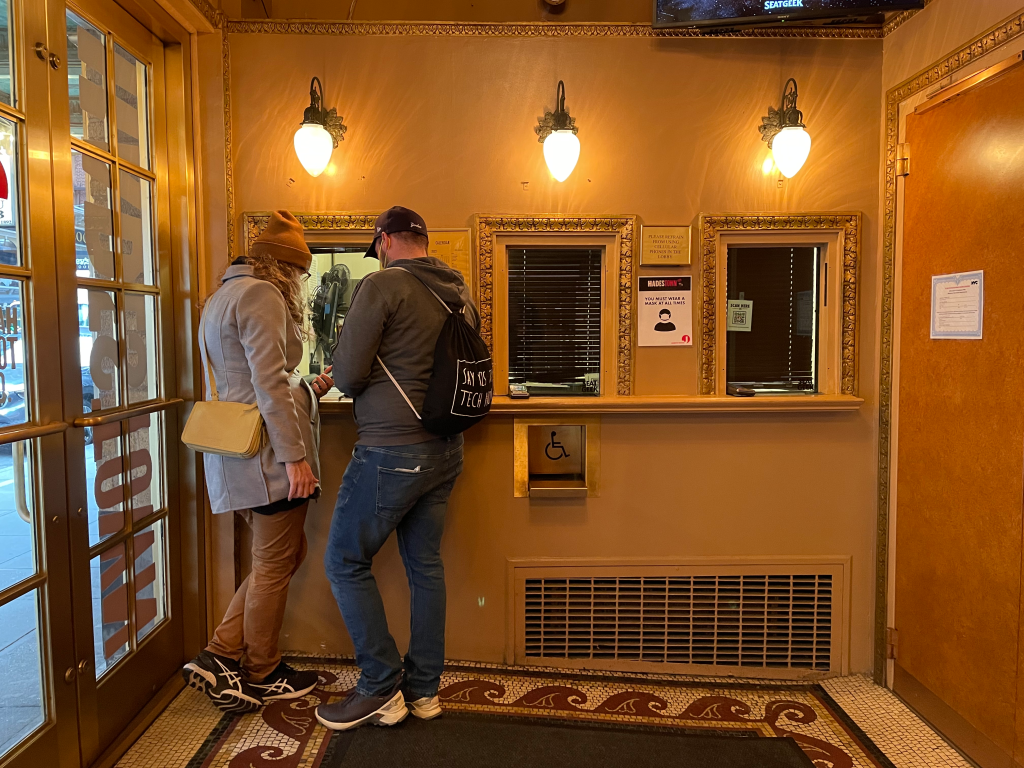
This is the classic method. You go to the theater, line up, and buy directly from the box office window once it opens.
- Where: the theater’s box office (not a third-party kiosk).
- How it works: first come, first served until the rush allotment is gone.
- What you need: a payment method and patience. Sometimes an ID if it is a student rush policy.
Digital rush
Some productions sell rush tickets through official platforms or authorized partner apps. You enter the rush queue in the app, attempt to purchase the moment it opens, and then check out quickly if you get through.
- Where: the show’s authorized ticketing platform or official partner app.
- How it works: a timed drop, often with a limited checkout window.
- What you need: an account set up in advance, payment saved, and fast fingers.
How availability works
Rush tickets live in the in-between spaces of a show’s inventory. That means availability is shaped by demand and by how many seats the production decides to allocate that day.
What affects your odds
- Day of week: Midweek performances often have better odds than weekends.
- Tourist seasons and holidays: Expect heavier competition.
- Weather: Bad weather can thin lines. This is the one time you can be grateful for drizzle.
- Cast changes and buzz: A new star, a closing notice, or a viral moment can turn rush into the Hunger Games.
- Matinee days: More performances can mean more inventory movement, but also more people trying.
What seats you might get
It depends. Rush seats can be:
- Partial view (common, and still often worth it if you know what you are getting)
- Front row (thrilling for plays and intimate musicals, intense for big dance-heavy shows)
- Side orchestra or mezzanine (sometimes surprisingly solid)
If you are sensitive to obstructed views, tell the box office clerk what you need. They cannot rewrite the theater, but they can usually explain what the seat is like before you pay.
In-person rush steps
- Pick your show and confirm policies the night before. Check whether it is general rush, student rush, or no rush at all.
- Arrive earlier than you think you need to. For high-demand titles, “at opening” can mean “too late.” For quieter days, arriving closer to opening can still work.
- Bring the essentials. Charged phone, water, a snack, an umbrella, and whatever ID is required.
- Know your dealbreakers. One ticket or two? Matinee only? No partial view? Deciding in advance makes the purchase moment calmer.
- Ask about options. Sometimes there are multiple price points, different seat locations, or standing room (when offered).
- Have a Plan B. If the rush line runs out, pivot to another show nearby, a same-day regular ticket, TKTS, or a different discount program.
Digital rush tips
Digital rush rewards preparation. The purchasing window can be short, and the difference between success and defeat is often whether your account is already set up.
- Create accounts in advance on any official apps or partner platforms you might use.
- Save your payment method and confirm it works.
- Log in early and be in the rush section before the drop time.
- Use a stable connection. If your phone signal is unreliable, find solid Wi-Fi.
- Check out immediately. Do not browse like you are shopping for throw pillows.
If you strike out, refresh once or twice at strategic intervals. Carts time out. People hesitate. Tickets sometimes reappear.
After you buy
- Check delivery method. Box office purchases are usually physical tickets, while digital rush may be mobile or will-call.
- Confirm ID requirements. Student rush and some special programs may require the purchaser’s ID at pickup or entry.
- Note the time window. Some digital rush tickets must be claimed by a certain time or they can be re-released.
- Arrive like a professional. Give yourself enough time for security, finding your seat, and the very real maze of some older theaters.
Accessibility notes
If standing in line is not feasible, you still have options. Digital rush can be the easiest alternative, and many theaters can answer questions by phone about policies, accessible seating, and what accommodations may be available. If you need specific access support, call the box office directly and ask what the most workable route is for that show.
Tips for students
Student rush can be a lifesaver, especially when a show offers a dedicated student price. Policies vary widely, so treat the details like part of your pre-show reading.
- Bring a valid student ID. Some box offices accept international IDs, some want current enrollment documentation. When in doubt, bring both if you have them.
- Ask about “one per ID” rules. Some student rush programs limit the number of tickets per person.
- Be flexible about seat location. Student rush often prioritizes price over placement.
- Go midweek if you can. It is not just less crowded. It can also be a calmer, more focused performance vibe.

Tips for tourists
If you are visiting New York or catching a regional theater stop with only a day or two to spare, rush is still possible. You just need to build your day around uncertainty.
- Pick two or three acceptable shows. If your top choice sells out in rush, you can pivot immediately.
- Choose a matinee day. It gives you more performance options and makes it easier to adjust.
- Know your transit time. If you are staying far from the theater district, leave earlier than you think. Rush lines do not pause for subway delays.
- Avoid resale panic. If you strike out, check the official seller for standard tickets or TKTS before you consider resale.
Tips for last-minute plans
Some of the best theater memories begin with “Want to see something tonight?” Rush can be part of that spontaneity, but it helps to know how to read the day.
- Check again in the afternoon. Holds can be released and extra seats can appear.
- Go in person even if digital rush failed. Some shows offer one but not the other, and inventory can differ.
- Be open to different sections. If you are chasing price, let location be the flexible variable.
- Bring a flexible friend. Pairs are harder than solo tickets. If you can split up or accept non-adjacent seats, say so.
Rush vs other options
Rush vs lottery vs standing room
These terms get thrown around like everyone learned them in Theater 101. Here is the plain-language version.
- Rush: same-day tickets sold at a discount, generally first come first served (in person or via an in-app queue).
- Lottery: you enter for a chance to buy discounted tickets. Winners are randomly selected.
- Standing room: no seat, you stand in a designated area. Not every show offers this, and policies vary.
Rush vs TKTS
TKTS is a same-day discount program, but it is not the same thing as rush. TKTS sells discounted tickets for many shows from official booths, usually at set percentage-off pricing. Rush is run by individual productions with their own rules, their own allotment, and often lower fixed prices. If rush is sold out, TKTS can be an excellent backup.
Common rules
- Limit per person: often 2 tickets, sometimes 1.
- Same-day only: typically for that day’s performances.
- ID requirements: common for student rush, occasional for other discounts.
- No seat selection: you may be assigned best available within the rush allotment.
- Final sale policies: exchanges and refunds are often limited.
Avoid resale markups
If your goal is “cheap and legit,” your best friend is the word official.
- Buy from the theater box office or the show’s authorized seller or official partner platform.
- Be wary of lookalike URLs that mimic official ticketing pages.
- Check the show’s website for the correct ticket provider and rush instructions.
- Skip urgency language that pushes you into “limited time” checkout on a resale site.
Rush is meant to be a bargain. If the price feels like a splurge, you have probably wandered into resale territory.
Rush ticket FAQ
How early should I line up?
It depends on demand. For buzzy, limited-availability shows, people may arrive well before the box office opens. For less in-demand performances, arriving closer to opening can still work. If you only have one shot, earlier is safer.
Is rush always the cheapest option?
Often, but not always. Lotteries and occasional promotions can match or beat rush prices. Rush has the advantage of being straightforward: you either get the ticket or you do not, same day.
Can I buy rush tickets online?
Sometimes. Many productions offer digital rush through official apps or authorized partner platforms, while others keep rush strictly at the box office.
Can tourists get rush tickets?
Yes. Rush is not reserved for locals, unless it is specifically labeled as student rush or has another eligibility requirement.
What if I get partial view seats?
Ask the box office what “partial view” means for that specific seat. In some theaters it is a minor obstruction. In others it can be significant. If it is a dealbreaker, say so before you pay.
Pre-rush checklist
- Confirm the show offers rush and whether it is in person, digital, or both
- Double-check the on-sale time
- Bring ID if you are aiming for student rush
- Decide your must-haves (time, number of tickets, view tolerance)
- Keep a Plan B show in your back pocket
Rush is part bargain, part sport, and part love letter to the idea that art should still have a door you can walk up to and afford. Sometimes you will miss. Sometimes you will land in the kind of seat that makes you stay through every last bow and curtain call, just to say thank you.