There are finales that tie bows, and then there are finales that light a fuse. Lanterns ends its first season firmly in the second category, finally delivering what the show has been patiently steering toward: John Stewart taking the ring, speaking an oath that sounds like him, and launching into whatever comes next.
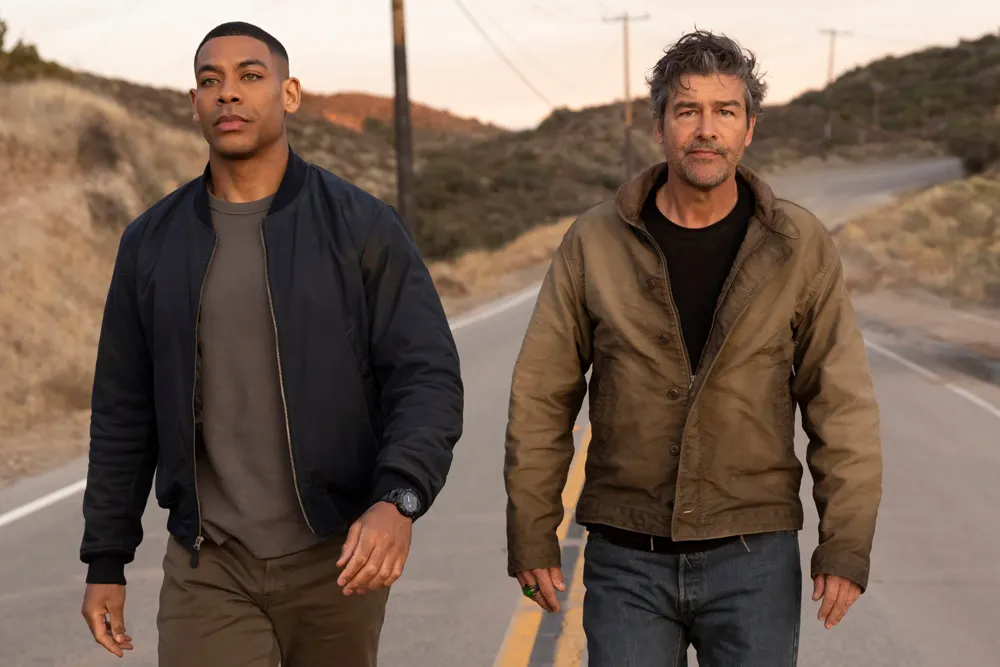
Episode 8, “Dirt and Stars,” crowns Stewart (Aaron Pierre) as Earth’s newest Green Lantern after he solves the mystery surrounding Hal Jordan’s (Kyle Chandler) death. Stewart claims Jordan’s ring, recites his oath and jets off toward his next adventure. A second season of Lanterns has not been announced, but the character will appear in James Gunn’s upcoming Superman sequel, Man of Tomorrow.
The hero they wanted
From the earliest conversations about the series, the creators envisioned Stewart as the kind of arrival that changes a scene’s weather. Co-creator Tom King put that ambition in blockbuster terms, pointing to a character you love for more than the spectacle.
“The idea was to build a character as compelling and impactful as, say, Thor in the Marvel universe,” King said.
That emphasis on integrity runs through the finale’s biggest beat. Stewart does not just inherit a power set. He steps into a role after the season has tested what kind of person he is under pressure, and what kind of person he refuses to be.
One ring, real friction
Season one keeps a key piece of Green Lantern canon at the center of the Jordan and Stewart dynamic: scarcity. Damon Lindelof explained why that matters, structurally and emotionally.
“Technically speaking, there’s only one ring delegated to this particular sector in which Earth fell,” Lindelof said.
That limitation turns partnership into tension. Jordan is a veteran; Stewart is a recruit. Their investigation into a killer alien robot on the run goes awry, and they split. By the time Stewart is holding Jordan’s ring, it lands less like a ceremonial handoff and more like a hard-won conclusion to a relationship that never had the luxury of being simple.
An oath on his terms
Green Lanterns are known for their oaths, but Lanterns frames Stewart’s version as a statement of agency as much as tradition. The writers always knew he would wear the ring by season’s end. The sharper question became what it would take for him to want it in a healthy way, rather than as a destiny assigned to him.
“The first part of John’s life is going to be [about] coming to terms with the fact that he doesn’t really want the ring,” Lindelof said.
Showrunner Chris Mundy described the oath moment as a shift in posture toward the Guardians, the immortal aliens who created the Green Lantern Corps.
“He was changing the relationship with the Guardians in that moment,” Mundy said.
The season notes that the Guardians had once seen Stewart as an ideal replacement for Jordan because he was willing to blindly follow orders. By the finale, the show signals that Stewart is not interested in operating on those expectations, and that his oath is meant to reflect the difference. Mundy summed up the intention in plain language.
“We wanted John to take [the role] on his terms,” Mundy said.
Hal, the Halogram, and no clean closure
The finale’s emotional sting is built into its structure. Because the “real” Hal is killed in 2026, the relationship between Hal and John remains unresolved, even after the mystery is solved. Stewart’s moment of connection comes through the Halogram, the backup version of 2006 Hal’s consciousness. Mundy called the arc a kind of love story, with an unavoidable cost.
“One of them has to die in order for them to truly come together,” Mundy said.
Even the smallest choices underline the tragedy. Over the course of the Halogram’s time with John, he calls him “trainee,” not “Junior,” until the end. The last line lands because it is late, and because it is all that’s left.
“I love you, too, Junior,” Mundy said of the Halogram’s final moment.
King tied Hal’s emotional lockup to the Sinestro subplot, and to the way trauma can narrow a person’s capacity for tenderness right when it is needed most.
“I think the trauma of that moment closed Hal up,” King said.
Lindelof argued that the lack of a tidy resolution is the point, and that the show’s sci-fi premise makes room for something that feels painfully ordinary.
“There is no apology. There is no forgiveness,” Lindelof said.
Why we stay with 2026 Hal
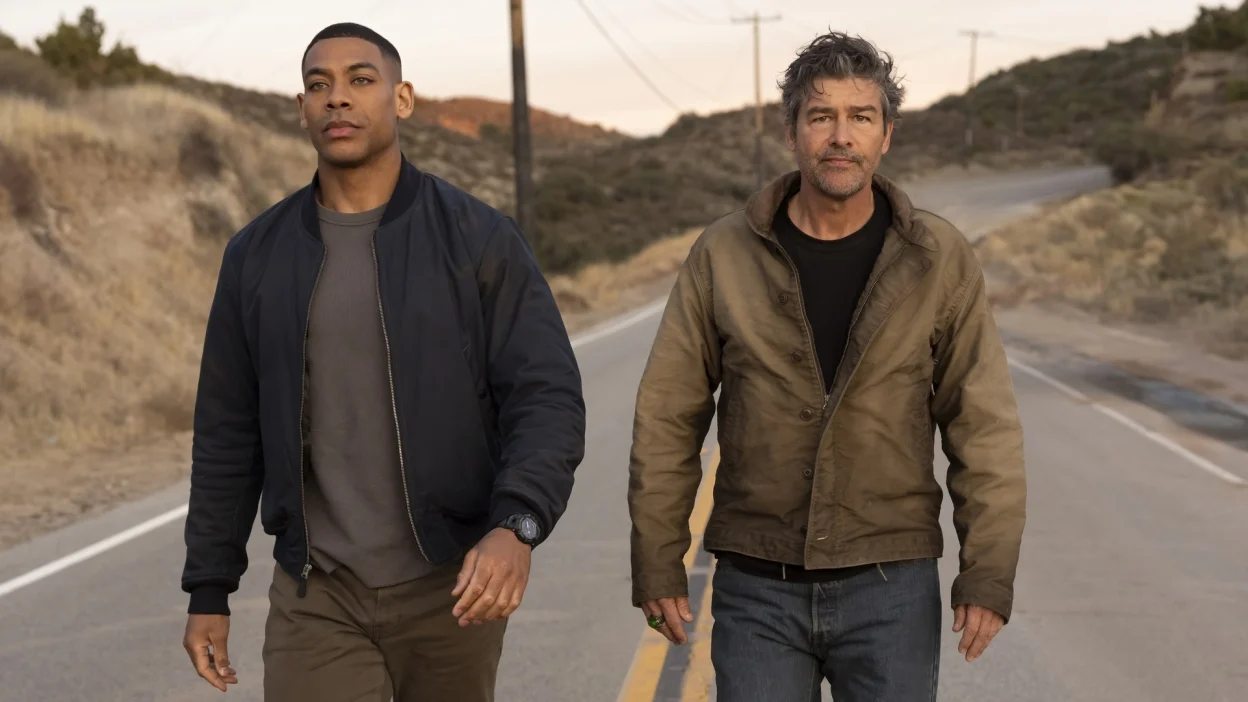
One of the finale’s smartest moves is refusing to treat Hal as a purely motivating absence. Instead, it spends time with 2026 Hal before the end, letting viewers sit with the person he became, not the person John needed him to be.
Lindelof noted how little direct access the season gives us to 2026 Hal until late, and why the finale needed to close that gap.
“Hal is not a changed man in 2026, but he’s an evolved man,” Lindelof said.
That distinction matters because it makes the tragedy specific. The finale does not just tell you Hal had a life. It shows enough of it that his death registers as an interruption, not a plot convenience.
Noah, programming, and legacy
With Noah revealed as a Manhunter, the show pivots the mystery into a mirror. Noah and John are each forced to question how much of a life is chosen and how much is imposed, whether by parents or by design.
King traced the writers’ room path from Stewart’s backstory to the Manhunters’ hardwired mission.
“John had been one of these kids who had been told, ‘You’re going to be this when you grow up,’” King said.
Mundy emphasized that the truck ride works because the tension never leaves the scene, even when the conversation turns intimate.
“John still doesn’t know if he’s about to die in this car,” Mundy said.
Mothers come forward
So much of the show’s intergenerational trauma is tied to fathers, but the finale makes space for the mothers shaping the same legacies. With Noah and John, the series clarifies how protection can be fierce, loving, and consequential all at once.
Mundy said that once the mystery mechanics were in place, it quickly became clear that Kerry belonged at the center of the answer.
“It just became a given pretty early on that Kerry would be the answer at the end,” Mundy said.
Lindelof credited writer Vanessa Baden Kelly with asking the question that forced the room to widen the emotional frame.
“She’s like, ‘Where’s mom?’” Lindelof said.
He also named the larger pattern the show wanted to push against.
“Inside of the canon of these superheroes, it’s always a dad,” Lindelof said.
By the time the finale lands, Kerry and Bernadette read as fierce counterparts, each acting out of love that arrives tangled with guilt, secrecy, and consequence. Stewart’s maturation is not only taking the ring. It is also beginning to reframe what was done to him as, at least in part, something done for him.
The Sinestro lantern
Alongside Jordan’s ring, Stewart ends the season with a second, quieter hook: a unique lantern for recharging his ring, forged by Sinestro, Jordan’s disgraced mentor. Asked whether that ominous origin could carry consequences, Mundy kept his answer short.
“It’s rife with possibility,” Mundy said.
What it leaves behind
Strip away the constructs and cosmic policing, and season one’s thesis stays intimate: becoming a hero can mean renegotiating what you were told you had to be. Stewart’s ascent is not framed as a simple destiny fulfilled. It is framed as authorship reclaimed, with the ring arriving only after he has fought his way toward terms he can live with.