AI has arrived in television the way new tech always does: first as a whispered shortcut, then as a shiny demo at a conference, and finally as a day-to-day tool that someone has to manage at 2 a.m. when the cut is due. If you love TV because you love people, the question is not whether AI can generate dialogue or smooth a background plate. It is what happens to the human choices that make a show feel alive.
This guide is for viewers who want to understand what is changing behind the curtain, and for creatives who want language to talk about it without turning every conversation into either a sales pitch or a panic spiral. We will cover where AI is actually showing up in TV production and screenwriting, what ethical guidelines are emerging, and what major union agreements mean in practice.
What people mean by AI
In TV, “AI” often gets used as a bucket term for three different things. Separating them helps you argue about the right problem.
- Machine learning features: built into tools you already use, like speech-to-text, noise reduction, object tracking, and auto-tagging.
- Generative AI: tools that create new text, images, audio, or video from prompts, including dialogue drafts and synthetic voices.
- Classic automation: templates, macros, and rules-based systems that are not “learning,” but still change labor and workflow.
Where AI is showing up now
Let’s separate the sci-fi headlines from the real workflows. In most productions, AI is less “a robot writing your show” and more “a set of features embedded into software you already use.” The impact is still huge, but it is often incremental and invisible to the audience.
1) Script development support
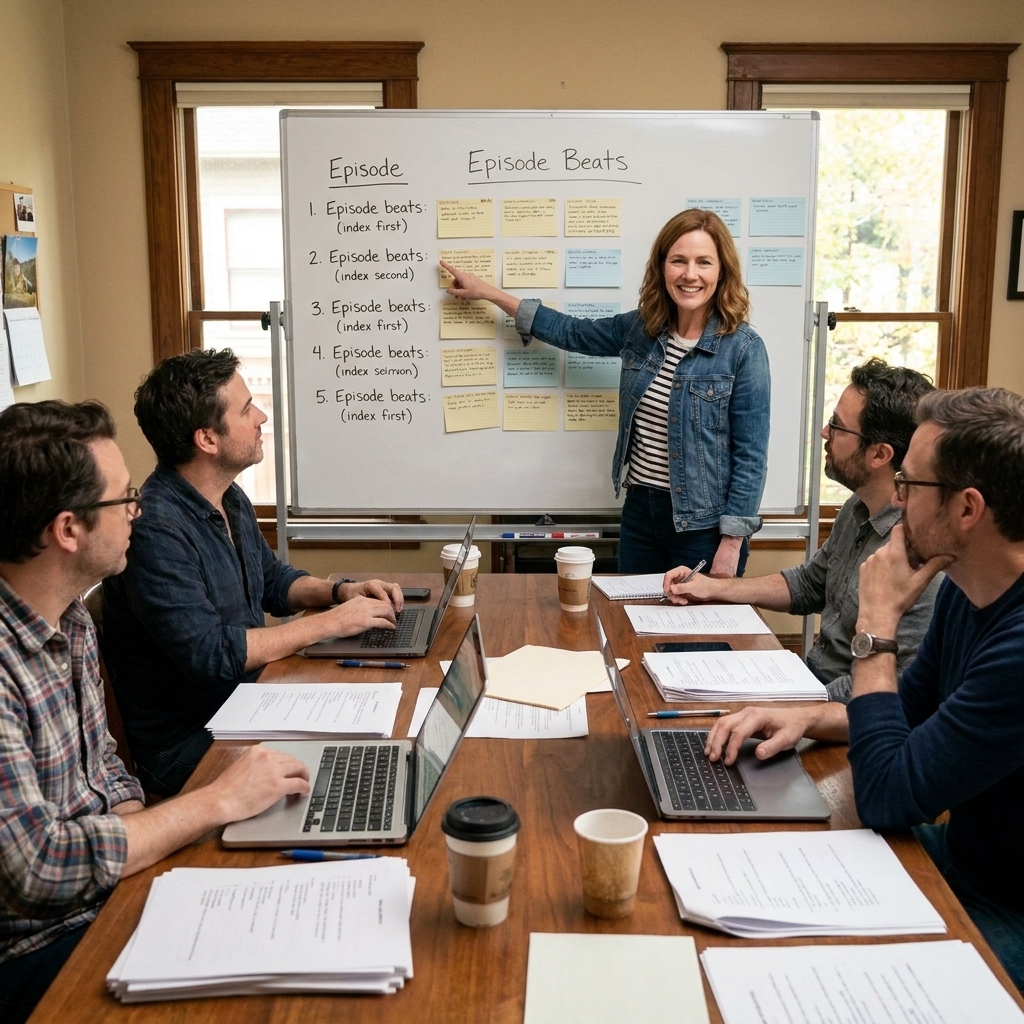
AI tools are being pitched as assistants for brainstorming and organization: generating loglines, proposing alternate scene angles, summarizing research, building beat sheets, and tracking continuity. Used thoughtfully, these can be time-savers. Used lazily, they can flatten a show’s voice into the same smooth, frictionless tone we have all learned to distrust.
- Common uses: outlining, rapid concept variations, synopsis drafts, research summaries, character name lists, “what if” prompts.
- Creative risk: generic voice, accidental recycling of familiar tropes, and a false sense that “more options” equals “better storytelling.”
- Practical risk: pasting confidential scripts or show bibles into third-party tools without permission, which can create data leakage or IP disputes.
One concrete example: some writers rooms use transcription and summary tools on recorded pitches or discussion notes so the room can find the moment someone solved a problem three weeks ago. That is not authorship, but it can save time.
2) Planning and budgeting
Scheduling, call sheets, stripboards, and budget projections are ripe for automation because they are structured and repetitive. Some productions are experimenting with AI-assisted breakdowns, location comparisons, and forecasting overtime risk. It is not glamorous, but it can be meaningful if it reduces chaos without cutting corners on safety or staffing.
3) Post workflows
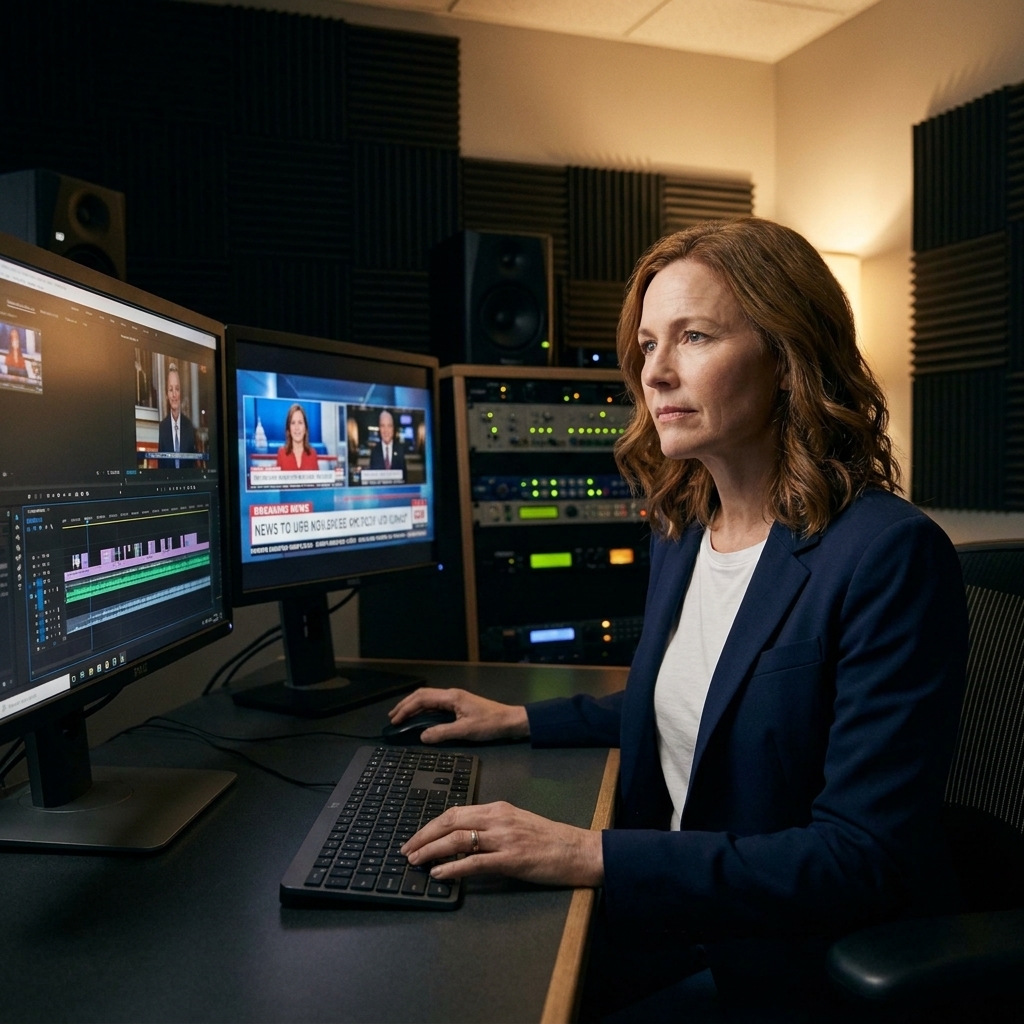
Arguably, post is where AI has become most normalized, largely because many tasks are technical, time-intensive, and measurable. You can see it in everyday features that editors and assistants now treat as standard.
- Editing assistance: speech-to-text transcriptions, searchable dailies, string-outs based on selects, and automated bleeping.
- Audio: voice isolation, noise reduction, dialogue cleanup, automated mixing suggestions, and ADR matching tools.
- VFX and finishing: roto assist, object removal, background cleanup, upscaling, stabilization, and increasingly sophisticated face or body work that used to require larger teams and longer timelines.
- Localization: faster subtitling, translation drafts, and early-stage dubbing experiments, with human review still doing the real quality work.
To be clear, none of this removes the need for taste. A tool can reduce buzz and hum. It cannot decide what silence means in a scene.
AI and screenwriting
There is a reason audiences can sense when dialogue is “technically fine” but emotionally weightless. Screenwriting is not just assembling sentences. It is intention, subtext, rhythm, cultural specificity, and restraint. AI can mimic patterns. It does not live a life.
Useful uses
- Structural help: formatting assistance, continuity checks, and keeping track of story threads across episodes.
- Research acceleration: first-pass summaries of public information, with human verification.
- Idea generation: prompts that help a writer move past blank-page paralysis, especially early in development.
Where red flags start
- Replacing authorship: drafting full scenes or episodes and asking writers to “polish” them, which can quietly reframe writers as cleanup crews for machine output.
- Voice dilution: choosing “neutral” output because it reads clean in a meeting, even if it plays dead on screen.
- Training and sourcing concerns: writers’ work used to train models without consent or compensation, raising serious ethical and legal issues.
If your show has a voice, protect it like it is a character. Because it is.
Ethics questions to ask
AI policies can sound abstract until you translate them into boring, necessary questions. Here are the ones I would want answered before any production leans on AI, whether that production is a studio series or a scrappy indie pilot.
1) Consent
- Were writers, actors, and crew informed about AI use in their department?
- If a performer’s likeness or voice is involved, is there explicit consent and clear compensation?
- Are background performers and day players protected from being “captured once, used forever” without a deal?
2) Credit
Credit is not vanity. It is a career record. A sensible policy defines what counts as writing, what counts as assistance, and how to document human authorship when tools are involved.
3) Data hygiene
- Are scripts, cuts, and dailies being uploaded to third-party services?
- Do contracts specify whether inputs can be used to train models?
- Is there a secure, production-approved toolset instead of ad hoc accounts?
Add the unsexy internal stuff too: who has access, how long vendors retain files, whether prompts and outputs are logged, and what happens when a crew member leaves the show.
4) Bias
AI systems can replicate stereotypes embedded in their training data. That becomes a storytelling problem and a reputational problem fast. Diverse human voices in the room are still the best safeguard against a show accidentally baking bias into its worldbuilding.
Union rules and protections
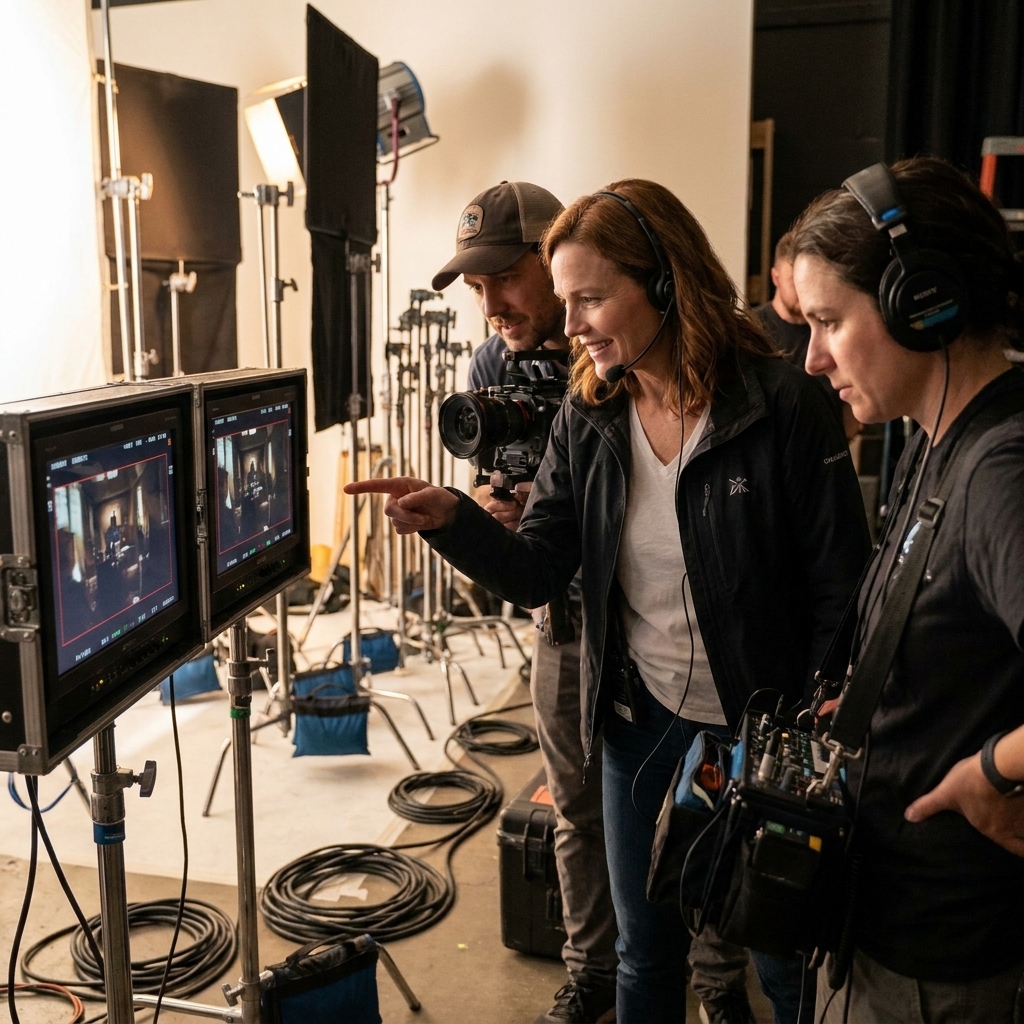
In the last few years, union negotiations have turned AI from a vague future threat into contract language. The details matter, and they vary by agreement, jurisdiction, and production status. The direction is clear, though: AI is not treated as a person, and workers are pushing to ensure tools do not become a back door to reduced pay, reduced credit, or reduced consent.
Scope note: This section is primarily US-focused (WGA and SAG-AFTRA). Other regions, including the UK, Canada, and the EU, have different frameworks and are evolving quickly.
Writers
Under the WGA 2023 MBA, generative AI has specific guardrails around credit and compensation, plus rules about a writer’s choice to use AI. In practice, that means AI-generated text cannot be credited as a writer, and companies cannot use AI to undermine the contractual frameworks that apply to writers. The exact effect depends on the project and the agreement, so productions should consult the current MBA language and guild guidance.
- Credit and compensation attribution: the agreement’s treatment of “literary material” is designed to keep credit and pay tied to human writers, even when tools exist in the workflow. This is a contract point, not a statement about copyright law in every context.
- Writer choice: writers generally cannot be required to use generative AI, and a writer’s choice not to use it should not be held against them under covered employment.
- Disclosure and process: the agreement includes obligations and bargaining pathways around company-provided AI and certain uses of AI-generated material, with details that matter in the fine print.
Performers
For actors, the concerns are intensely personal: your face, your voice, your body movement. SAG-AFTRA’s 2023 TV and Theatrical agreement includes provisions covering “digital replicas” and the consent and compensation framework around creating and using them. Like all contract language, the specifics depend on how the replica is defined, how it is used, and what paperwork the production is under.
- Consent: performers should explicitly agree to the creation and use of a digital replica and understand what the production intends to do with it.
- Compensation: using a replica is using a performance, and compensation is a core part of the negotiated framework.
- Scope: agreements should define where, when, and for how long a replica can be used, including reuse and future projects.
Note: Union contracts vary by project type, budget tier, and jurisdiction, and updates continue as technology changes. The most reliable source for any specific project is the relevant union’s current agreement language and the project’s deal memo and paperwork.
Legal and IP risk
Even if your intentions are good, AI can create messy problems for chain of title, E&O insurance, and delivery requirements. The biggest risks are not philosophical. They are paperwork.
- Chain of title: if a vendor’s terms claim rights in outputs, or if prompts include protected material, you can create ownership ambiguity.
- Indemnity and warranties: some AI vendors limit liability or refuse to warrant non-infringement, which can become a studio delivery issue.
- Logs and documentation: keeping prompt and output logs, tool versions, and approvals can help with disputes and insurance questions.
- Clearances: synthetic voices, faces, and brand-like imagery can trigger right of publicity, trademark, or clearance problems, even when “no one meant it.”
A practical playbook
If you are trying to use AI without turning your set into a philosophical debate club, focus on process. Here is a grounded way to think about implementation that respects craft.
Start with a purpose
- What problem are you solving: time, cost, access, safety, or quality?
- Is the tool replacing a job or removing drudgery?
- Who is accountable for the output?
Keep humans where meaning lives
Automate the repetitive tasks. Protect the interpretive ones. A good rule of thumb is that anything involving performance, authorship, or character should have explicit human sign-off.
Document decisions
AI can muddy the record of who created what. Build a paper trail: tool used, settings, input source, who approved, and where the output ended up. It is not glamorous, but it will save you in disputes, audits, and credits conversations.
Use approved systems
Studios and networks are increasingly pushing productions toward approved vendors and enterprise tools with clear data policies, sometimes including explicit prohibitions on using production inputs for model training. If you are independent, you can still adopt the spirit of that standard: do not upload scripts or cuts to tools that claim broad rights over your inputs.
What audiences can watch for
It is tempting to make AI a purity test. But film and television have always been collaborative and tech-dependent. The better question for viewers is whether the work feels considered and whether the people who made it were treated like people.
- Does the show have a point of view? Tool-polished storytelling can feel oddly risk-averse when nobody is willing to commit to a sharp human choice.
- Are performances respected? If digital manipulation is used, is it in service of story rather than a cost-cutting trick?
- Do credits still look like a village? When departments vanish from the scroll, it changes the ecosystem that trains the next generation.
FAQ
Will AI replace screenwriters?
It can replace certain tasks, and some companies will try to replace jobs. But replacing a screenwriter is not the same as generating a script-shaped document. The industry runs on voice, trust, collaboration, and the ability to rewrite under pressure with taste and accountability. Those are deeply human skills, and unions are actively working to keep them protected.
Is it legal to train AI on scripts?
That question is being fought over in multiple arenas and depends on the source material, permissions, and jurisdiction. Ethically, many creators argue consent and compensation should be non-negotiable. Practically, many productions are moving toward clearer licensing, approved vendor lists, and tighter controls on whether inputs can be used for training, because uncertainty is expensive.
Can AI write a good TV episode?
AI can generate competent scenes and plausible structure. “Good,” in the way viewers mean it, usually requires specificity: lived-in characters, emotional logic, cultural texture, and surprise that feels earned. Those are still best delivered by people who know what it costs to make a choice.
What should writers do if asked to rewrite AI output?
Ask what the source is, what tool was used, and how credit and compensation will be handled. If you are working under a union agreement, consult your representative or guild guidance and point to the relevant agreement language. If you are not, get the terms in writing and protect your authorship and your time.
How can a production use AI ethically?
Use it transparently, with consent, within union rules, and with a clear data policy. Aim it at drudgery rather than authorship, pay people for the value their work creates, and never treat “we can” as a substitute for “we should.”
The bottom line
Television has always been a marriage of art and machinery. Cameras got lighter, editing went digital, and streaming changed how stories are structured. AI is the next shift, but it is not destiny. It is a set of choices, made by executives, showrunners, department heads, and yes, audiences who reward work that feels human.
If we want TV that still surprises us, comforts us, and occasionally knocks the wind out of us, the goal is simple: let tools serve the story, not the other way around.