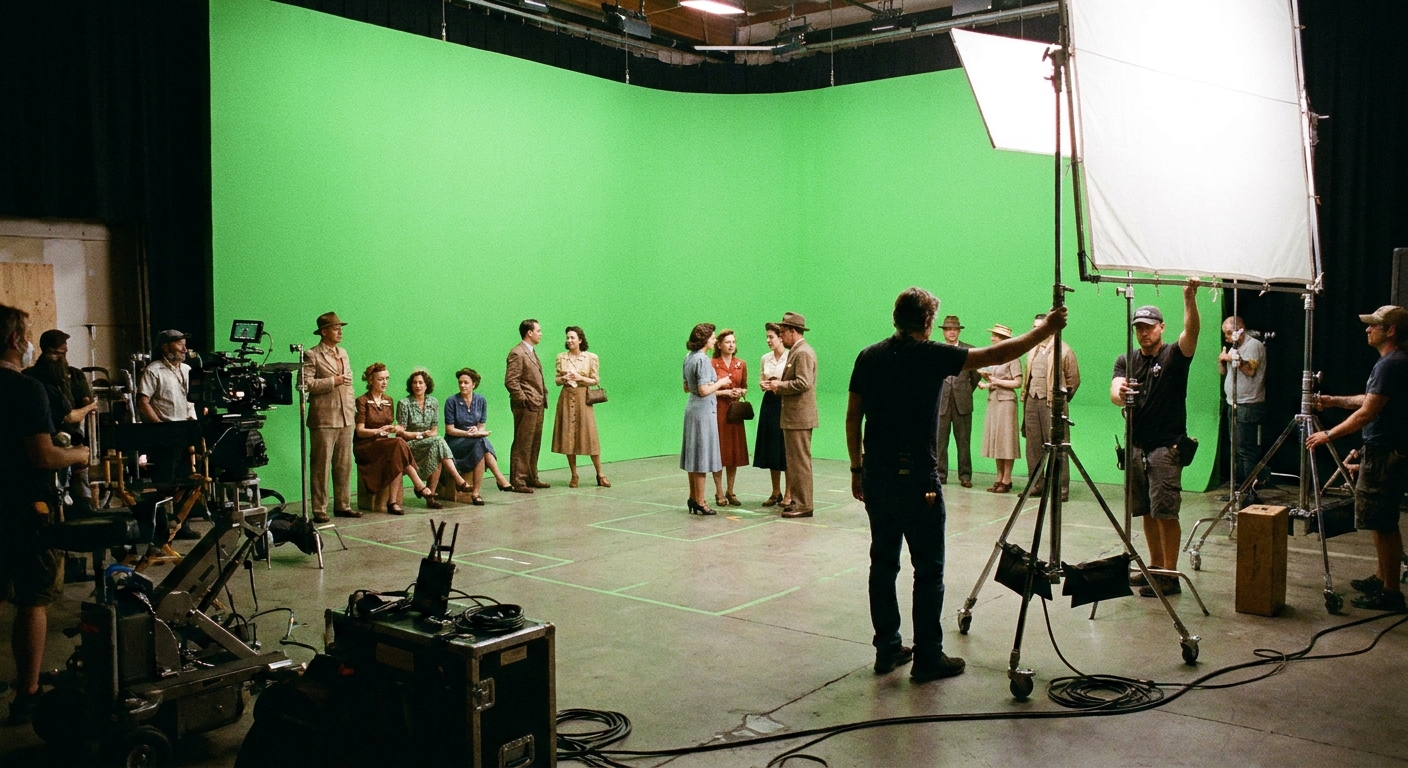
Lights down. Curtain up.
On a film set, you will hear the same gentle reminder again and again: hit your mark. It sounds simple, but it is one of the quiet gears that keeps the whole machine turning.
What is a mark on a film set?
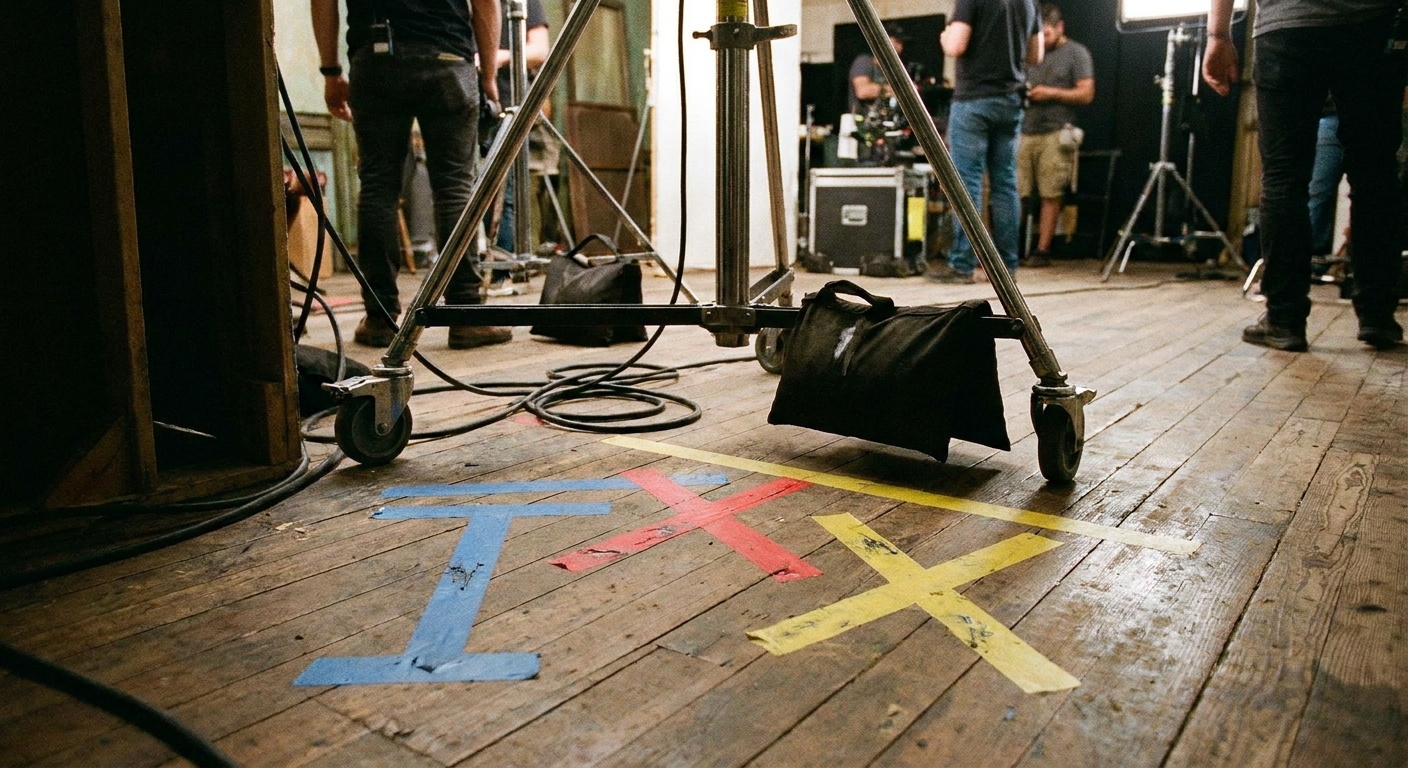
An actor’s mark is a specific spot on the floor, ground, or set where a performer is expected to stand at a given moment. It is usually indicated with tape (often called a spike or spike mark) so the actor can land in the right place for:
- Focus: staying sharp, especially with shallow depth of field
- Framing: being correctly positioned in the shot
- Lighting: remaining inside the designed light
- Continuity: matching position and movement between takes
- Camera movement: staying clear of rigs, dollies, and swings
Marks can be as subtle as a tiny piece of tape on carpet, or as practical as a chalk mark on pavement, depending on the location and what the camera will see.
What does “hit your mark” mean?
“Hit your mark” means: arrive at the planned spot at the planned time. It is not only about ending up in the right place. It is also about arriving there with the right pace, eyeline, and body angle so the shot works exactly as rehearsed.
A simple example: on your line, you cross to the window and land on the tape so the camera can catch you in focus as you turn back into the scene.
If you are acting in a scene, your mark might be tied to a line. If you are background, your mark might be tied to a traffic pattern, a reset point, or a moment when the camera pans through.
Why marks matter: focus, frame, light
Focus is measurement
In many setups, the camera team measures distance so the focus can be set precisely. If you drift forward or back even a little, you can slip out of focus, especially on longer lenses or wide-aperture shots where focus is razor thin.
Some setups are more forgiving. Wider lenses and deeper depth of field can tolerate small shifts. Long lenses and wide apertures usually cannot.
Framing is choreography
A mark helps the director and camera operator compose the frame, including where your head lands, what is visible behind you, and whether you overlap another actor at the right moment. Marks also keep you out of unusable areas like the edge of frame, reflections, or places that create boom shadows.
Lighting is built around you
Lighting is often shaped for a very specific position. If you miss your mark, you might step out of the key light, wander into a hot highlight, or block light meant for someone else.
What is a T-mark?
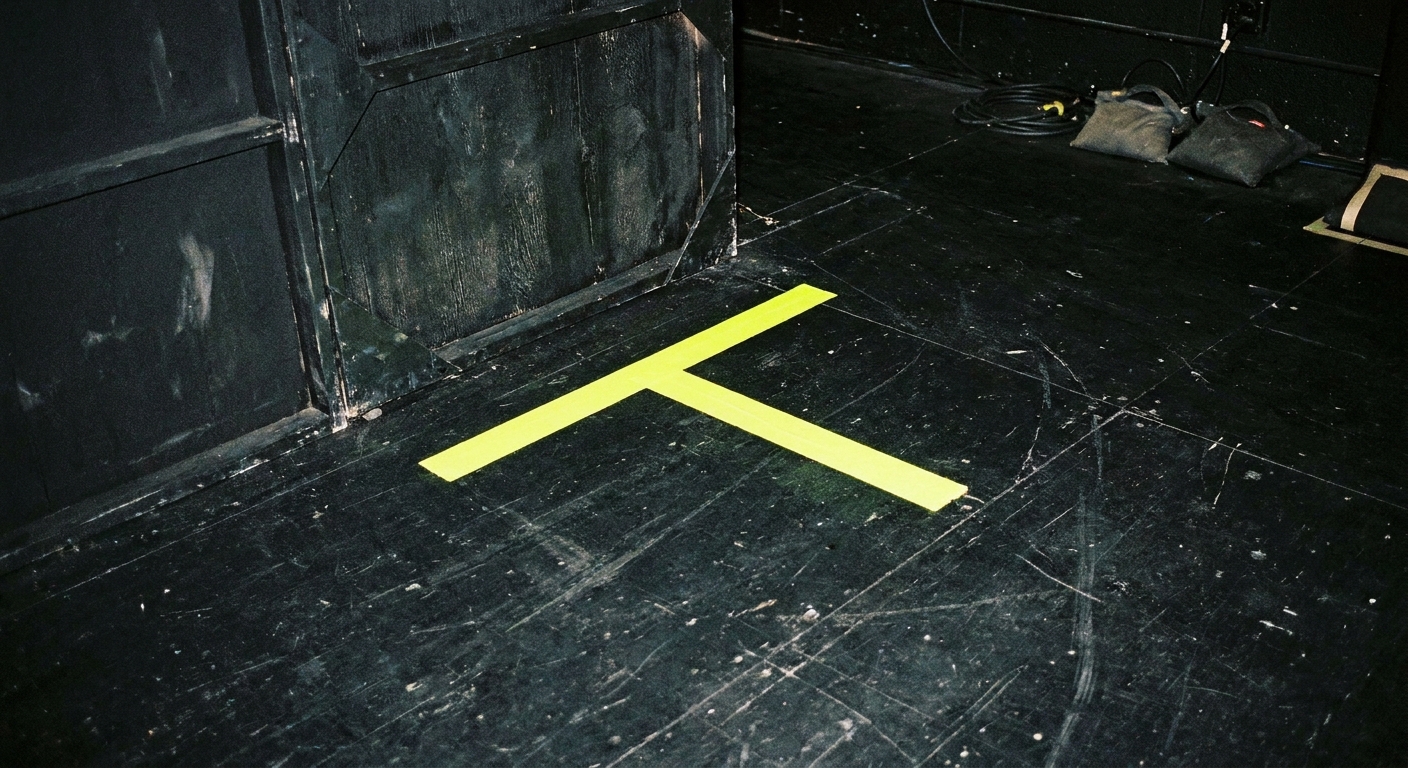
A T-mark is a tape mark shaped like the letter T, often used to give performers two pieces of information at once:
- The intersection of the T indicates where your feet should land.
- The top bar helps indicate your orientation, like which way your toes, shoulders, or body should face.
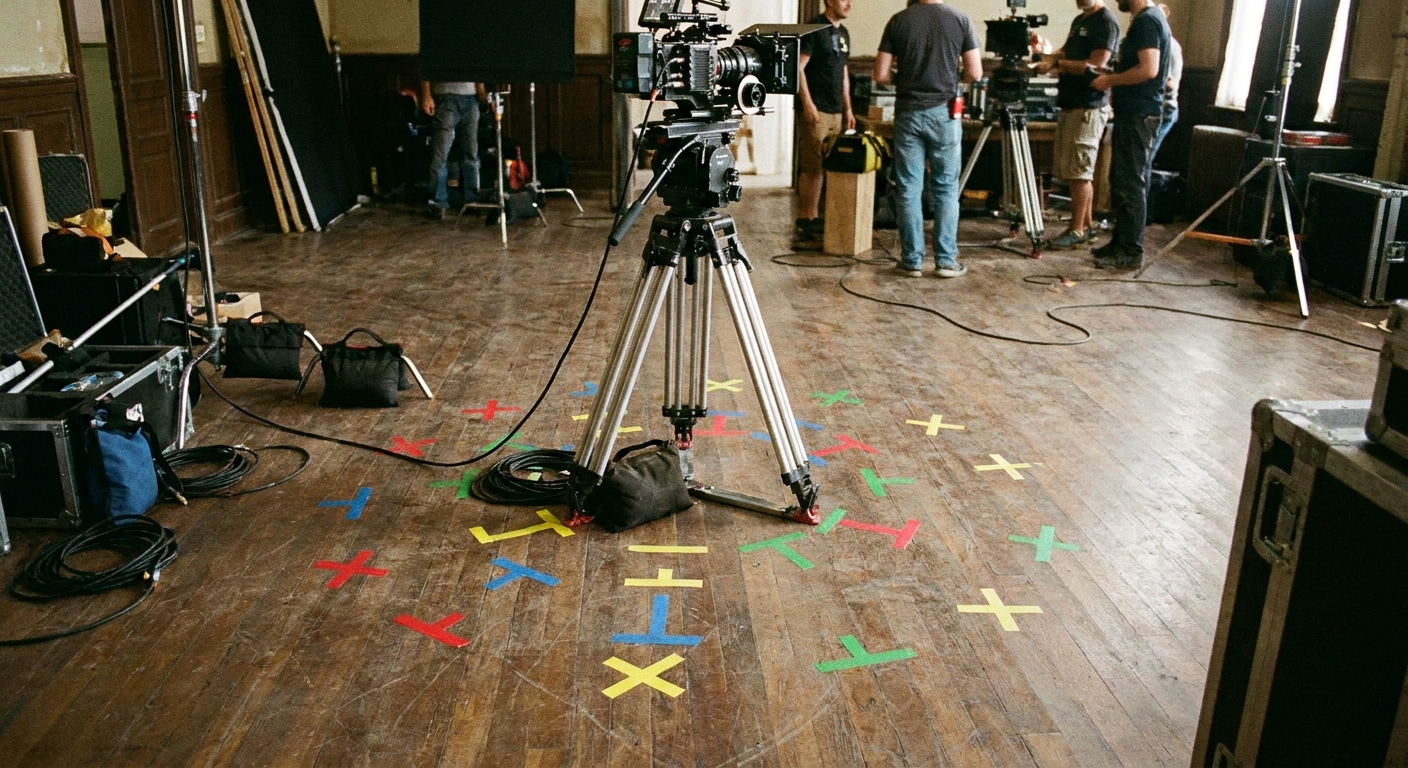
You might also see variations like an L-shape, a small box, or multiple tiny pieces of tape that form a code. Different crews have different habits, but the goal is the same: repeatable positions that match the shot design.
Marks are not just for actors
Marks are for anyone or anything the camera needs to control, which can include:
- Principals: leads and supporting actors
- Stunts: where placement can also be a safety requirement
- Stand-ins: holding marks while lighting and camera are set
- Background: especially when a shot depends on traffic flow and timing
- Gear and set pieces: camera positions, dolly stops, props, and furniture that must return to the same spot
That last one matters for language, too. On many crews, “spike” does not only mean an actor mark. It can also mean marking where a piece of equipment or a prop needs to live so it can be reset perfectly.
Background actors often work with simpler directions like “start at this line,” “cross to that corner,” or “stop at the chair,” but it is still marking, just in a more crowd-friendly form.
Why extras are told not to look down
If you have ever been background, you have probably heard this: do not look down.
It is not a power move. It is a camera move. Looking down telegraphs that you are thinking about the floor instead of living in the scene. It can read as nervous, unnatural, or simply distracting, especially if multiple people glance down in the same moment.
Instead, crews want you to learn your target quickly, then play the moment with a believable eyeline. Some common tricks performers use include:
- Clocking the mark early before the take starts so your body remembers the distance.
- Using a reference point nearby, like the edge of a rug, a chair leg, or a crack in the sidewalk.
- Hitting the neighborhood and then adjusting subtly without a visible “search.”
What to do if your mark is missing
Tape gets pulled. Dust and foot traffic happen. Locations fight back. If you arrive for a setup and your mark is gone, keep it calm and practical:
- Do not invent a new mark by slapping tape down yourself unless someone on the crew tells you to. Marks are part of a larger plan.
- Use nearby references you remember: a chair, a doorway edge, a seam in the floor, a prop, or a set wall corner.
- Ask the right person between takes. Often that is someone on the AD team or your on-set point person. For background, it is usually the background PA. A quick “My mark is gone, where would you like me?” is perfect.
- Watch the stand-in or rehearsal if one happens. The blocking will usually reveal the correct landing spot.
- Prioritize safety. If the missing mark was keeping you clear of gear or a stunt path, do not guess.
The goal is to get you back into the same repeatable position without slowing the set down or creating a continuity surprise.
Marks and blocking
Marks are the footprints of blocking. Blocking is the planned movement in the scene. Marks are how that plan becomes repeatable across takes, coverage, and camera angles.
Sometimes you will rehearse first, then marks appear as tape once the camera team and director see exactly where the moment lives. Other times, marks are placed early because the camera move or lighting setup is very precise.
Quick etiquette
- Do not peel up tape unless asked by the crew.
- Avoid stepping on marks that are not yours, especially near camera or for another actor.
- Do not improve your position because it feels better. If you need an adjustment, ask.
- Listen for clarifying notes like “cheat out,” “open up,” or “favor camera,” which may mean the mark stays the same but your body angle changes.
FAQ
Are marks always tape?
No. Tape is common, but marks can also be chalk, small stickers, objects placed just off camera, or natural references already in the location. The method depends on what will be visible and what will damage the surface.
What is a spike?
A spike is a piece of tape used to mark a position. It can be used for performers, but it is also commonly used for gear, props, and furniture. You will hear “spike it” when the crew wants a location clearly marked for repeatability.
What if I keep missing my mark?
Take a breath and ask for one clear reference. Many performers do better with a nearby landmark than with a tiny piece of tape. If the shot is especially tight, the crew may adjust the mark or give you a bigger visual cue.
Do marks change between takes?
They can. A slight camera adjustment, a lens change, or a lighting tweak can mean the mark shifts. If someone moves your mark, assume it is for a reason and follow the new placement.