House lights down. Curtain up.
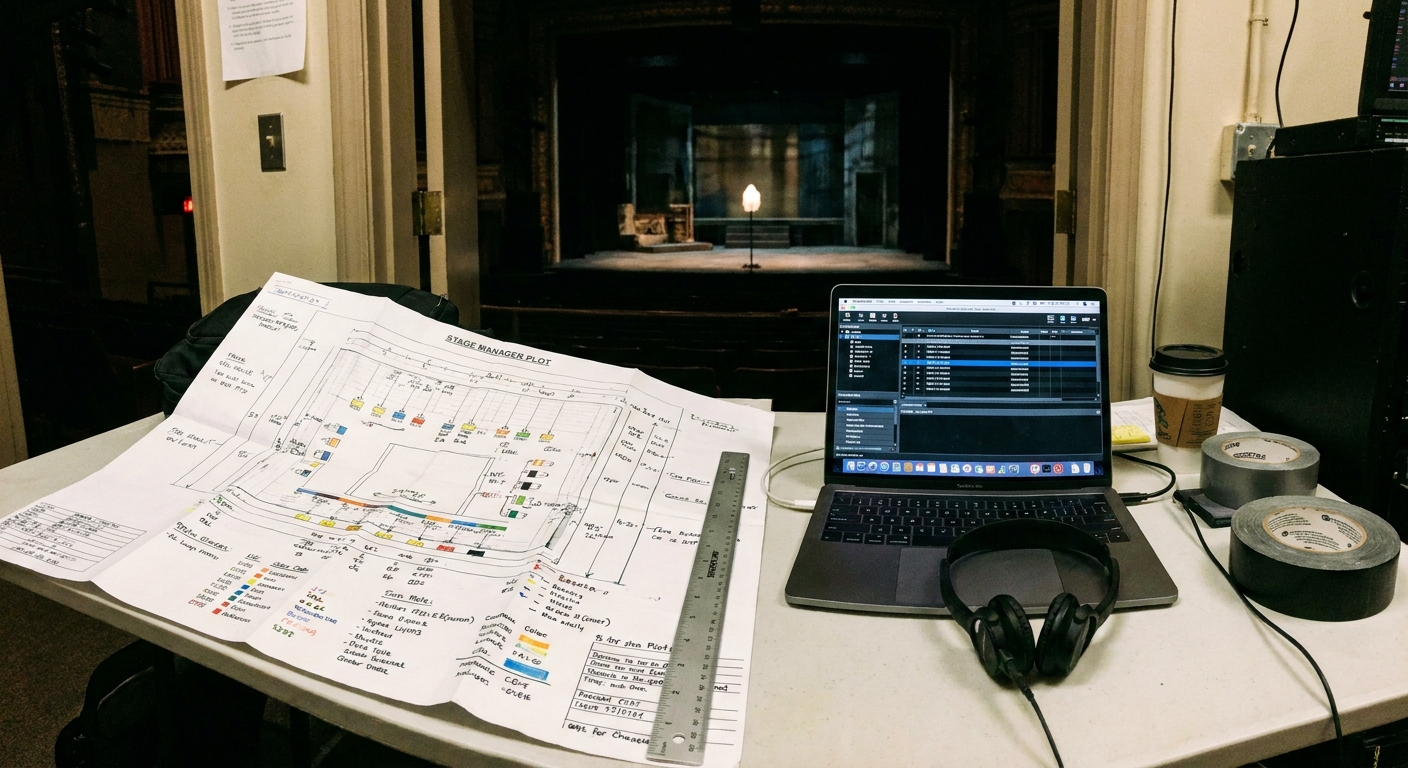
If you have ever peeked into a theater after hours and spotted a single bulb glowing center stage, you have met the ghost light. It looks simple, almost lonely, but it is doing a real job while carrying a lot of lore.
What a ghost light is
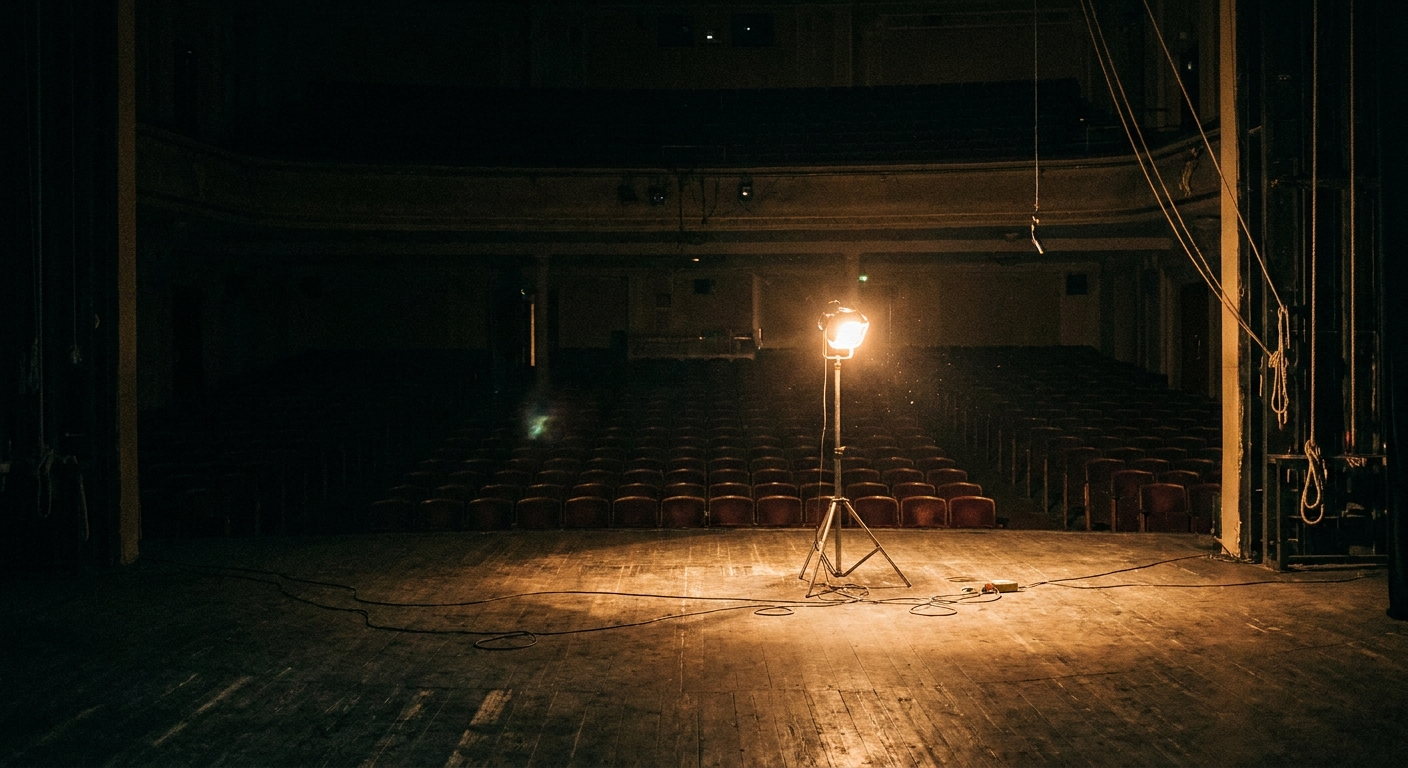
A ghost light is a single lamp, usually a bare bulb inside a wire cage on a stand, left turned on on an otherwise dark, empty stage when the theater is closed or when no one is actively working.
You will often see it placed near center stage, but its exact position depends on the space and the crew. The key idea is simple: one light stays on when the stage lights are off.
The practical reason: safety
The ghost light is famous for its superstition, but its primary modern purpose is safety.
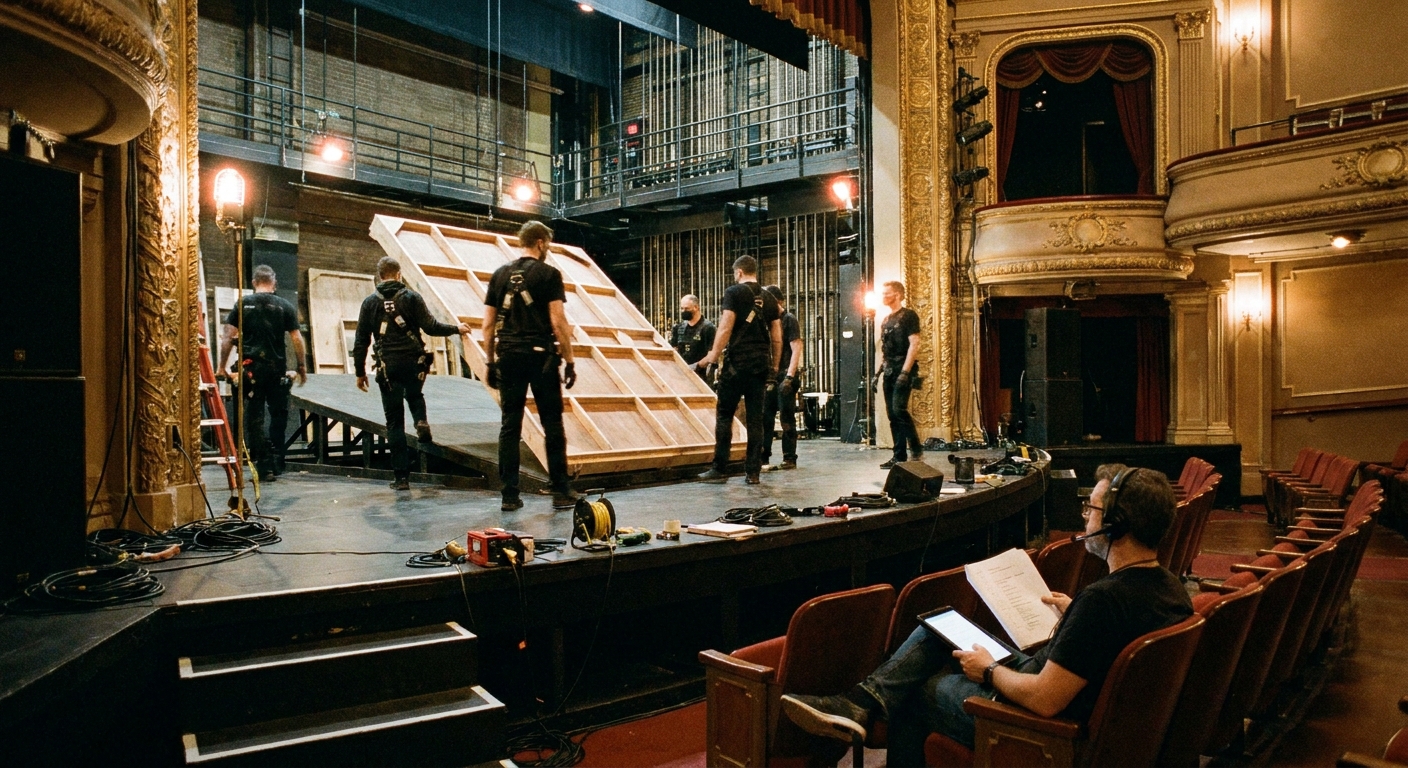
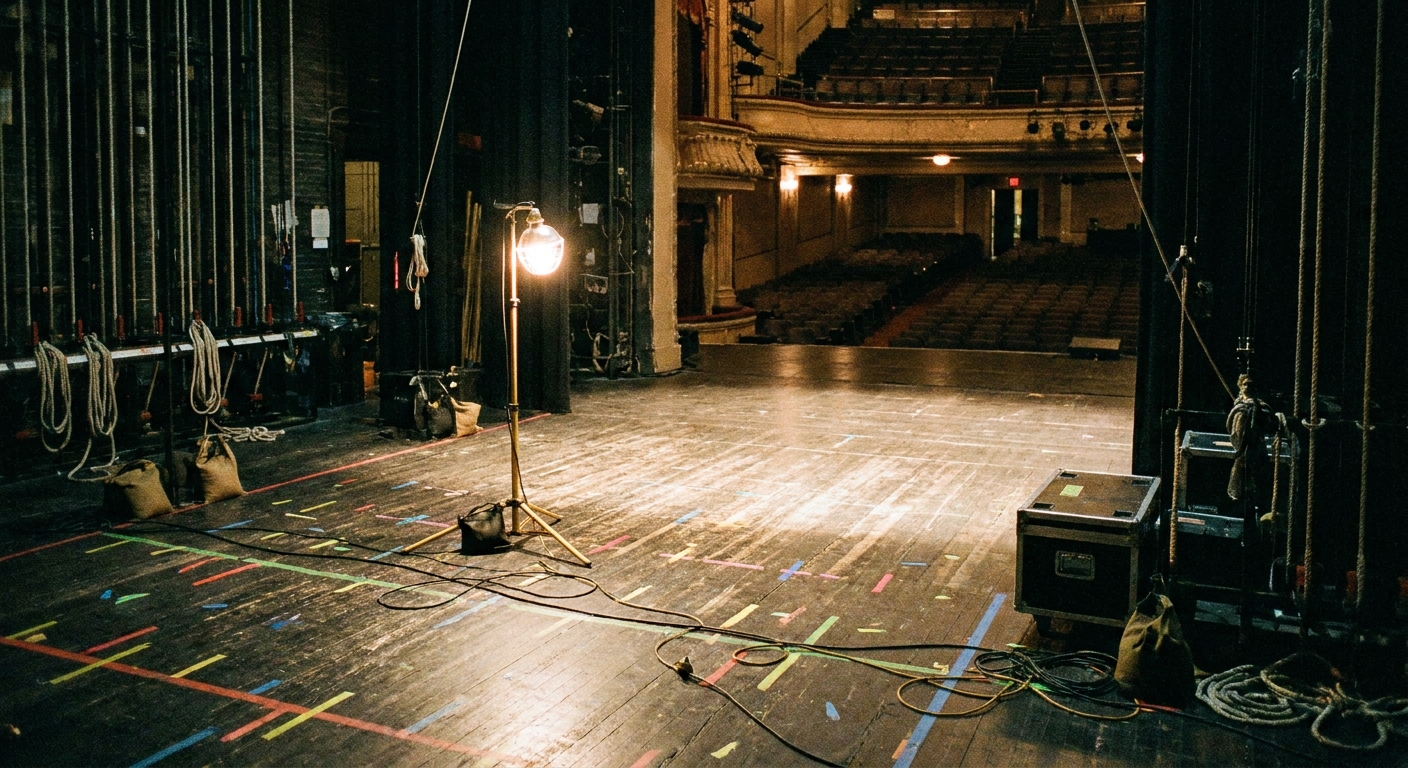
Stages are full of hazards in the dark: orchestra pits, stair units, cables, trapdoors, set pieces, and edges that disappear when work lights go out. A single lamp provides enough visibility for someone who enters unexpectedly, like a cleaner, a security guard, a stage manager working late, or a performer who forgot a water bottle, to navigate without taking a fall.
What it helps prevent
- Trips and falls over cables, floor plates, and set spikes
- Missteps at edges, including stairs, ramps, and the apron edge
- Accidents near pits in venues with an orchestra pit or pit lift
- Collisions with scenery stored onstage
In other words, it is a simple, low-tech way to make sure “dark stage” does not mean “dangerous stage.”
The superstition: why it is called a ghost light
The nickname comes from theater superstition. Different theaters tell the story in different ways, but the common themes are these:
- It keeps ghosts company. The light is said to give the theater’s spirits something to gather around after everyone leaves.
- It keeps ghosts off the stage. In some tellings, the light wards them away and keeps mischief to a minimum.
- It marks the stage as “still alive.” Even when the building is quiet, the stage is treated like a living space that deserves a little respect.
Whether you believe in ghosts or not, the tradition sticks because theater people are famously loyal to rituals, especially the ones that also make the workplace safer.
When it gets set and struck
In many theaters, the ghost light is part of the final rhythm of closing up.
Set
The ghost light is commonly set at the end of the night, after rehearsal or after the performance, when the stage lights and work lights are going off and the crew is clearing out.
Struck
It is commonly struck, meaning turned off and moved out of the way, before the next day’s call or before work begins onstage, so it does not block entrances, scenery moves, or choreography.
Exact habits vary by venue. Some keep it at center stage, some keep it near the safest crossover route, and some use more than one light in larger or more complex spaces. The idea is the same: light on when the room is otherwise dark, light off when people are actively working.
Quick best practices
- Use a caged lamp or sturdy work light that can take a bump.
- Make sure the base is stable and the cord is dressed so it does not create a new trip hazard.
- Place it to light a safe route, not in the middle of a common spike mark or traffic pattern.
- Confirm it is on a circuit that is allowed to remain energized overnight.
What a ghost light is not
A ghost light is not the same thing as a dark day.
A dark day is a scheduling term. It means there is no performance scheduled. Rehearsals and other work may or may not be called, depending on the production and venue.
The ghost light, meanwhile, is a physical lamp used when the stage is unoccupied and dark, whether the building is between shows, between calls, or simply closed for the night.
What it looks like in real theaters
There is no single, official model of ghost light. Common versions include:
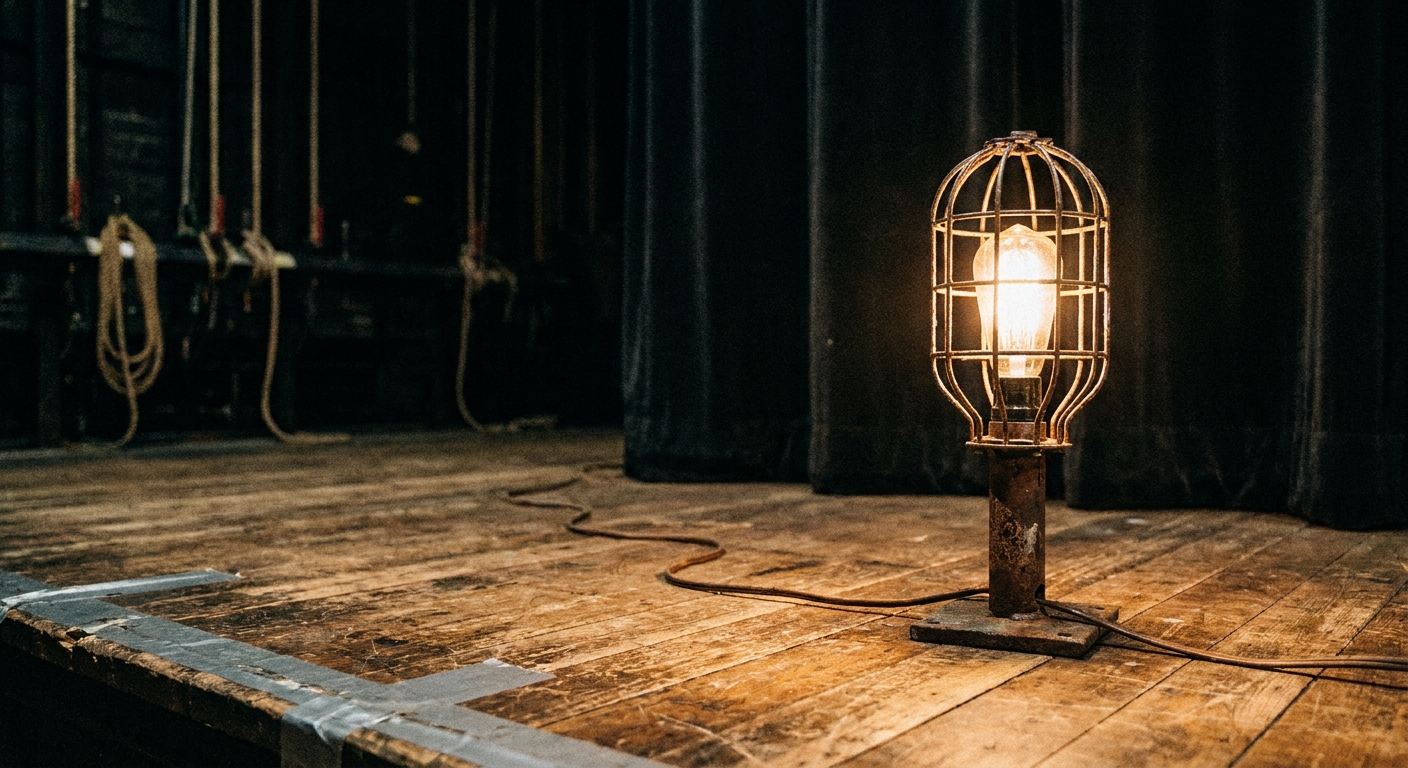
- A bulb with a protective wire cage on a tall stand
- A portable work light on a base, often weighted
- A practical lamp placed on a sturdy box or platform in smaller venues
Many theaters prefer a caged bulb because it is sturdy and less likely to shatter if it gets bumped. Placement matters, too: it should light the space without becoming a tripping hazard itself.
Quick FAQ
Why do theaters leave one light on overnight?
Mostly for safety. A single lamp helps prevent falls and accidents when someone enters a dark stage unexpectedly. In some houses, it is also a tradition that people take seriously.
Is a ghost light required?
Policies vary by venue, but the underlying safety goal is common. Many theaters include it as part of their standard closing checklist.
Does it have to be center stage?
No. Center stage is traditional and practical in many spaces, but crews place it where it best supports safe movement.
Is it bad luck to turn off the ghost light?
Superstitions differ, but in day-to-day practice, crews turn it off when work begins so it does not interfere with calls, rehearsals, or scene shifts.
The takeaway
The ghost light is the theater’s overnight heartbeat: a single lamp left burning on an empty, dark stage. It is there first for safety, and second for the stories we tell ourselves about what happens after the audience goes home.