Lights down. Curtain up.
Before you even spot your row, there is a smaller performance happening in the lobby: the security line. Most theaters follow similar patterns, but each venue can set its own policies based on the show, building layout, and local safety requirements. The safest plan is simple: pack light, keep your bag small, and assume anything that could distract, spill, or record the show may be stopped at the door.
One more practical tip: if you are bringing a bag, arrive a little earlier than you normally would. Screening is usually fast, but one oversize tote or a questionable item can slow the whole line.
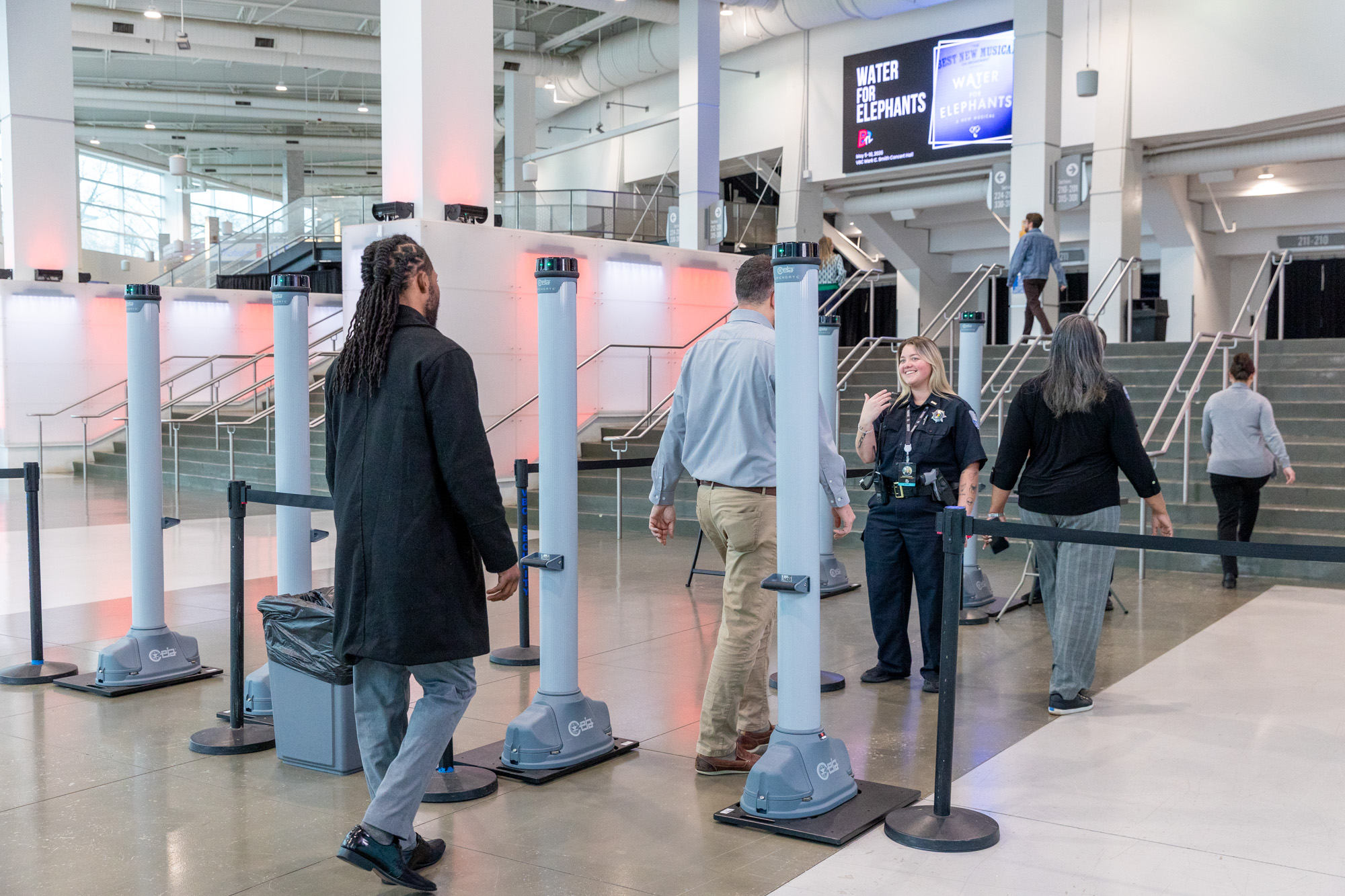
How security usually works
Many theaters use some mix of these steps:
- Bag check or visual inspection at the entrance or just inside the lobby.
- Metal detector screening, either a walk-through unit or handheld wanding.
- Ticket scanning and sometimes an ID check for will-call pickup.
Security is designed to be quick. The items that slow things down are oversized bags, lots of metal on keychains, and anything that needs a supervisor decision. If you want the smoothest entry, keep your essentials easy to reach and avoid bringing “maybe it is fine” objects.
Also note: some rules are show-specific. A special event, a high-profile opening, or a celebrity-heavy audience can mean tighter screening than usual, even at the same venue.
Bags: what is typically allowed
Most theaters allow small personal bags, but may restrict size. Some venues post exact measurements. Others simply say “small bags only” and decide case by case at the door.
Commonly allowed
- Small purses and crossbody bags
- Clutches
- Small backpacks (often discouraged, sometimes allowed if compact)
- Medical bags and necessary mobility-related items
Commonly restricted or refused
- Large backpacks and luggage
- Oversized totes that cannot fit under your seat
- Hard-sided or bulky bags that are difficult to search
Even when a bag is permitted, expect it to be opened. If your bag is packed tightly or has lots of pockets, it can slow screening.
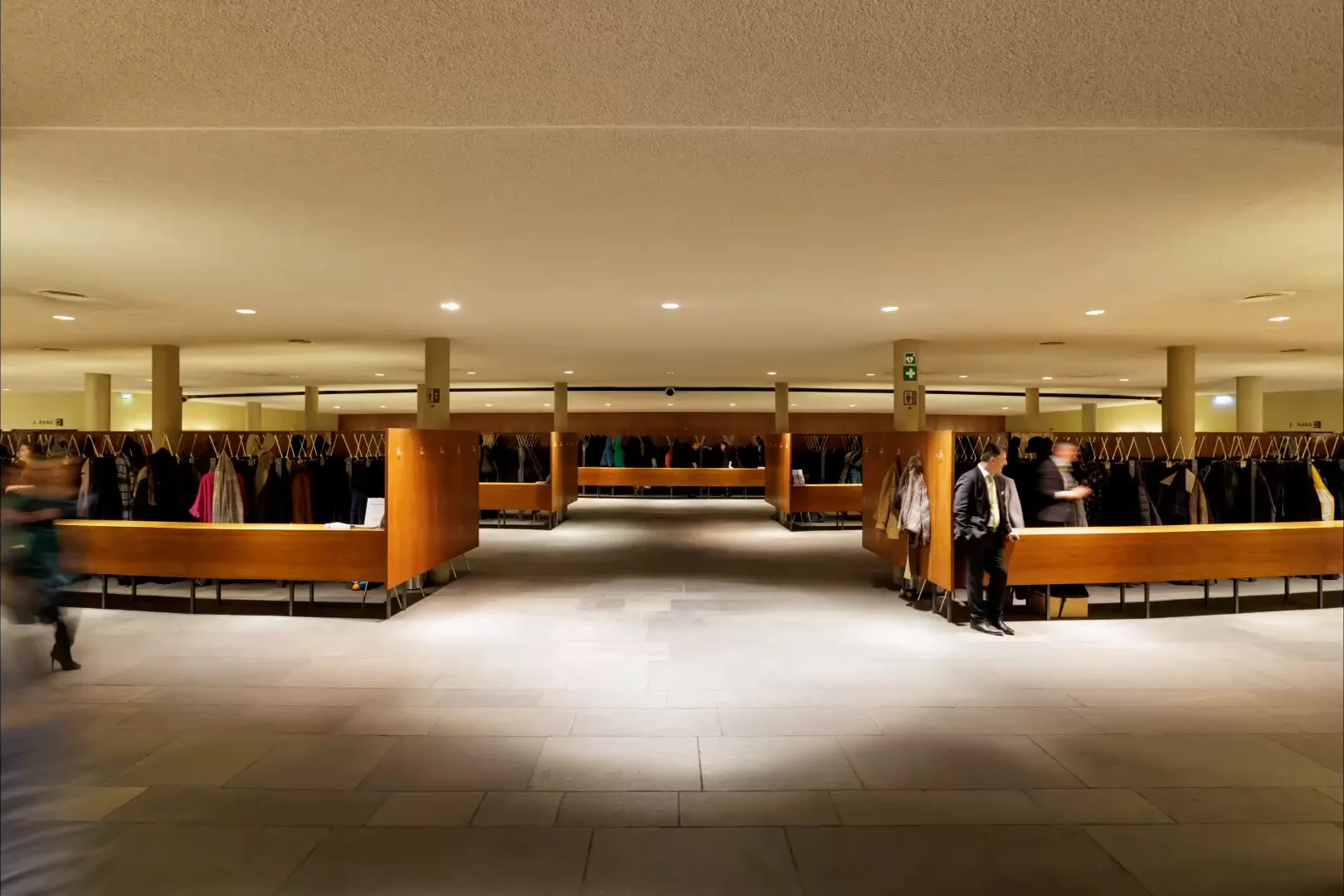
If you are arriving by bike or scooter, keep in mind that helmets may be treated like bulky items. Some theaters will let you carry one to your seat if it fits under the seat, others may point you to coat check if available.
Outside food and drink
Policies vary, but many theaters restrict outside food and drink. That includes takeout cups, cans, and anything that can spill, crunch loudly, or create odors in close seating. When in doubt, assume you will need to finish it or toss it before you enter.
What sometimes passes
- Sealed water if the venue allows it (some do, some do not)
- Small medically necessary snacks if you explain the need
- Baby formula and items for young children in family-friendly venues, subject to inspection
What is often refused
- Alcohol brought from outside
- Open beverages of any kind
- Hot foods, messy foods, and strongly scented items
If a show has concessions, the venue will almost always prefer you buy drinks and snacks inside.
Cameras, photos, and recording
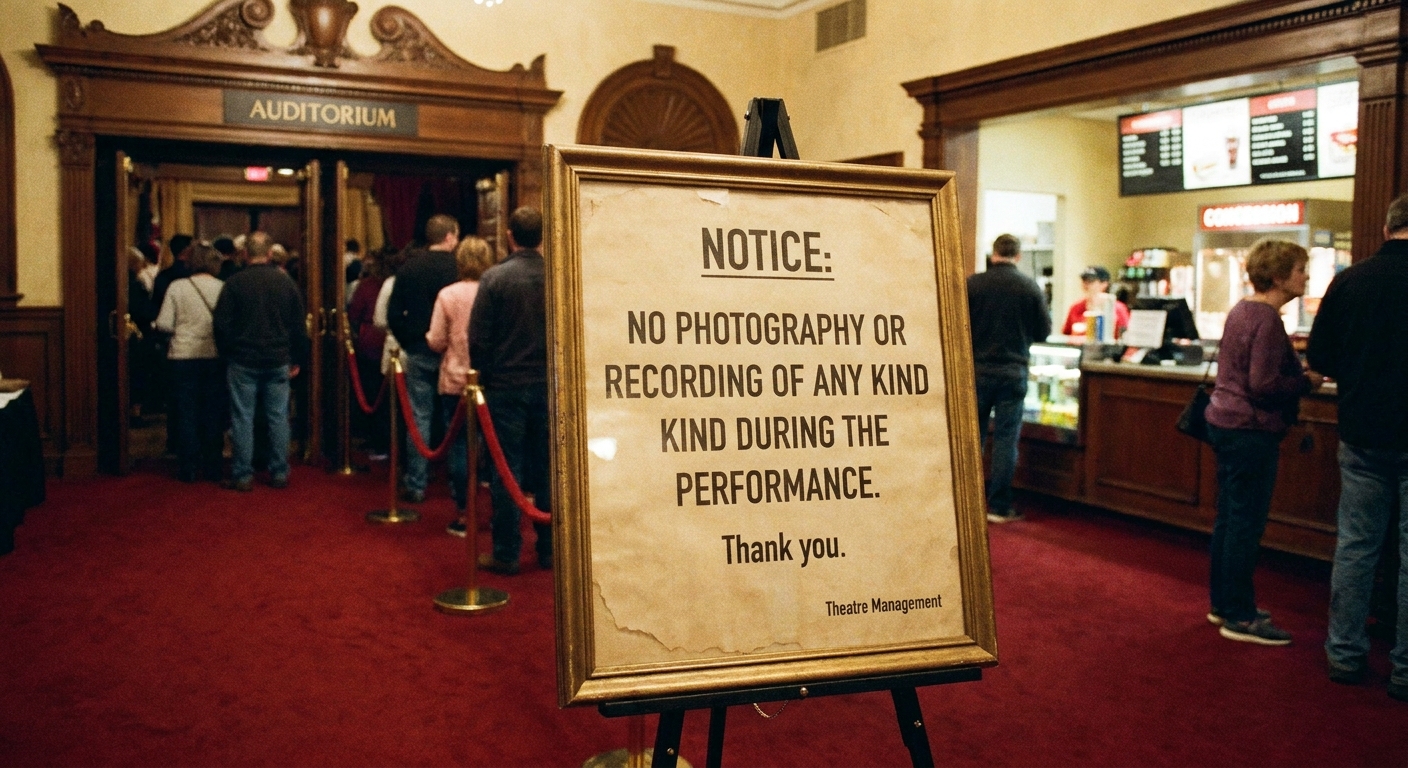
This one is straightforward: recording the performance is not allowed in essentially all professional theaters. That includes video, audio recording, and photography during the show.
What you can usually bring
- Your phone
- A small point-and-shoot camera, depending on the venue
What is commonly stopped
- Professional cameras with detachable lenses
- Tripods, monopods, selfie sticks
- Audio recording devices intended for capture
Many venues allow photos in the lobby and at your seat before the show, but that does not mean you can photograph the stage once the performance begins. If you are unsure, look for a posted sign, listen for the preshow announcement, or ask an usher. Ushers and house staff typically enforce this.
Flowers and gifts
Flowers feel classic, but in modern theaters they can be tricky. Some venues allow small bouquets, while others discourage flowers and gifts entirely, especially if they create crowding in the lobby or complications at the stage door.
If you want to bring flowers
- Choose a small bouquet that can stay out of the way at your seat.
- Avoid glass vases, large baskets, and anything with water.
- Assume stage-door drop-offs are not allowed unless staff explicitly say they are.
For gifts, think “flat and simple.” Cards are easiest. Large packages can be refused, especially if they cannot be quickly inspected.

Items often prohibited
Exact lists differ, but these categories are frequently restricted across many theaters:
- Weapons of any kind, including knives and pepper spray, even if legally carried elsewhere
- Illegal substances
- Glass containers
- Large props or signs that block sightlines
- Noise makers and anything designed to amplify sound
- Laser pointers
- Flammable items
- Vapes and cannabis products, even where legal, since many venues treat them like smoking items or potential contraband
Even everyday items can be questioned if they could cause harm or disruption. If you carry a multi-tool, sharp grooming tool, or anything that reads “utility,” leave it at home.
Power banks and spare batteries are usually fine, but very large power banks or loose batteries may get extra attention during screening. If you are bringing one, keep it easy to show.
Medications and access needs
Theaters generally accommodate medical needs, but you may be asked to show items for inspection. For the smoothest entry:
- Keep medication in its original labeled container when possible.
- Bring only what you need for the performance window.
- If you require a device (for example, an EpiPen or glucose supplies), keep it accessible and be ready to explain it briefly to security.
Mobility devices and accessibility equipment are typically handled with care, not treated like ordinary bags, but they may still be visually checked. If you have a more complex accommodation or you just want less stress at the door, check the venue’s accessibility page or contact the box office ahead of time, and arrive early.
Umbrellas, coats, and merch
Umbrellas
Compact umbrellas are usually fine. Large golf umbrellas can be a problem in tighter houses. Wet umbrellas may be directed to a bag, a sleeve, or coat check if available.
Coats
Coats are fine, but a heavy bag stuffed into a coat can still be subject to search. Some theaters offer coat check, especially in colder months, but it is not universal.
Merchandise
Items bought inside the theater are generally permitted at your seat, but oversized souvenirs can be inconvenient in tight rows. If it could block someone’s view, staff may ask you to stow it.
If something is not allowed
Many theaters have limited space to hold items, and some do not hold prohibited items at all. If security refuses an item, your options are usually:
- Return it to your car or hotel
- Dispose of it if it is food, drink, or something low value
- Use coat check only if the item is eligible and the service is available
That is why “pack light” is not just style advice, it is time-saving advice.
Quick checklist
- Small bag only, with easy-to-open compartments
- Arrive early if you are carrying a bag
- No outside alcohol, and assume outside drinks are a no unless the venue says otherwise
- Phone is fine, but no recording once the performance begins
- Skip sharp tools, pepper spray, vapes, and anything that could be treated as a weapon
- Keep medical items accessible and clearly identified
FAQ
Can I bring a backpack into a Broadway theater?
Sometimes, if it is small. Many theaters discourage backpacks because they are bulky and slow to search. Large backpacks and luggage are commonly refused.
Can I bring water into a theater?
It depends on the venue. Some allow a sealed bottle of water, others do not allow outside beverages at all. If you bring one, expect it to be inspected and be ready to toss it if asked.
Are snacks allowed?
Often no, especially not outside snacks. Medically necessary snacks are frequently accommodated, but it is best to keep them small and discreet.
Can I take photos inside the theater?
Often yes in the lobby and sometimes at your seat before the show, but not during the performance. If the venue announces a no-photos policy more broadly, follow that, and expect staff to step in if someone ignores it.
Can I bring flowers to a show?
Some venues allow small bouquets, others discourage them. If you do bring flowers, keep them compact, avoid glass and water-filled containers, and plan to keep them under your seat.