Festival networking has a reputation problem. Somewhere between the lanyards, the late screenings, and the seventh “let’s grab coffee” that never happens, it can start to feel like you are speed dating with a résumé.
But when it works, it works because it is simple: you show up prepared, you talk like a real person, you listen like a collaborator, and you follow through. Whether it is Cannes , Sundance, TIFF, SXSW, Berlinale, Venice, Series Mania, or Tribeca, the best connections are built in small, respectful moments where you make someone’s day easier, not louder.
Before you land: build a pocket plan
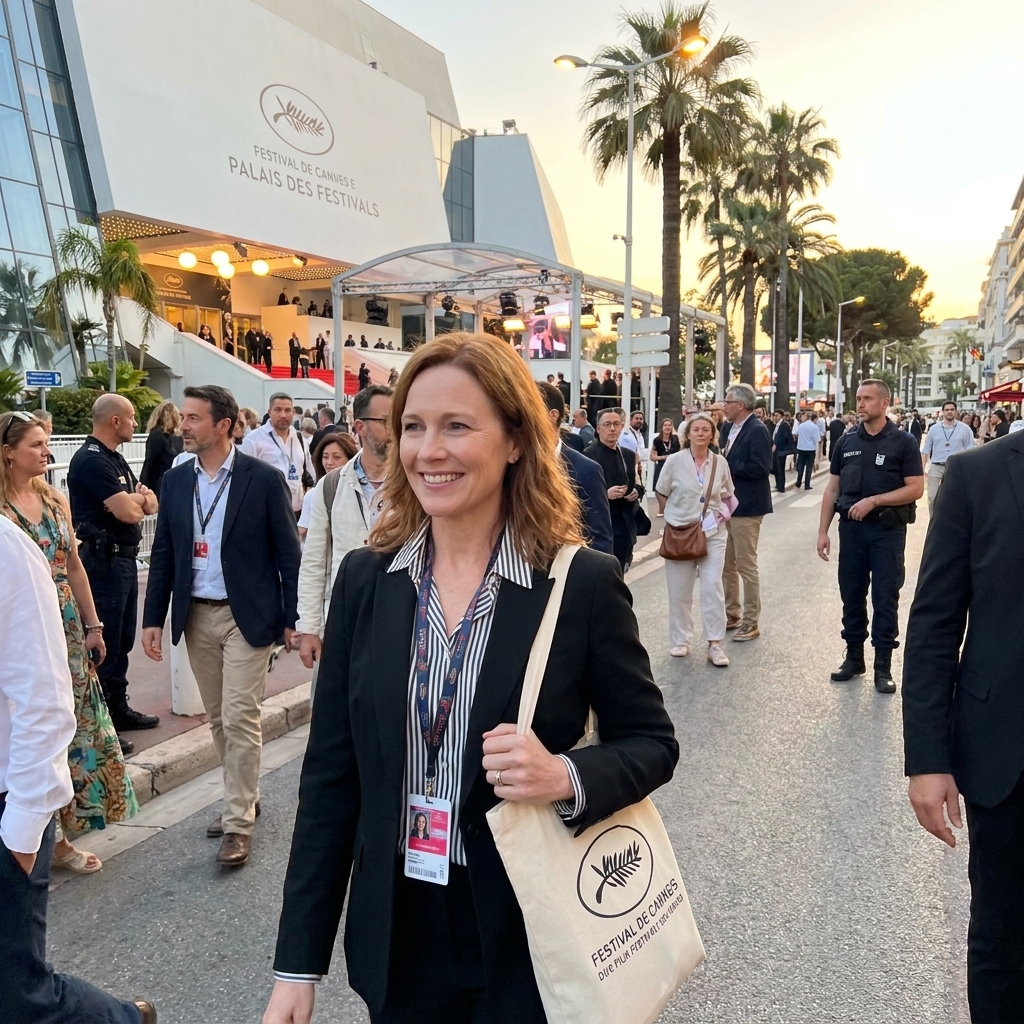
Your festival schedule will collapse the second you arrive. That is normal. The goal is not perfect control, it is a smart framework that keeps you from drifting into random chaos.
Pick one primary goal and one secondary goal
- Actors: Primary might be meeting casting directors, reps, and filmmakers with active slates. Secondary might be press relationships or discovering a director whose work you genuinely love.
- Directors: Primary might be sales agents or producers aligned with your genre and budget range. Secondary might be cinematographers, editors, and composers for the next project.
- Producers: Primary might be financiers, sales, and co-pro partners. Secondary might be emerging talent and labs to feed your pipeline.
If your goal is “meet everyone,” you will meet no one well.
Do a targeted pre-list, not a fantasy list
Create a short list of 20 to 30 people and companies you can reasonably cross paths with. Think: people with films premiering, panels scheduled, markets in attendance, or credits that align with what you are actually making.
- Scan the festival lineup and market listings.
- Note premieres, sales titles, juries, and official selections.
- Identify who is attending for press, acquisitions, or talent scouting.
- Track where they will be: Q&As, mixers, industry breakfasts, film markets, lounges.
Fix your materials so they are frictionless
Festival hallways are not the place for a 15-minute explanation of your magnum opus. Make it easy for people to remember you and find you later.
- A one-sentence intro: who you are, what you make, what you are seeking.
- A two-minute version: one specific project, the tone, and why now.
- A link hub: one URL that holds everything (a simple site or Linktree-style page) with your reel, credits, contact, and a one-page PDF.
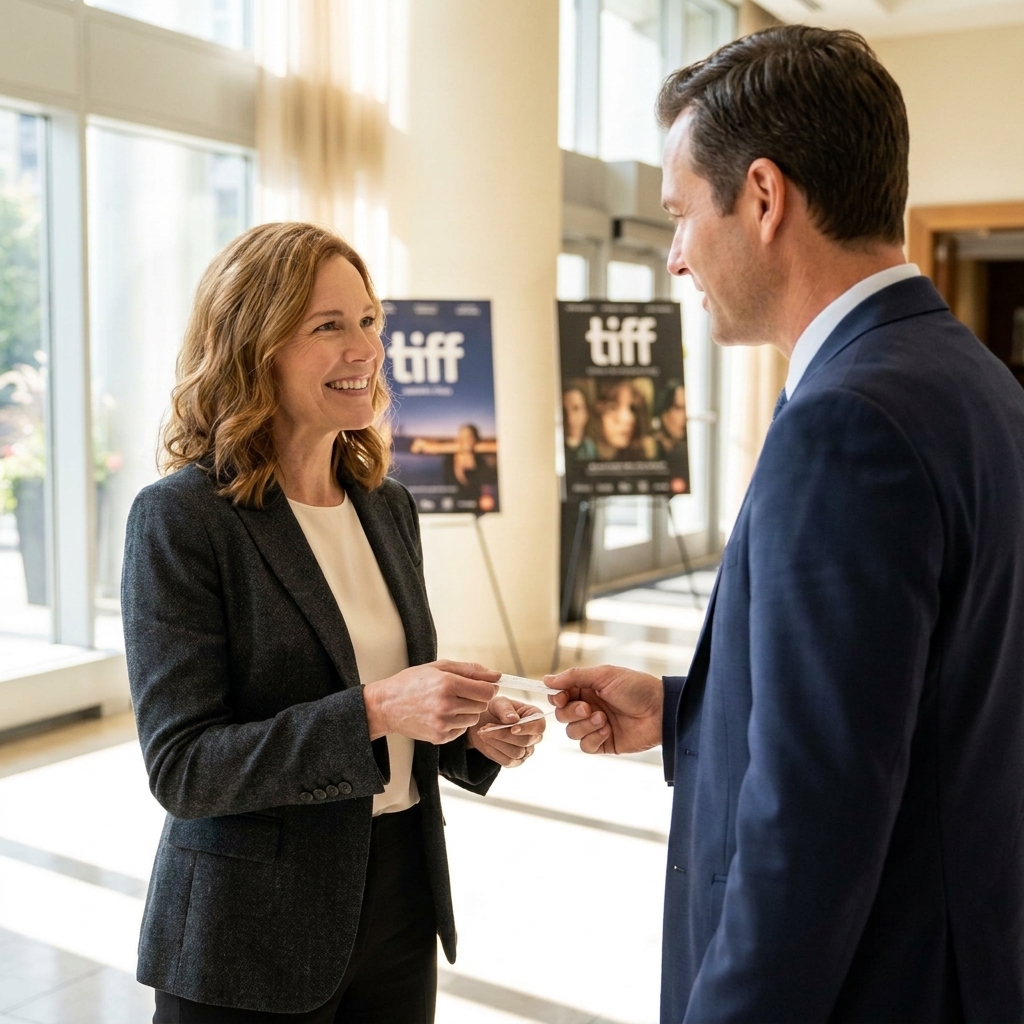
- Business cards: still useful because battery life is not a networking strategy.
Keep PDFs lightweight, reels short, and contact info obvious. If someone has to hunt, they will not.
Set up two kinds of meetings
- Anchor meetings: 3 to 6 pre-scheduled, high-priority conversations. These make the trip worth it.
- Flex meetings: open slots for the serendipity that festivals are built on.
Try not to schedule back-to-back across town. Festivals reward those who leave breathing room.
Where networking happens (and where it rarely does)
Let’s retire the myth that the only way to meet decision-makers is to get into the most exclusive party. Sometimes that is true. Often, it is not the highest-return use of your limited energy.
High-yield places to connect
- Q&As and panels: ask one thoughtful question, then introduce yourself briefly afterward if it is appropriate.
- Industry lounges and sponsored hubs: they often facilitate meetings. Some are more brand-forward, but they can still be useful if you are clear and polite.
- Film markets: Cannes Marché du Film, Berlinale EFM, TIFF Industry. These are built for business and can be more direct than the social swirl.
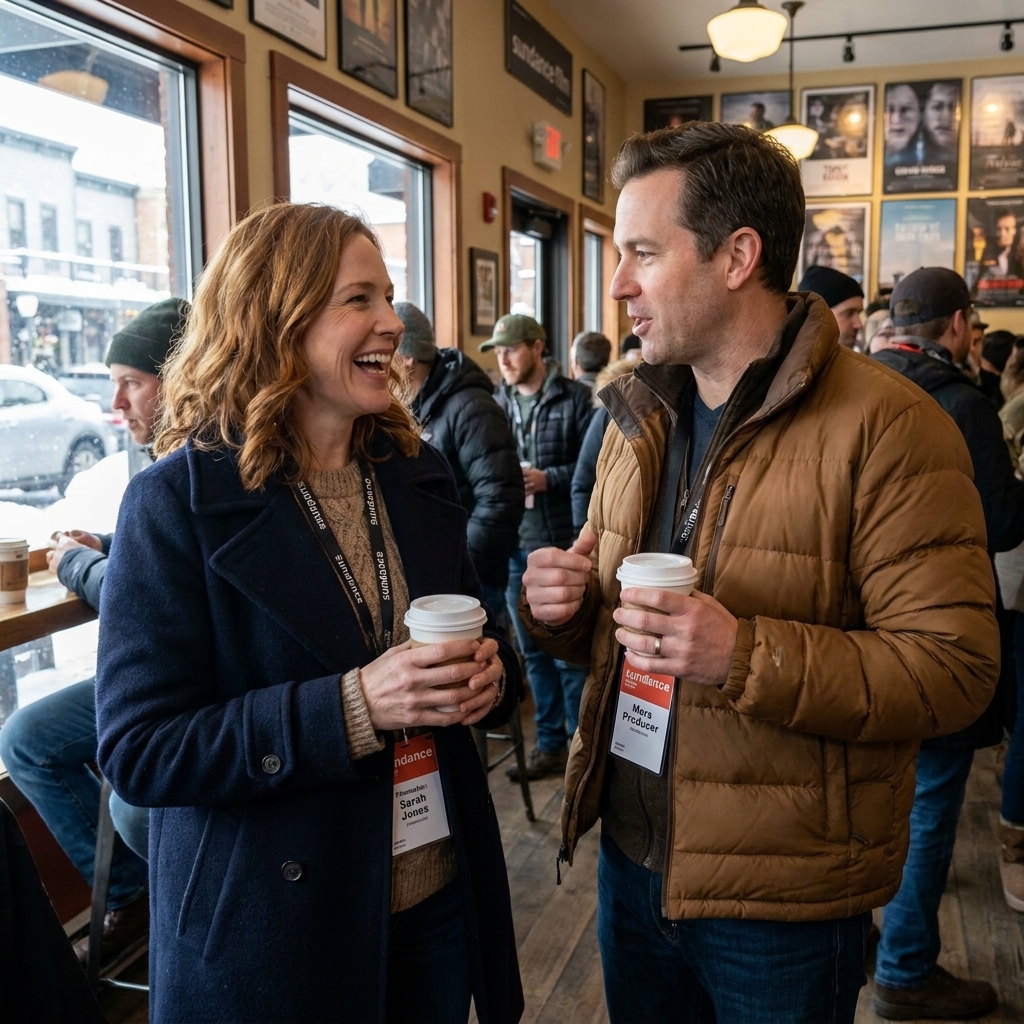
- Morning coffee lines: people are human before noon. It is a magical window.
- Workshops and labs: fewer tourists, more peers who will still be in your orbit next year.
- Volunteer and alumni events: alumni pride is an underrated networking accelerant.
Places that look good on Instagram and go nowhere fast
- Overpacked parties where you cannot hear a sentence.
- Celebrity-adjacent photo scrum zones.
- Events where you do not know why you are there.
If you go to a party, go with a purpose: to support a friend, celebrate a screening, or meet one or two specific people. Leave when the room stops being useful or kind.
What to say: intros that feel human
The best festival networkers are not smoother. They are clearer. They know what they do, why they do it, and what kind of collaboration they are seeking.
A simple intro formula
1) Name and role.
2) A specific credit or current focus.
3) A gentle ask or next step.
“Hi, I’m Maya. I’m a producer focused on contained thrillers in the $2 to $5 million range. I’m here with a short in a late-night section and I’m looking to meet directors with feature-ready scripts. Are you here with a project?”
This works because it invites the other person in. It is not a monologue.
Conversation starters that create connection
- “What brought you to the festival this year?”
- “What have you seen that surprised you?”
- “Are you in acquisition mode, talent scouting mode, or just trying to survive?”
- “What kind of stories are you hungry for right now?”
Notice these are craft-forward. You are signaling that you are here for the work, not the gossip.
Actors: network without feeling transactional
- Lead with what you love to do, not what you need: “I’m chasing grounded comedy with emotional stakes.”
- Ask directors and producers about their process: “How do you like to cast? What helps you trust an actor quickly?”
- Have a short, clean link ready: a reel that starts strong and ends before anyone checks their watch.
Directors: make producers and sales lean in
- Communicate your taste: comps are useful when they are tonal, not aspirational.
- Know your budget reality and your audience, even if you are still exploring partners.
- Be ready to describe why you are the only person who can tell this story, without oversharing.
Producers: stand out without acting like a banker
- Be specific about the lane you play in: genre, scale, talent level, financing structure.
- Offer value in the moment: “If you need a line producer in New Mexico, I have two names I trust.”
- When you like something, say it plainly and with detail. Creatives remember genuine attention.
Badges and access: know your lane
Festival access levels shape your networking reality. A market badge, an industry pass, and a public ticket can be three different worlds.
- If you have market access: prioritize the market hubs, buyer listings, and scheduled meeting areas. That is where people are mentally in “work mode.”
- If you have an industry pass: lean into panels, Q&As, filmmaker events, and calmer daytime touchpoints where conversations can actually happen.
- If you are on public tickets: focus on screenings, lines, and post-film moments. You can still meet great people, just be patient and play the long game.
Whatever badge you have, act like it is enough. Confidence reads best when it is quiet.
Etiquette: the rules that get you invited back
Networking is not about being everywhere. It is about being respectful in the rooms you enter.
Do
- Watch the work. If you compliment a film, make it clear you actually saw it.
- Be mindful of timing. Right before a premiere is not the moment for your script logline.
- Ask permission. “Is now a bad time for a quick hello?” is a power move.
- Introduce others. You become memorable when you connect dots for people.
- Keep it short. Leave them wanting a follow-up, not an escape route.
Don’t
- Corner people in bathrooms, elevators, or while they are eating.
- Lead with favors. “Can you introduce me to your agent?” is not a first conversation.
- Talk trash. The industry is small and the air is thin.
- Overdrink. If you cannot trust your memory, no one can trust your professionalism.
International norms: small adjustments, big wins
At Cannes and Berlinale especially, you will be crossing cultures all day. A little awareness goes a long way.
- Keep greetings simple: use names, make eye contact, and follow the other person’s lead on formality.
- Mind language: speak clearly, avoid slang-heavy speed, and do not make someone feel small for not being fluent.
- Ask their preferred follow-up channel: some people live in email, others move faster on WhatsApp or text. “What’s best for you?” is both respectful and efficient.
- Time zones are real: if you promise to follow up “tomorrow,” remember that tomorrow can arrive at different speeds for different inboxes.
Boundaries and safety: stay professional
Late-night festivals can blur lines. You can be friendly without being reckless.
- Do not let access become obligation: you can say no to an invite without apologizing for your existence.
- Be cautious with private locations: default to public meetups, especially with new contacts.
- Photos and tagging: ask before posting someone, tagging them, or sharing where they are staying. Not everyone wants their festival schedule broadcast.
Follow-up: where careers get built
If festivals are the spark, follow-up is the oxygen. Most people do the fun part, then vanish. Do not vanish.
A follow-up timeline that works
- Same day: jot a note in your phone: where you met, what you discussed, one personal detail.
- Within 48 hours: send a short message while you are still fresh in their mind.
- Within 7 to 10 days: if they responded positively, propose a specific next step: a call, a coffee, a script, a reel.
- One month later: a gentle check-in if appropriate, especially if you promised something.
A follow-up email you can steal
Subject: Great meeting you at [Festival] | [Your Name]
Body:
Hi [Name],
It was great meeting you after [screening/panel/event] at [Festival]. I loved what you said about [specific detail].
If it is helpful, here is the link to my [reel/one-pager/project deck]: [link].
Would you be open to a quick 15-minute call next week? I would love to learn more about what you are looking for this year and see if there is a fit.
Best,
[Name] | [Role]
[Phone] | [Website]
Specific. Light. Easy to answer. No guilt.
Keep a “festival CRM” even if it is a spreadsheet
- Name, role, company
- Where you met
- What they are seeking
- What you promised to send
- Follow-up date and status
Your future self will thank you when someone emails three months later and you can respond like a pro.
Protect your energy (so you do not burn out)
Festivals are marathons disguised as parties. Networking takes energy. You need rest like you need Wi-Fi.
- Schedule one quiet block daily. A walk, a nap, a museum, staring at a wall. Anything that resets your nervous system.
- Eat actual food. Not just canapé math and espresso.
- Choose one nightly event. If you try to do three, you will be present for none.
- Have an exit line ready. “I’m going to catch a screening, but I’d love to continue this. Can I email you?”
The goal is to be the person who is consistently pleasant, not the person who is briefly everywhere and then disappears into exhaustion.
Common scenarios and what to do
You meet someone important but you blank
Say the truth, lightly: “I’m thrilled to meet you and my brain is running on two hours of sleep. Can I give you my card and follow up when I can be coherent?” People laugh. They relate. You regain control.
You are not “industry enough” for the room
Most rooms have a spectrum, from first-timers to veterans. Ask questions, listen, and be useful. Curiosity reads as confidence when it is grounded and respectful.
Someone asks, “So what are you working on?” and you have nothing new
You have something: your taste, your skills, and your trajectory. Share what you are developing, what you are seeking, and what kind of collaborators excite you. “I’m between projects, but I’m reading grounded sci-fi and looking for a director with a strong visual language” is a real answer.
You get invited to something you cannot attend
Decline with warmth and offer a substitute: “I can’t make it tonight, but I’m free tomorrow after 2. Would a quick coffee work?”
A quick checklist for the big festivals
- Know your one-liner and your two-minute version
- Have a link hub and a card
- Set 3 to 6 anchor meetings
- Choose 1 to 2 high-yield daily networking zones
- Watch at least one thing you can discuss passionately
- Write notes after each conversation
- Follow up within 48 hours
- Sleep like it is part of your strategy, because it is
FAQ
Do I need to pay for expensive parties to network?
No. Some ticketed events can be useful, but a lot of meaningful networking happens at screenings, panels, markets, and the spaces in between. Spend money when it buys access that aligns with your goals, not when it buys the illusion of proximity.
How do I network if I am introverted?
Plan fewer, higher-quality conversations. Arrive early to events when rooms are calmer. Use questions to carry the interaction. And give yourself permission to take breaks. Consistency beats intensity.
When is it appropriate to send someone a script or deck?
When they ask, or when they clearly signal interest and you confirm: “Would it be helpful if I sent the deck?” Unsolicited attachments are the quickest way to become a future inbox regret.
What if I only have a short film at the festival?
A short is a calling card. Treat it like one: know what you learned making it, what you want to make next, and what support you need to scale. Shorts start features when you follow up like a grown-up.
Festivals are loud. Your job is not to outshout them. Your job is to be clear, kind, and specific enough that the right people can find you again after the lights come up. That is networking. That is also, quietly, how the next thing gets made.