Royal stories rarely travel in a straight line. They loop, they echo, they arrive in waves. And right now Prince William is back in the center of the cycle for two reasons that feed each other: Prince Harry has publicly said he wants reconciliation, and a newly released state banquet portrait of William and Catherine has added a glossy, composed counter-image to the conversation.
If you are trying to decode “what William does next,” it helps to stop thinking in terms of one dramatic gesture and start looking at the tools William actually uses. In the modern monarchy, the most meaningful moves are often quiet: what gets acknowledged, what does not, who appears where, and how the Waleses choose to be seen.
What Harry actually put on the table
Prince Harry’s latest comments are straightforward in intention: he has said he wants to reconcile with Prince William and King Charles. That single sentence does a lot of work. It positions the public narrative around family repair, it invites speculation about private contact, and it places pressure on the other side to appear open-hearted even if nothing substantive is happening behind the scenes.
In royal terms, this is also a strategic move because it shifts the question from “what happened?” to “what happens next?” And when the conversation becomes future-facing, William becomes the crucial figure, whether he wants that role or not.
Why the state banquet portrait matters more than it seems
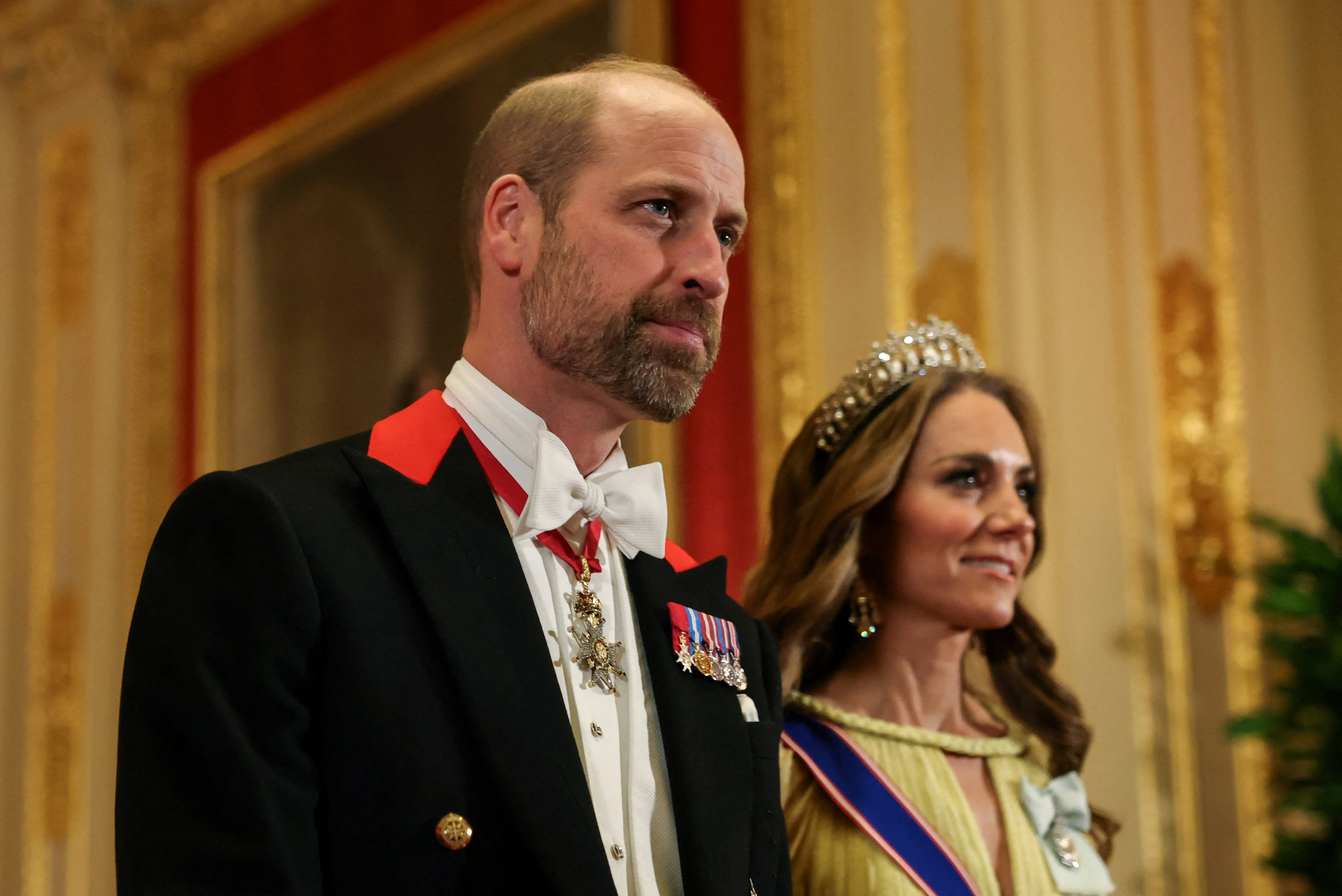
The state banquet portrait of Prince William and Catherine is, on its surface, exactly what it sounds like: formal, glamorous, and built for historical continuity. But it also functions as something else in the royal ecosystem: a visual reset.
Banquet imagery is never just fashion and flattering lighting. It is a performance of stability. It tells the audience: this is the working unit, this is the future-facing couple, this is the tone we are setting. When family tension rises in the headlines, an official portrait can act like a calm chord held underneath the melody, reminding viewers where the institution wants attention to land.
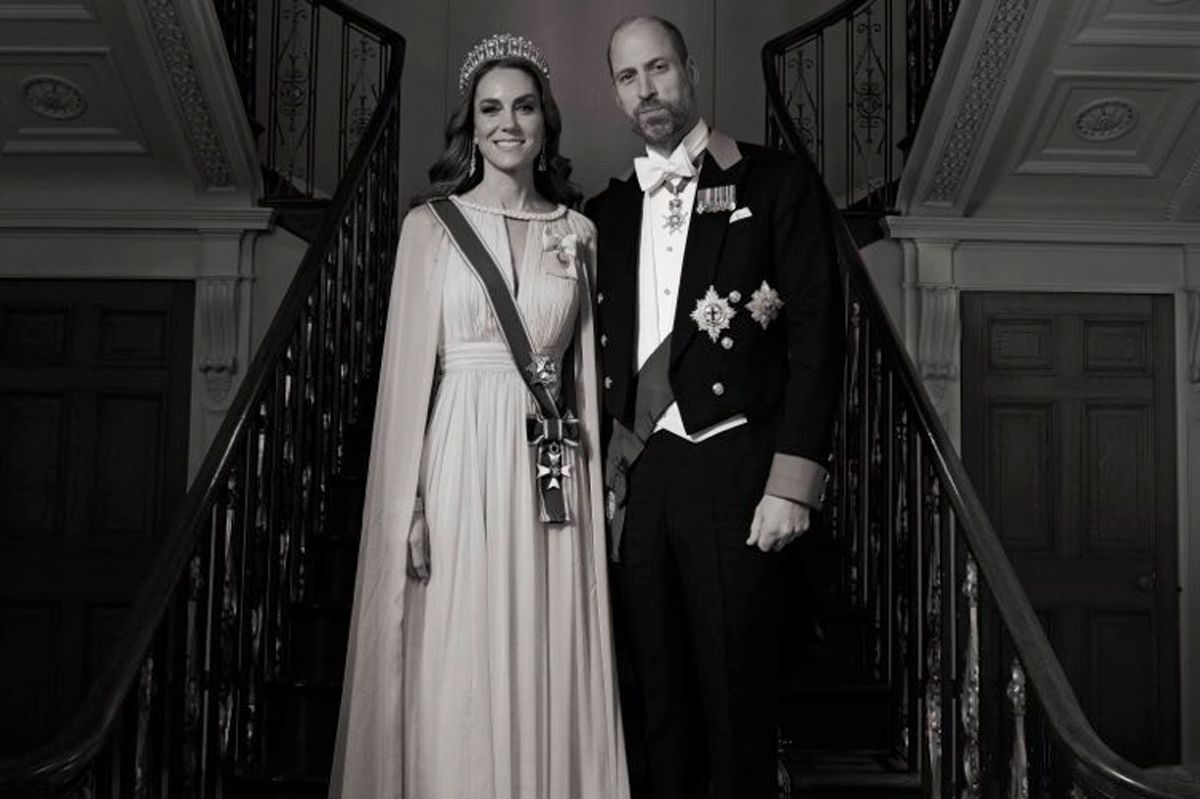
For William specifically, the portrait invites a particular reading: not “respond,” but “continue.” Not “react,” but “remain.”
What “William’s next move” usually looks like in practice
When people imagine the next step in a royal family rift, they tend to picture a phone call, a summit, or a surprise appearance. But William’s public-facing pattern, especially in moments of scrutiny, is far more conservative. The moves are about message discipline.
1) No public negotiation
William is not likely to answer a reconciliation plea with a reconciliation statement. That would turn family life into an ongoing press conference, and it would validate the idea that private relationships can be advanced through public commentary.
2) Controlled visibility with Catherine
When the Waleses want to project steadiness, they do it together, in settings that emphasize duty and continuity. The banquet portrait sits neatly in that tradition.
3) Let the institution speak around him
One of the clearest ways the palace “responds” without responding is by placing William in frames where he is being supported, praised, or affirmed through official channels. In the current moment, that instinct is visible in the way King Charles has publicly praised Prince William after Harry’s interview, which helps draw a bright line around the heir’s role: reliable, working, aligned with the crown.
Is there any real thaw happening?
Harry’s public desire to reconcile and William’s likely reluctance to engage publicly can both be true at the same time. That tension is precisely why the story has traction. A reconciliation narrative is emotionally satisfying, but the mechanics are thorny. A meaningful thaw would require trust-building offstage, away from cameras and quotes.
And if that work is happening, it will probably be invisible at first. The earliest signs would be subtle: softening language, fewer pointed references, and a gradual return to parallel lines rather than direct conflict. Not a sudden joint appearance designed to go viral.
How the Waleses are being positioned right now
As an arts writer, I always come back to staging. The monarchy is, in many ways, an institution of staging: locations, wardrobes, optics, and timing. In this cycle, William and Catherine’s state banquet portrait operates like a carefully lit tableau, the kind you hold on a beat longer so the audience absorbs the intended feeling.
The feeling here is composure. Whatever turbulence is happening elsewhere, the Waleses are presented as polished and forward-facing. The story being told visually is not “family drama,” but “continuity.”
The short answer: expect steadiness, not fireworks
If you are waiting for a clear, definitive “next move” from Prince William, the likeliest answer is that he will choose the least theatrical option available. That does not mean nothing is happening privately. It means the public posture will be restraint: stay on schedule, emphasize duty, and allow official imagery and institutional praise to do what public rebuttals cannot.
In other words, if Harry’s approach is dialogue in the open, William’s is almost certainly going to be silence with structure. And the banquet portrait is part of that structure.
FAQ
Did Prince Harry say he wants reconciliation?
Yes. Prince Harry has publicly said he wants to reconcile with Prince William and King Charles.
Has Prince William responded publicly?
There is fresh reporting about how William may respond, but William’s public-facing approach is typically to avoid engaging directly in public back-and-forth.
Why are people talking about a state banquet portrait?
Because it is a new, official image of William and Catherine that projects unity and continuity, offering a sharply different tone from the reconciliation-and-feud conversation happening around Harry’s comments.