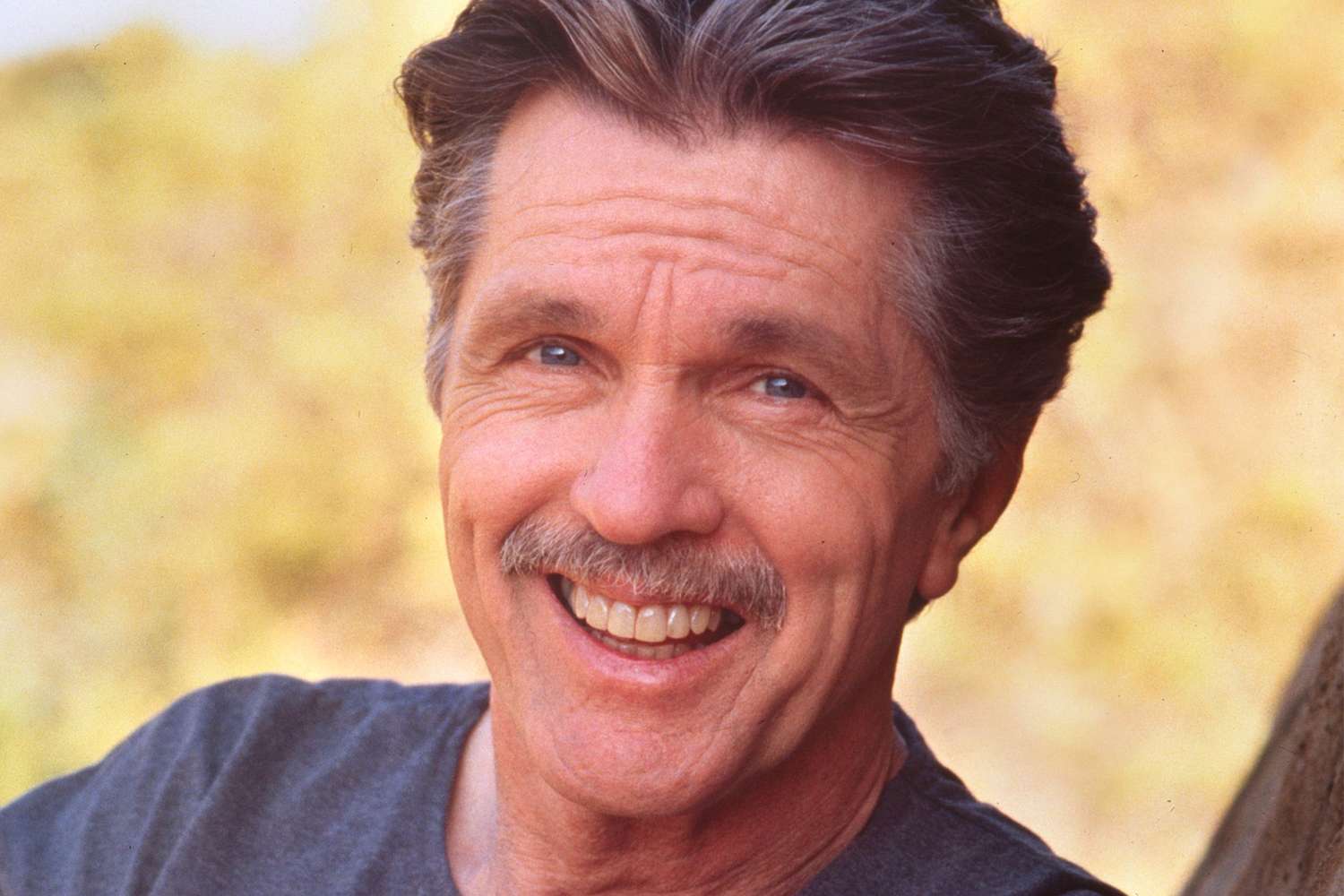
Tom Skerritt, the rough-hewn actor who sparkled amid ensembles in M*A*S*H, Alien and Top Gun before starring as small-town sheriff Jimmy Brock on the quirky 1990s series Picket Fences, has died. He was 93.
Skerritt died Wednesday of natural causes, his family announced.
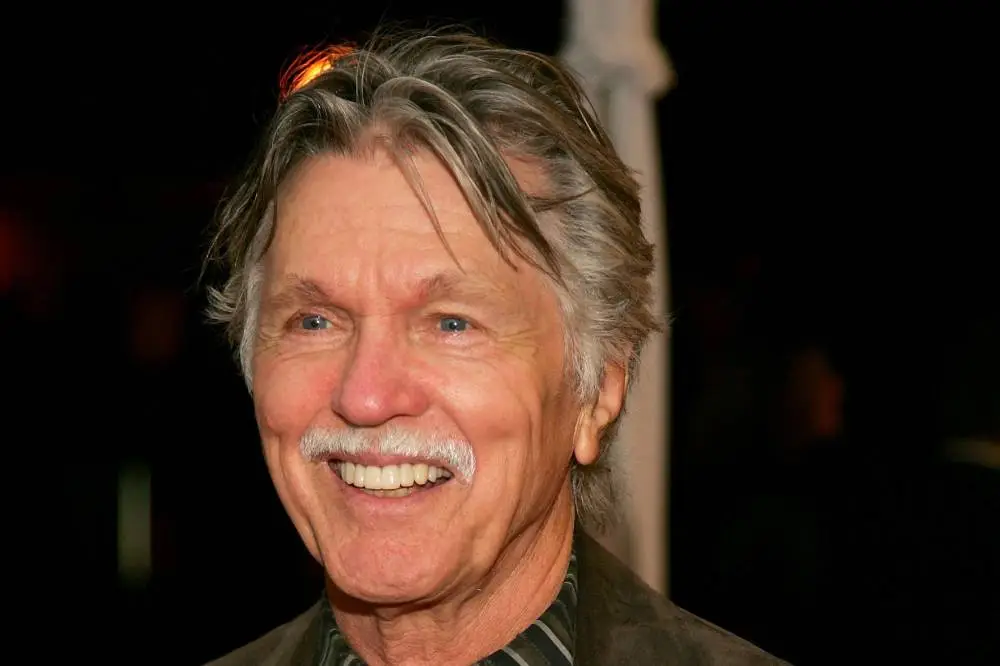
“We are heartbroken by his loss,” his family said. “While the world knew Tom through his remarkable acting career, we knew him for his humor, curiosity, wisdom, generosity and the love he brought into our lives. He cared deeply about imagination, creativity, storytelling, service, veterans, the natural world and helping others find and share their own voices.”
Over six decades on screen, Skerritt projected a kind of lived-in confidence. That quality, part bristly and part inviting, made him an easy fit in stories that needed someone credible in charge, or someone you wanted to follow into the next scene.
Roles people remember
Many viewers knew Skerritt best as Sheriff Jimmy Brock on Picket Fences, David E. Kelley’s drama set in the fictional Rome, Wisconsin. For four seasons on CBS beginning in 1992, he played the sheriff as the voice of calm amid insanity. Skerritt, who played the husband of the town doctor (Kathy Baker) and a father of three, won the Emmy for outstanding lead actor in a drama series in 1993 and was nominated again the following year.
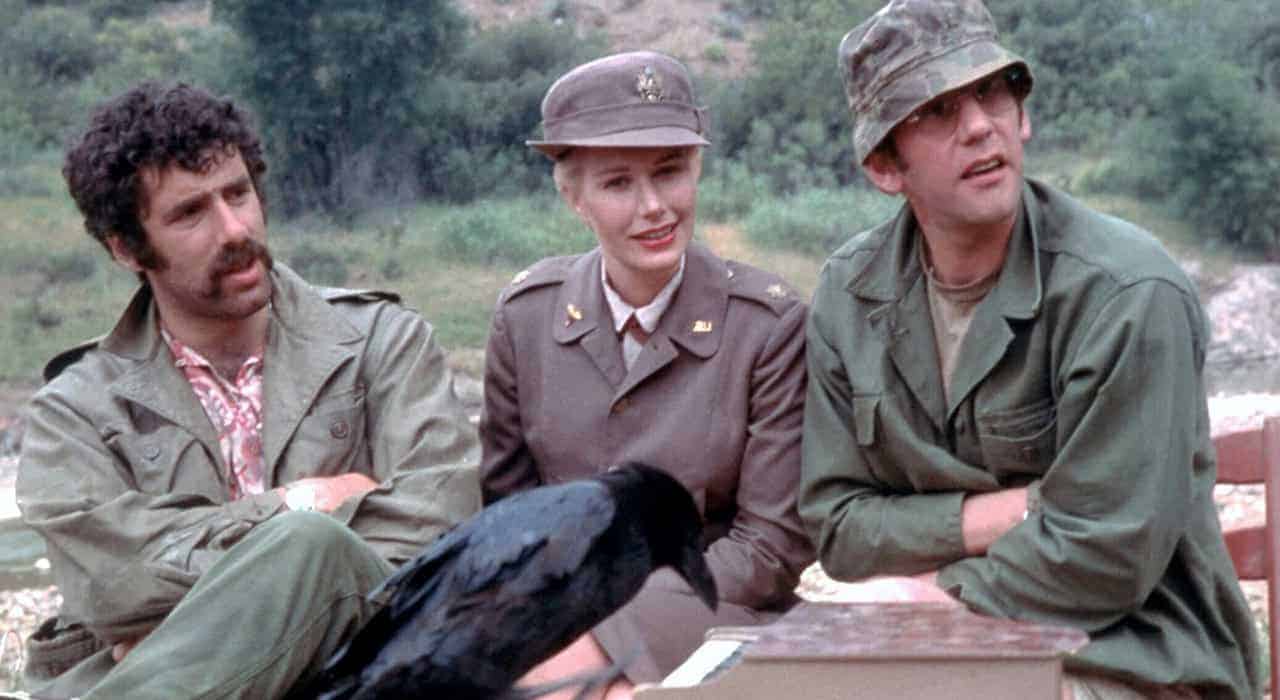
Skerritt’s breakthrough came in Robert Altman’s 1970 film M*A*S*H. As Southern surgeon Duke Forrest, he opens the film by stealing a jeep with co-conspirator Hawkeye Pierce (Donald Sutherland) to get them to the mobile hospital where they are assigned to treat injured U.S. soldiers during the Korean War. Once there, the two join forces with Trapper John McIntrye (Elliott Gould) and set about questioning rigid army regulation that stands in the way of their drinking and womanizing. Curiously, Skerritt’s character was one of the few not included in the long-running CBS series adaptation, but the role proved he had star power.
In 1979, Skerritt played Captain Dallas, commander of the doomed spacecraft Nostromo, in Alien. It is one of his most enduring performances, a portrait of competence under pressure that still anchors the film’s mounting dread.
By 1986, he was Tom Cruise’s Air Force instructor Mike “Viper” Metcalf in Top Gun, a role that leaned into Skerritt’s long-running screen identity as someone audiences would accept, instantly, as a figure of authority. He returned to that register in other projects too, including starring as the iconic lawman Will Kane in a 2000 remake of High Noon for TBS.
Skerritt also portrayed Shirley MacLaine’s husband in the 11-time Oscar nominee The Turning Point (1977) and was memorable as a minister and the patriarch of the MacLean family in Robert Redford’s A River Runs Through It (1992).
How he worked
The Detroit native credited Altman with giving him the freedom to create. In Mitchell Zuckoff’s 2009 book Robert Altman: The Oral Biography, Skerritt remembered an early lesson that stayed with him.
“I just loved the guy from the first. He made me realize early on that you could do no wrong, as long as you tried,” Skerritt said. “The worst you could do was make an ass out of yourself. And that’s the first thing you have to be willing to do as an actor, be willing to make an ass out of yourself. Bob gave me that.”
Skerritt’s decisions could be practical as well. He originally turned down Alien, fearing the film’s budget would be consumed by special effects. He reconsidered after learning Ridley Scott had signed on to direct. In an interview for the 2001 TV documentary Alien Evolution, Skerritt described watching Scott’s debut feature.
“Hold on here, let me see. I’ve heard of this Ridley Scott guy, I’ve heard that he did this thing called The Duellists [Scott’s 1977 feature debut]. ‘Can I see this?’ And they said, ‘Yes, we’ll run a screening for you tomorrow.’ So I went to see The Duellists. And it was a masterpiece. I mean, I have never seen a picture that captured so much production value as The Duellists. Magnificent-looking film, a painting from beginning to end. So I had to do Alien at that point.”
Early years
Thomas Roy Skerritt was born on Aug. 25, 1933, in Detroit. After graduating from Mackenzie High School in 1951, he enlisted in the Air Force, hoping to see the world. Instead, lacking the skills to be a pilot, he spent most of his time in uniform in Austin as a classification specialist. Skerritt then returned to his hometown to study English at Wayne State University.
Deciding to pursue a career as a writer or director, Skerritt transferred to UCLA, where he also did some acting in a bid to overcome his shyness. He never dreamed he could make a living at it. In 2016, he explained how acting became its own education in filmmaking.
“I thought I would continue writing and continue acting if I was going to be a director,” Skerritt said. “I happened to be seen as an actor and I was hired for a little low-budget film and I thought, ‘Hey, this is a great way to learn how to be a director, to be a participant in the actual reality of making a film.’
“You can’t be a filmmaker purely by going to the university, as you know. The practical knowledge, the street knowledge you can gain by being on a set, being around that, being around the way people talk, the way they approach the business, was really the benefit I saw in it from the beginning.”
The low-budget film was War Hunt (1962). Its producers, Terry and Denis Sanders, had seen Skerritt in a community stage production and offered him a job. Throughout the 1960s, he appeared on a long list of TV series, including Laramie, The Real McCoys, Alfred Hitchcock Presents, My Three Sons, Wagon Train, Voyage to the Bottom of the Sea, The Time Tunnel and Mannix, with multiple appearances on shows such as Death Valley Days, Gunsmoke, The F.B.I., The Fugitive, 12 O’Clock High, Combat!, Bonanza and The Virginian.
More credits
After M*A*S*H, Skerritt landed work in films such as Wild Rovers (1971), Fuzz (1972), Big Bad Mama (1974) and Ice Castles (1978). He worked again with Altman in Thieves Like Us (1974) and did a zany turn in Cheech & Chong’s Up in Smoke (1978) as Strawberry, a shell-shocked, pot-dealing Vietnam veteran.
He portrayed Rebecca Howe’s (Kirstie Alley) ultra-suave ex-boss, Evan Drake, on the sixth season of Cheers, played Sally Field’s deceased husband, William, on Brothers and Sisters, and appeared as himself in a cameo in the 2012 comedy Ted.
His other notable film credits included Savage Harvest (1981), The Dead Zone (1983), SpaceCamp (1986), Made to Order (1987), Steel Magnolias (1989), The Rookie (1990), Contact (1997), The Other Sister (1999), Tears of the Sun (2003), Bonneville (2006), Redemption Road (2010), A Hologram for the King (2016) and Day of Days (2017).
And in 2021, he landed a rare leading role in a feature when he played a retired heart surgeon and recent widower who learns he has terminal cancer in East of the Mountains.
Work beyond sets
Skerritt helped launch TheFilmSchool in Seattle to support the next generation of filmmakers and storytellers. He also co-founded the Red Badge Project to help veterans work through PTSD, anxiety and depression by writing and sharing their experiences.
His passion for service included protecting the natural world. Inspired in part by A River Runs Through It, he helped create and champion Reflections of the River, a documentary series exploring the health of America’s rivers and the urgent need to protect them. He also supported river conservation through partnerships with the Wildlands Festival, American Rivers and the Gallatin River Task Force.
Survivors
Survivors include his third wife, Julie Tokashiki, whom he married in 1998; his children Andy, Erin, Matt, Collin and Emiko; grandchildren Sara, Maddison, Sunny, Louisa and Georgia; and great-grandchildren Marigold and Ravi.
Remembering Skerritt
Skerritt could be outsized when a part demanded it and understated when the moment called for control. If his performances often suggested authority, that was also because he made authority look specific: a set of habits, a voice, a point of view, and a willingness to stay steady when the story turned strange.
Rewatch Alien and it is hard to miss how much the fear relies on believable working professionals. Revisit Picket Fences and the appeal is still in the balance he finds between composure and exasperation. Across genres and decades, Skerritt’s gift was making characters feel like people who had lived a life before the camera found them.